Nicaragua Sellos Stamps : Locomotive 1912 Silver Currency
for Bluefields/Zelaya & Cabo & 1913 Gold-currency surcharges
Overview:
Nicaragua was in economic and political upheaval from 1909 to 1912/13. A key factor which would impact who would resolve the crisis was an existing financial arrangement between the Government and industrial concession-holders, most of whom were American and operating in an area of the country over which the government had only limited control. We examine this background in some depth due to its direct influence on stamp-issuing policy.
During this crisis period, Nicaragua produced two groups of railway-related stamps that are variously complex and fascinating. The so-called ‘railway ticket’ issues of 1911/12 were emergency issues, not so unusual in philately, but they are probably the most complex stamp issues that the world has ever witnessed and we are giving those a wide berth.
By contrast, the 1912 locomotive issue with its later surcharges is less complex philatelically but the economic background that led to these Waterlow-printed stamps certainly provides them with uncommon interest. They are, in addition, a beautiful design and these stamps form the sole subject of this article.
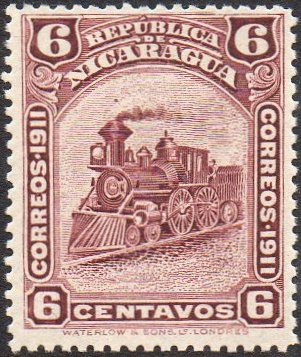
 In the early 1900s, Nicaragua was effectively, though unofficially, split into two currency areas with widespread use of a silver-based currency on the Atlantic side, including Cabo and Bluefields / Zelaya, while paper money predominated in the west. The change to a new national currency, linked to the gold standard, in 1912 was done by stages with the centre and west of the country being the first to exchange cash and convert bank balances into the new currency.
In the preceding decade, the old paper currency had become more and more distrusted in Cabo and Zelaya and was barely circulating there at all. It was clear that the new paper money, though gold-backed, would face great initial resistance if introduced there overnight. Consequently, in 1912, a special stamp issue was produced for, and sold solely in, Bluefields/Zelaya and Cabo. It was denominated in the Silver Currency and was to act as a temporary bridge to be used there whilst the new money gained credibility.
The new currency quickly proved to be a success and it started to be accepted for payment within months in the silver currency area, at which point (in late 1912), the coins and stamps in the silver currency could be withdrawn. The old money was exchanged for new and the sales of locomotive stamps discontinued, national stamps replacing them. Many of the locomotive stamps would later be surcharged in the new Gold Standard-based currency.
Below we provide a more detailed political / economic background to the strange state of monetary affairs that existed in Nicaragua prior to and during the currency reform. It is not essential to read it in order to understand the stamp issues, which may be studied as a stand-alone subject, but you may find it interesting. (You can access the philately sections - 3, 4 & 5 - directly using the internal page links in the left panel.)
In the early 1900s, Nicaragua was effectively, though unofficially, split into two currency areas with widespread use of a silver-based currency on the Atlantic side, including Cabo and Bluefields / Zelaya, while paper money predominated in the west. The change to a new national currency, linked to the gold standard, in 1912 was done by stages with the centre and west of the country being the first to exchange cash and convert bank balances into the new currency.
In the preceding decade, the old paper currency had become more and more distrusted in Cabo and Zelaya and was barely circulating there at all. It was clear that the new paper money, though gold-backed, would face great initial resistance if introduced there overnight. Consequently, in 1912, a special stamp issue was produced for, and sold solely in, Bluefields/Zelaya and Cabo. It was denominated in the Silver Currency and was to act as a temporary bridge to be used there whilst the new money gained credibility.
The new currency quickly proved to be a success and it started to be accepted for payment within months in the silver currency area, at which point (in late 1912), the coins and stamps in the silver currency could be withdrawn. The old money was exchanged for new and the sales of locomotive stamps discontinued, national stamps replacing them. Many of the locomotive stamps would later be surcharged in the new Gold Standard-based currency.
Below we provide a more detailed political / economic background to the strange state of monetary affairs that existed in Nicaragua prior to and during the currency reform. It is not essential to read it in order to understand the stamp issues, which may be studied as a stand-alone subject, but you may find it interesting. (You can access the philately sections - 3, 4 & 5 - directly using the internal page links in the left panel.)
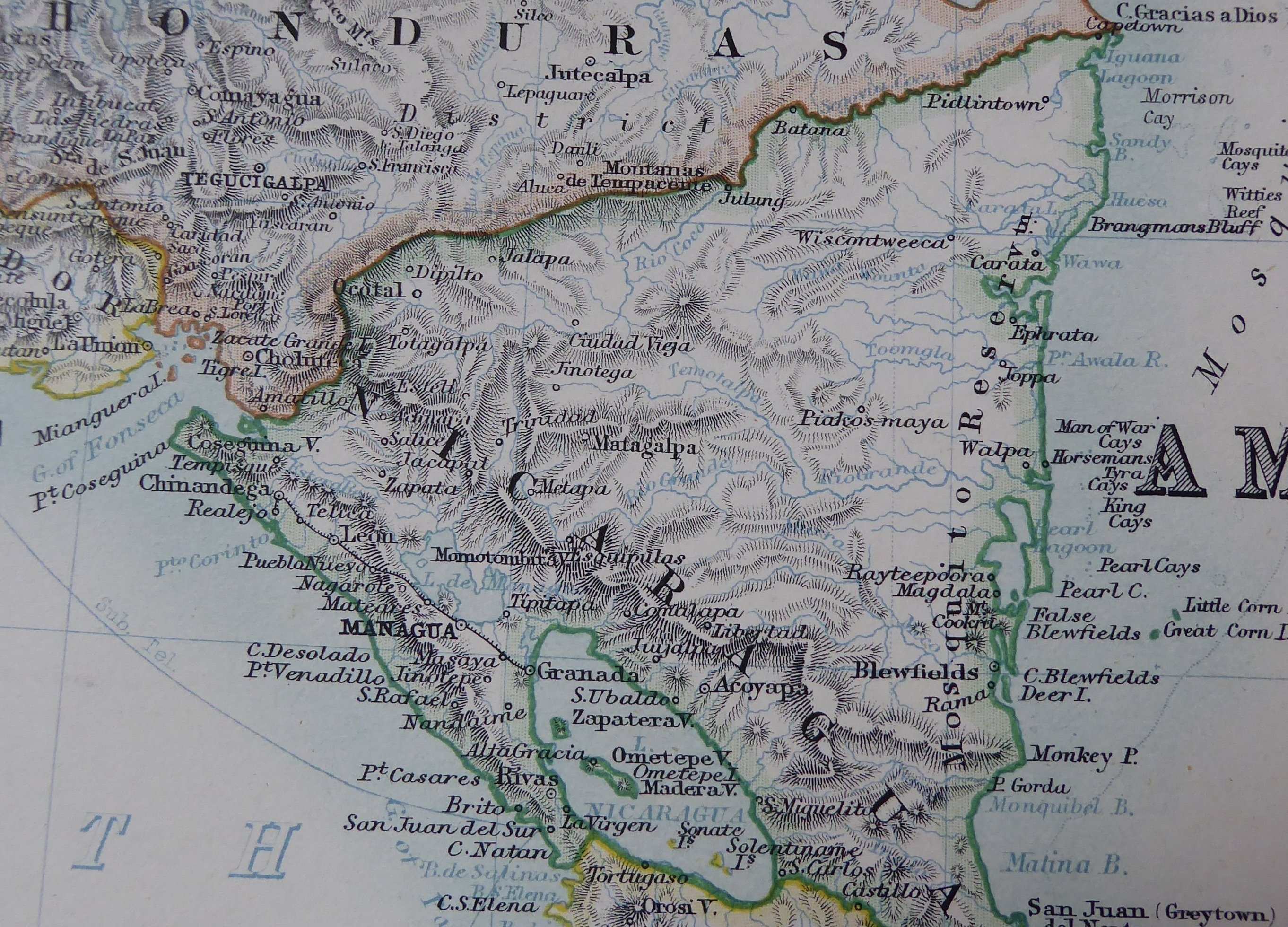 The map, c.1895, shows Cabo at top right, Blewfields (sic) towards bottom right and, to the west, one railway running through the capital, Managua. Note also, of interest to railway philatelists, Mount Momotombo east-north-east of Managua.
The south of Honduras Republic is top centre, a corner of El Salvador top left and the north of Costa Rica at the bottom.
.
The Political / Economic Background to the stamps :
International trade relies on trust in currencies and functioning markets. Since the introduction of the Bretton Woods System (1944) and the International Monetary Fund it spawned (1945), the vast majority of countries have elected to be a part of a system of world banking infrastructure with its rules and constraints. Prior to 1940, such stability as existed was due to the fact that there were few major players in the market, notably the USA, European powers and their economically-important former colonies, all of whom had a vested interest in assisting international trade to work smoothly.
Each major player naturally sought to protect its markets and extend its influence. For many decades before Bretton Woods, America, with a strong anti-colonial ethos, had been working to establish, extend and protect a large zone of influence in the Americas at the expense of the Europeans. Nicaragua certainly fell into this zone.
The Munroe Doctrine (Wikipedia extracts, edited) :
The Monroe Doctrine was mooted as an aim of United States foreign policy position in the 19th Century, one that opposed European colonialism in the Western Hemisphere. It holds that any intervention in the political affairs of the Americas by foreign powers is a potentially hostile act against the United States. The doctrine, in time, was to become central to American grand strategy in the region. (End of Wikipedia extract).
By the turn of the 20th century, the United States was strong enough to adopt the doctrine effectively and it became a defining tenet in their foreign policy. Indeed, in 1904 Theodore ('Teddy') Roosevelt (US President 1901-1909) officially expanded the Monroe Doctrine and stated that America would, in effect, act like an international police force within the Central American area in order to fight corruption and suppress violent uprisings. Additionally and self-evidently a most intrusive interference in a country's affairs, the USA would intervene in the event of ‘financial mismanagement’, but the criteria by which this was to be judged were unspoken.
The map, c.1895, shows Cabo at top right, Blewfields (sic) towards bottom right and, to the west, one railway running through the capital, Managua. Note also, of interest to railway philatelists, Mount Momotombo east-north-east of Managua.
The south of Honduras Republic is top centre, a corner of El Salvador top left and the north of Costa Rica at the bottom.
.
The Political / Economic Background to the stamps :
International trade relies on trust in currencies and functioning markets. Since the introduction of the Bretton Woods System (1944) and the International Monetary Fund it spawned (1945), the vast majority of countries have elected to be a part of a system of world banking infrastructure with its rules and constraints. Prior to 1940, such stability as existed was due to the fact that there were few major players in the market, notably the USA, European powers and their economically-important former colonies, all of whom had a vested interest in assisting international trade to work smoothly.
Each major player naturally sought to protect its markets and extend its influence. For many decades before Bretton Woods, America, with a strong anti-colonial ethos, had been working to establish, extend and protect a large zone of influence in the Americas at the expense of the Europeans. Nicaragua certainly fell into this zone.
The Munroe Doctrine (Wikipedia extracts, edited) :
The Monroe Doctrine was mooted as an aim of United States foreign policy position in the 19th Century, one that opposed European colonialism in the Western Hemisphere. It holds that any intervention in the political affairs of the Americas by foreign powers is a potentially hostile act against the United States. The doctrine, in time, was to become central to American grand strategy in the region. (End of Wikipedia extract).
By the turn of the 20th century, the United States was strong enough to adopt the doctrine effectively and it became a defining tenet in their foreign policy. Indeed, in 1904 Theodore ('Teddy') Roosevelt (US President 1901-1909) officially expanded the Monroe Doctrine and stated that America would, in effect, act like an international police force within the Central American area in order to fight corruption and suppress violent uprisings. Additionally and self-evidently a most intrusive interference in a country's affairs, the USA would intervene in the event of ‘financial mismanagement’, but the criteria by which this was to be judged were unspoken.
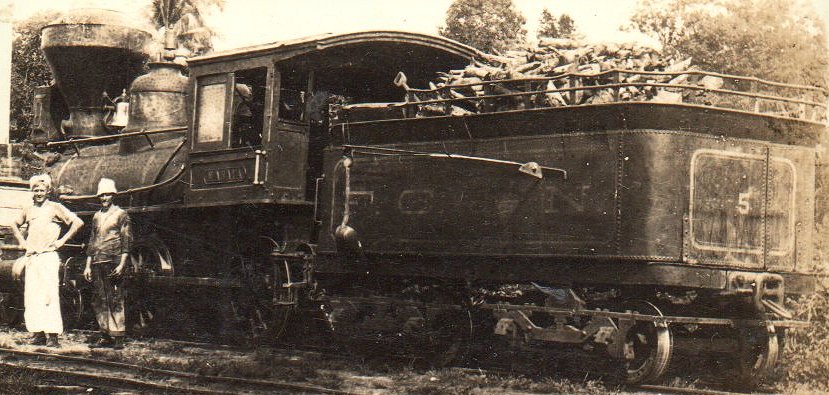 Details from a superb RP postcard of a wood-burning locomotive, No. 5, Masaya, in Corinto at an unknown date.
This policy was to have a significant influence on Nicaragua where, on the eastern seaboard, influential companies held major concessions from the Nicaraguan government. This area included Bluefields, 'Cabo Gracias a Dios' on the Honduran border and much of the so-called Mosquito Coast. In the early years of the 20th century, the concession-holders were preceived by President Zelaya's government in Nicaragua to be reaping the rewards of the concessions but not always honouring their contractual obligations, such as paying all of their taxes and developing the country’s infrastructure. The latter was supposed to include the building of new railways to help open up the country.
President Zelaya, who had conquered the province named after him, securing it from the British in 1894 with a view to incoroporating it into Nicaragua, had initiated the sale of concessions in order to help finance the modernisation of Nicaragua and, by stages, unify the two flanks of Nicaragua. The eastern seaboard had always been very remote from the centre of government but mining and logging in Bluefields and Cabo had made this region a significant area of the country economically. President Zelaya was a modern, liberal leader for the era but his goals and rising hostility over the conduct of the concession-holders would have severe consequences for him. In how far the crisis stemmed from the behaviour of the concession-holders on the one hand or the financial peril of Zelaya's government on the other is open to interpretataion.
Details from a superb RP postcard of a wood-burning locomotive, No. 5, Masaya, in Corinto at an unknown date.
This policy was to have a significant influence on Nicaragua where, on the eastern seaboard, influential companies held major concessions from the Nicaraguan government. This area included Bluefields, 'Cabo Gracias a Dios' on the Honduran border and much of the so-called Mosquito Coast. In the early years of the 20th century, the concession-holders were preceived by President Zelaya's government in Nicaragua to be reaping the rewards of the concessions but not always honouring their contractual obligations, such as paying all of their taxes and developing the country’s infrastructure. The latter was supposed to include the building of new railways to help open up the country.
President Zelaya, who had conquered the province named after him, securing it from the British in 1894 with a view to incoroporating it into Nicaragua, had initiated the sale of concessions in order to help finance the modernisation of Nicaragua and, by stages, unify the two flanks of Nicaragua. The eastern seaboard had always been very remote from the centre of government but mining and logging in Bluefields and Cabo had made this region a significant area of the country economically. President Zelaya was a modern, liberal leader for the era but his goals and rising hostility over the conduct of the concession-holders would have severe consequences for him. In how far the crisis stemmed from the behaviour of the concession-holders on the one hand or the financial peril of Zelaya's government on the other is open to interpretataion.
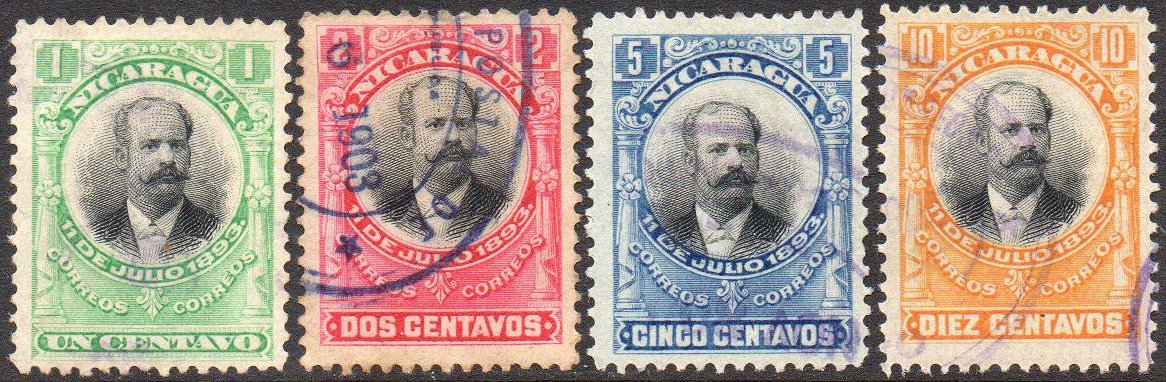 The first four values of the 1903 set/8 (non-railway) showing President Santos Zelaya.
As President Zelaya became more forceful in his demands, the biggest companies began to pressure the American authorities to help maintain the status quo. The financial advantages of the existing arrangements to the American companies, and by extension to the U.S. economy, coincided with a growing interest in such issues by the American institutions. This led to calls being made to intervene in Nicaragua.
The possible threat of that country cancelling some concessions was high on the list of causes but the disquiet was further fuelled by the fact that the disputes were starting to draw in rival European trading interests, an encroachment that would play into the mind-set that the Munroe Doctrine spawned. President Zelaya was also thought still perhaps to harbour ambitions for a competing trans-isthmus canal through Nicaragua. All of this will also have informed American attitudes beyond the finances of a few noisy companies. The combination appears to have been sufficient for Washington to put in motion the overthrow of President Zelaya.
The first four values of the 1903 set/8 (non-railway) showing President Santos Zelaya.
As President Zelaya became more forceful in his demands, the biggest companies began to pressure the American authorities to help maintain the status quo. The financial advantages of the existing arrangements to the American companies, and by extension to the U.S. economy, coincided with a growing interest in such issues by the American institutions. This led to calls being made to intervene in Nicaragua.
The possible threat of that country cancelling some concessions was high on the list of causes but the disquiet was further fuelled by the fact that the disputes were starting to draw in rival European trading interests, an encroachment that would play into the mind-set that the Munroe Doctrine spawned. President Zelaya was also thought still perhaps to harbour ambitions for a competing trans-isthmus canal through Nicaragua. All of this will also have informed American attitudes beyond the finances of a few noisy companies. The combination appears to have been sufficient for Washington to put in motion the overthrow of President Zelaya.
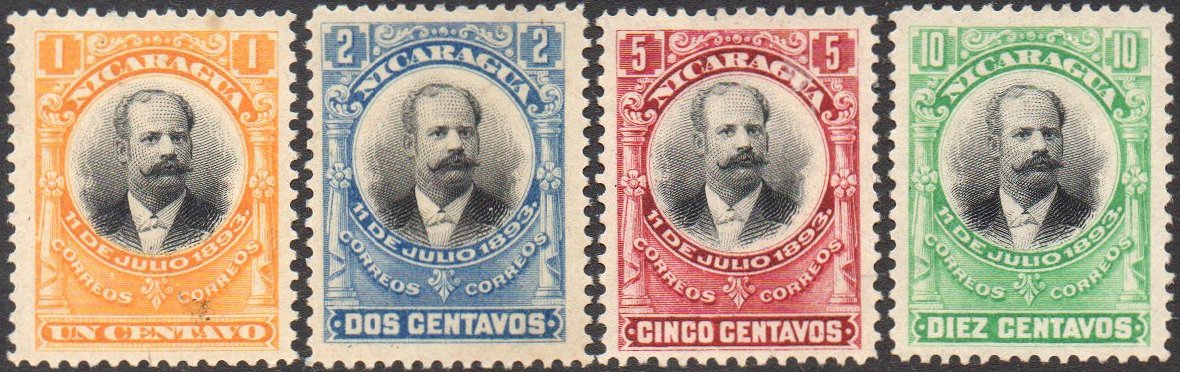 The same four values as above but in unissued colours.
Of course, the right noises needed to be made to justify the actions that followed. A mine-laying incident, apparently not ordered by President Zelaya but which could have led to the sinking of an American warship, was one of the reasons put forward, along with the financial / economic situation in the country.
Even though the President had made progress in modernising Nicaragua, the financial situation was delicate and unnerving for those with investments and pro-concessions actors simply amplified the points of dispute to try to create an image at home and abroad of a President who was apparently incompetent, dishonest and anti-business. Expressions like ‘preventive intervention’ and ‘the country would benefit from American methods and supervision’ were passed to the media and circulated amongst diplomats.
Despite this, there were widespread reports that other countries, and indeed even some American marines who helped in what amounted to a coup which would lead to a long-term military presence, were far from convinced that the concession-holders had been worthy of such intervention. Some took the view that their reason for calling on America to assist them was simply about continuing to garner large profits by means of impeding any Nicaraguan government from exercising proper oversight and accountability of their activities.
When the first replacement president, Madriz, failed to satisfy America, a further round of negotiations was initiated in order to establish a government that they could favour. These negotiations led to what is known as the Dawson Pacts. These tied Nicaragua to a programme of reforms, of which the most far-reaching was to hand over ultimate control of Nicaragua’s financial affairs and its currency to American-nominated bankers.
If we go back around a decade to 1899, there had been an earlier attempt, led by Reyes, to oust President Zelaya, but it had failed. One conspirator, Adolfo Diaz, was briefly jailed for his involvement and it was he who was now installed as President – and a very pro-American choice he proved to be.
.
The Currencies of Nicaragua :
1871-1912 : 100 Centavos = 1 Nicaraguan Peso
1912-1987 : 100 Centavos = 1 Cordoba (equivalent to 12.50 former Pesos)
In the 19th centruy, silver-based currency in the country was replaced by paper currency but it lost value and became increasingly less convertible with foreign currencies from 1900 onwards. In response to this, on the eastern seaboard, largely isolated from the rest of the country and with an economy heavily driven by the American-owned companies, the paper currency was distrusted and the silver currency continued to hold sway.
money . . . . money . . . . money . . . . money . . . . money . . . . money . . . .
money . . . . money . . . . money . . . .
The same four values as above but in unissued colours.
Of course, the right noises needed to be made to justify the actions that followed. A mine-laying incident, apparently not ordered by President Zelaya but which could have led to the sinking of an American warship, was one of the reasons put forward, along with the financial / economic situation in the country.
Even though the President had made progress in modernising Nicaragua, the financial situation was delicate and unnerving for those with investments and pro-concessions actors simply amplified the points of dispute to try to create an image at home and abroad of a President who was apparently incompetent, dishonest and anti-business. Expressions like ‘preventive intervention’ and ‘the country would benefit from American methods and supervision’ were passed to the media and circulated amongst diplomats.
Despite this, there were widespread reports that other countries, and indeed even some American marines who helped in what amounted to a coup which would lead to a long-term military presence, were far from convinced that the concession-holders had been worthy of such intervention. Some took the view that their reason for calling on America to assist them was simply about continuing to garner large profits by means of impeding any Nicaraguan government from exercising proper oversight and accountability of their activities.
When the first replacement president, Madriz, failed to satisfy America, a further round of negotiations was initiated in order to establish a government that they could favour. These negotiations led to what is known as the Dawson Pacts. These tied Nicaragua to a programme of reforms, of which the most far-reaching was to hand over ultimate control of Nicaragua’s financial affairs and its currency to American-nominated bankers.
If we go back around a decade to 1899, there had been an earlier attempt, led by Reyes, to oust President Zelaya, but it had failed. One conspirator, Adolfo Diaz, was briefly jailed for his involvement and it was he who was now installed as President – and a very pro-American choice he proved to be.
.
The Currencies of Nicaragua :
1871-1912 : 100 Centavos = 1 Nicaraguan Peso
1912-1987 : 100 Centavos = 1 Cordoba (equivalent to 12.50 former Pesos)
In the 19th centruy, silver-based currency in the country was replaced by paper currency but it lost value and became increasingly less convertible with foreign currencies from 1900 onwards. In response to this, on the eastern seaboard, largely isolated from the rest of the country and with an economy heavily driven by the American-owned companies, the paper currency was distrusted and the silver currency continued to hold sway.
money . . . . money . . . . money . . . . money . . . . money . . . . money . . . .
money . . . . money . . . . money . . . .
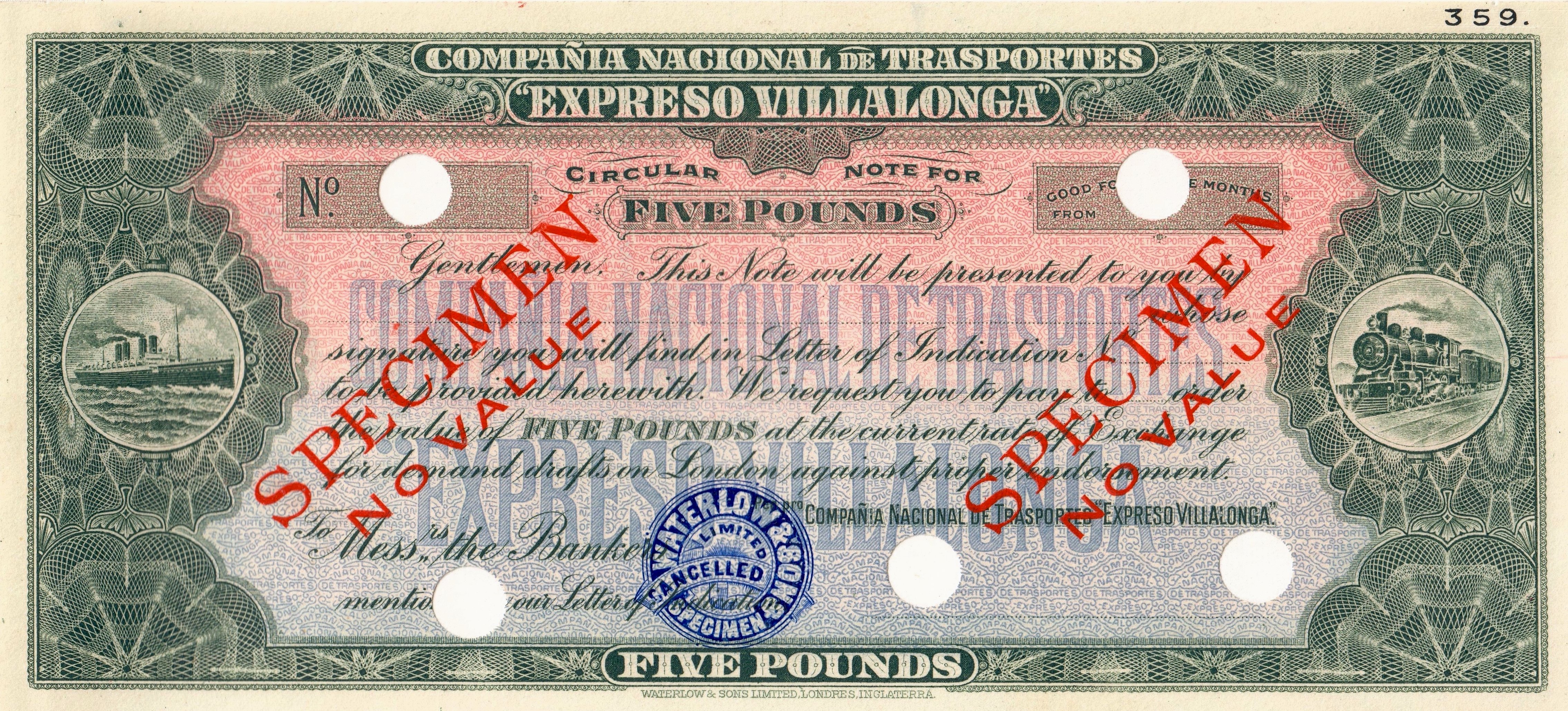 Not Nicaraguan but it is by Waterlow & Sons Ltd., printers of the locomotive stamps in this article : A specimen banknote for Expreso Villalonga in Argentina. (Image courtesy of Mel Spinella.)
The eastern seaboard area at that period is known to philatelists principally as Bluefields or by its alternative name of Zelaya, with the lesser known Cabo (Gracias a Dios) often tacked onto it in conversation. 'Mosquito Coast' is also used as an alternative shorthand by some. As mentioned higher up, when Nicaragua's new currency was launched in 1912, it would have been very unpopular to try to introduce the new banknotes and coinage in the province immediately; indeed, it may have been unsuccessful.
The interim solution was to support the continuance of silver currency in that area on an official basis. The philatelic outcome of this was the locomotive stamp issue, viz. the original stamps without surcharge. These were sold only in the province of Zelaya, where one cent of silver currency was worth only about 50% of the value of one cent in gold currency.
Once the new currency had been introduced in the west, tied to the Gold Standard (to which it was to remain tied until 1931), confidence in it grew rapidly and, by late in the same year, the replacement of the silver currency in Bluefields and Cabo with the new currency could proceed. The locomotive stamps were then no longer required and the remainders were surcharged in gold currency and issued in 1913.
It should be noted that the surcharges on the locomotive issue were not applied in order to convert a stamp from a certain silver currency value to its gold equivalent. In the face of a shortage of (mostly) low-value gold currency stamps in the country as a whole, the post office was simply surcharging spare stocks of any stamps, whether originally issued in the 'silver currency' zone or in the rest of the country. All the surcharged stamps were sold throughout Nicaragua.
So, the financial fix worked yet it should be pointed out that the instruction issued to the bankers when first sent to Nicaragua had been simply to review the currency and make proposals to Washington and Managua as to possible ways to proceed. However, the general state of the economy, the poor standing of the paper currency throughout the country and the wretched state of the banknotes in circulation due to the climate combined to convince the bankers that the situation was so urgent that they should exceed their authority and proceed with the introduction of a new currency on their own initiative.
For those who like wading through financial jargon, their report is available here (opens in a new tab, large file).
Alternatively, a few selected extracts of the report are in Appendix 1 at the foot of this article.
Not Nicaraguan but it is by Waterlow & Sons Ltd., printers of the locomotive stamps in this article : A specimen banknote for Expreso Villalonga in Argentina. (Image courtesy of Mel Spinella.)
The eastern seaboard area at that period is known to philatelists principally as Bluefields or by its alternative name of Zelaya, with the lesser known Cabo (Gracias a Dios) often tacked onto it in conversation. 'Mosquito Coast' is also used as an alternative shorthand by some. As mentioned higher up, when Nicaragua's new currency was launched in 1912, it would have been very unpopular to try to introduce the new banknotes and coinage in the province immediately; indeed, it may have been unsuccessful.
The interim solution was to support the continuance of silver currency in that area on an official basis. The philatelic outcome of this was the locomotive stamp issue, viz. the original stamps without surcharge. These were sold only in the province of Zelaya, where one cent of silver currency was worth only about 50% of the value of one cent in gold currency.
Once the new currency had been introduced in the west, tied to the Gold Standard (to which it was to remain tied until 1931), confidence in it grew rapidly and, by late in the same year, the replacement of the silver currency in Bluefields and Cabo with the new currency could proceed. The locomotive stamps were then no longer required and the remainders were surcharged in gold currency and issued in 1913.
It should be noted that the surcharges on the locomotive issue were not applied in order to convert a stamp from a certain silver currency value to its gold equivalent. In the face of a shortage of (mostly) low-value gold currency stamps in the country as a whole, the post office was simply surcharging spare stocks of any stamps, whether originally issued in the 'silver currency' zone or in the rest of the country. All the surcharged stamps were sold throughout Nicaragua.
So, the financial fix worked yet it should be pointed out that the instruction issued to the bankers when first sent to Nicaragua had been simply to review the currency and make proposals to Washington and Managua as to possible ways to proceed. However, the general state of the economy, the poor standing of the paper currency throughout the country and the wretched state of the banknotes in circulation due to the climate combined to convince the bankers that the situation was so urgent that they should exceed their authority and proceed with the introduction of a new currency on their own initiative.
For those who like wading through financial jargon, their report is available here (opens in a new tab, large file).
Alternatively, a few selected extracts of the report are in Appendix 1 at the foot of this article.
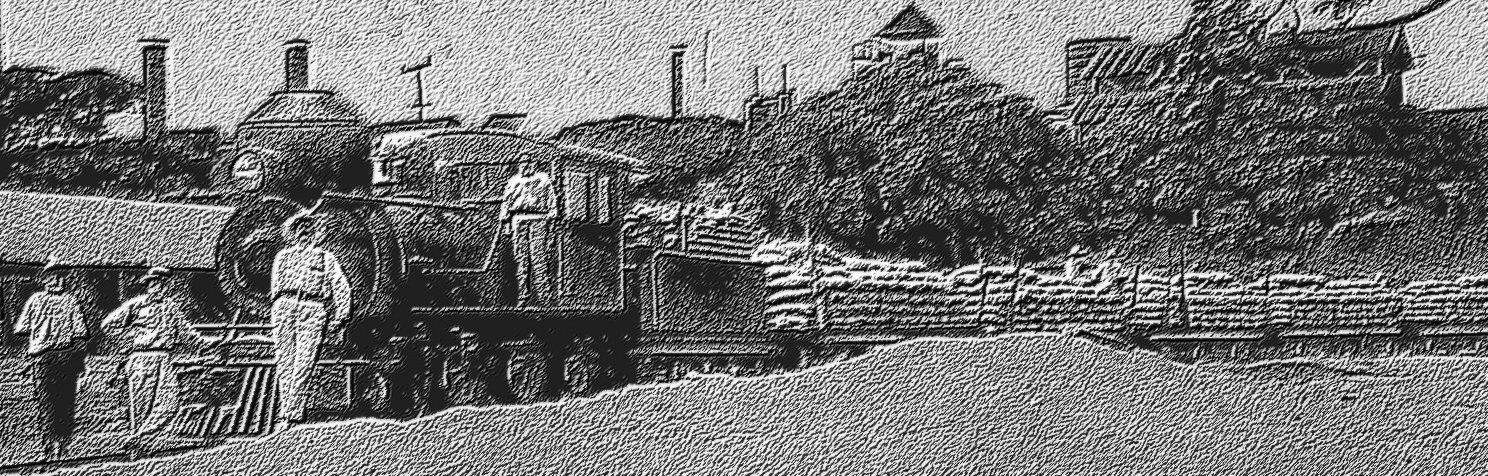 Steam train, flat wagons loaded with sugar, leaving the San Antonio Sugar Mill, Nicaragua.
.
The Stamps : Introduction to the listing of Varieties & Pricing
In this article, we have chosen to provide our own catalogue number and price for most of the stamps. Whilst most of the basic stamps are available from time to time, though not in large numbers, varieties can be rare, many of them occurring only once in a sheet/100. Varieties range from the minor to the major but only a tiny proportion of those on the locomotive stamp surcharges have ever been deemed to warrant a listing by the major catalogues. This selectivity, which is not based on the same criteria across the board, seems to stem largely from the perceived philatelic status of a country. Your author will resist expanding at length on that subject here.
However it seems right to point out that the explosion of specialists in the hobby in the last 30 years appears to have grown in direct proportion to the excessive cost and quantity of new issues, as well as, too often, their lazy, repetitive and soulless nature. There are certainly fewer collectors than was once the case, but many of them are now deeply engaged.
As a consequence, the demand for varieties has flourished in a philatelic pond usually stocked with plenty of common fish but with very few rare species. This demand is strongest amongst 'one-country' collectors but some thematic collectors take a serious interest as well. For very popular themes, such as railways, this adds a significant number of additional seekers chasing a very small supply of many of the varieties.
We know of no varieties on the original, unsurcharged stamps. For those that were surcharged, we have included numerous varieties than are not listed in the main catalogues. Several of these additional surcharges are listed in Maxwell's catalogue of Nicaragua but we have extended beyond his listing as well. Our prices are intended to reflect the ever-increasing demand for these stamps in the face of a limited and finite supply. Even so, these prices for stamps are, in truth, still very modest. Very few examples of any variety that is found only in 1% of an issue with a quite limited printing are likely to have survived.
Our prices are in Pounds Sterling and are for 'mint hinged' and 'used'. Although some mint never hinged are found, your collection will probably never extend very far if limited to those and we would not advocate they should command a high premium. Finally with regard to listings, if one should be required, we suggest the catalogue prefix 'AF' for our numbers.
.
The 1912 Issue for Bluefields (Zelaya) and Cabo : Locomotive : Silver Currency.
Steam train, flat wagons loaded with sugar, leaving the San Antonio Sugar Mill, Nicaragua.
.
The Stamps : Introduction to the listing of Varieties & Pricing
In this article, we have chosen to provide our own catalogue number and price for most of the stamps. Whilst most of the basic stamps are available from time to time, though not in large numbers, varieties can be rare, many of them occurring only once in a sheet/100. Varieties range from the minor to the major but only a tiny proportion of those on the locomotive stamp surcharges have ever been deemed to warrant a listing by the major catalogues. This selectivity, which is not based on the same criteria across the board, seems to stem largely from the perceived philatelic status of a country. Your author will resist expanding at length on that subject here.
However it seems right to point out that the explosion of specialists in the hobby in the last 30 years appears to have grown in direct proportion to the excessive cost and quantity of new issues, as well as, too often, their lazy, repetitive and soulless nature. There are certainly fewer collectors than was once the case, but many of them are now deeply engaged.
As a consequence, the demand for varieties has flourished in a philatelic pond usually stocked with plenty of common fish but with very few rare species. This demand is strongest amongst 'one-country' collectors but some thematic collectors take a serious interest as well. For very popular themes, such as railways, this adds a significant number of additional seekers chasing a very small supply of many of the varieties.
We know of no varieties on the original, unsurcharged stamps. For those that were surcharged, we have included numerous varieties than are not listed in the main catalogues. Several of these additional surcharges are listed in Maxwell's catalogue of Nicaragua but we have extended beyond his listing as well. Our prices are intended to reflect the ever-increasing demand for these stamps in the face of a limited and finite supply. Even so, these prices for stamps are, in truth, still very modest. Very few examples of any variety that is found only in 1% of an issue with a quite limited printing are likely to have survived.
Our prices are in Pounds Sterling and are for 'mint hinged' and 'used'. Although some mint never hinged are found, your collection will probably never extend very far if limited to those and we would not advocate they should command a high premium. Finally with regard to listings, if one should be required, we suggest the catalogue prefix 'AF' for our numbers.
.
The 1912 Issue for Bluefields (Zelaya) and Cabo : Locomotive : Silver Currency.
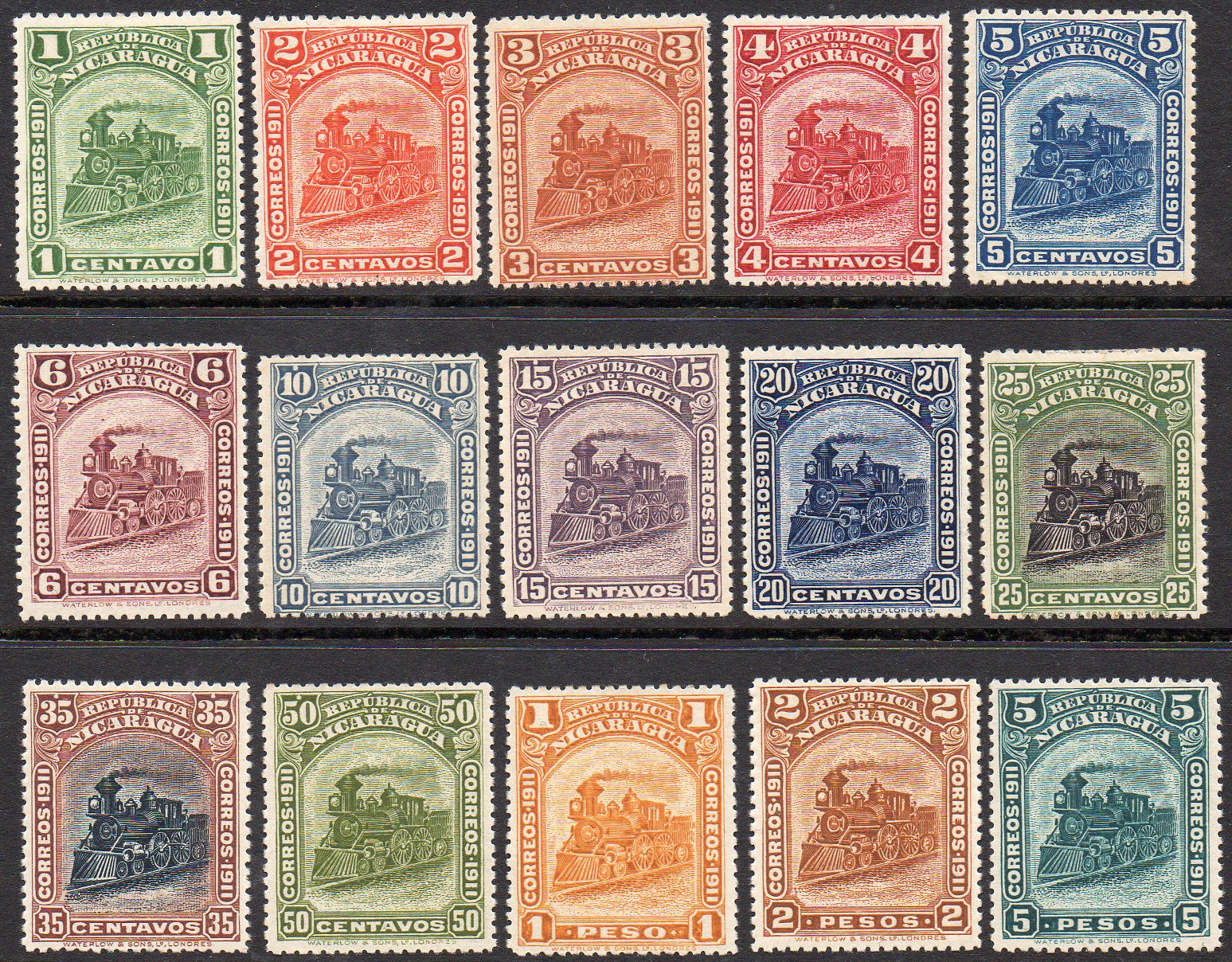 Unsurcharged stamps are prefixed 'M' for Mosquito Coast.
M1 : 1c Yellow-Green [ . ] [ . ] £6.00 / £2.50
M2 : 2c Vermilion [ . ] [ . ] £5.00 / £3.00
M3 : 3c Yellow-Brown [ . ] [ . ] £4.50 / £2.50
M4 : 4c Deep Rose-Carmine [ . ] [ . ] £7.50 / £3.50
M5 : 5c Blue [ . ] [ . ] £7.00 / £1.50
M6 : 6c Pale Claret [ . ] [ . ] £35.00 / £20.00
M7 : 10c Slate [ . ] [ . ] £2.00 / £2.00
M8 : 15c Greyish-Lilac [ . ] [ . ] £2.00 / £4.00
M9 : 20c Deep Blue [ . ] [ . ] £11.00 / £2.50
M10 : 25c Green & Black [ . ] [ . ] £22.00 / £11.00
M11 : 35c Brown & Black [ . ] [ . ] £4.00 / £4.50
M12 : 50c Olive-Green [ . ] [ . ] £4.00 / £5.50
M13 : 1 Peso Yellow-Orange [ . ] [ . ] £2.00 / £8.00
M14 : 2 Pesos Yellow-Chestnut [ . ] [ . ] £8.50 / £11.00
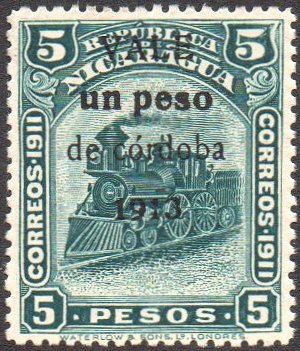
M15 : 5 Pesos Deep Blue-Green [ . ] [ . ] £8.50 / £11.00
M1-15 : Set Price £130.00 / £92.00
.
Waterlow Sample Stamps :
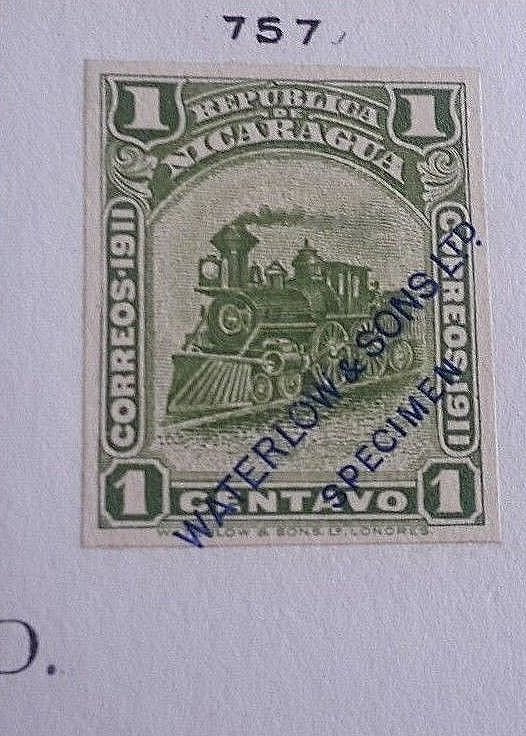
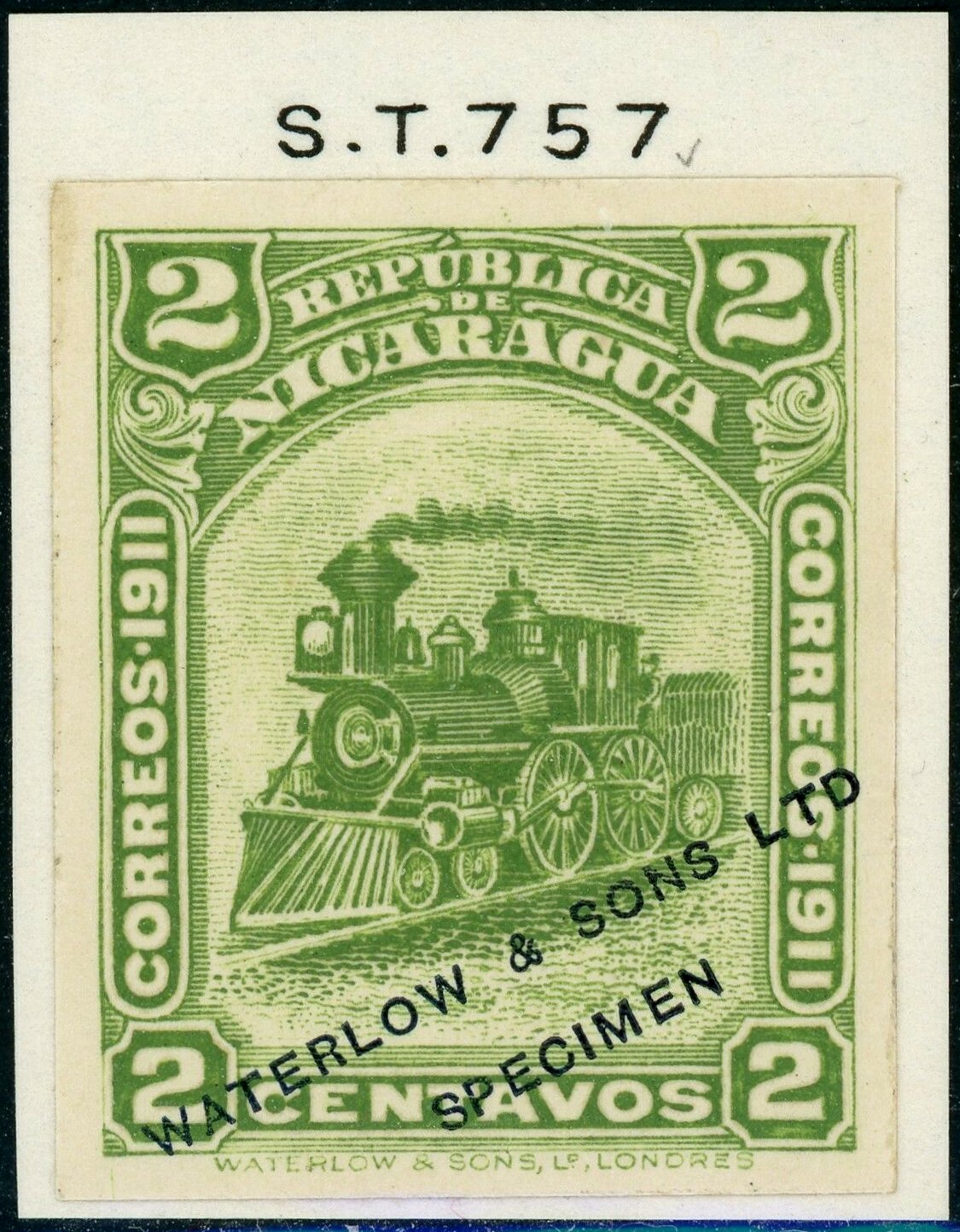
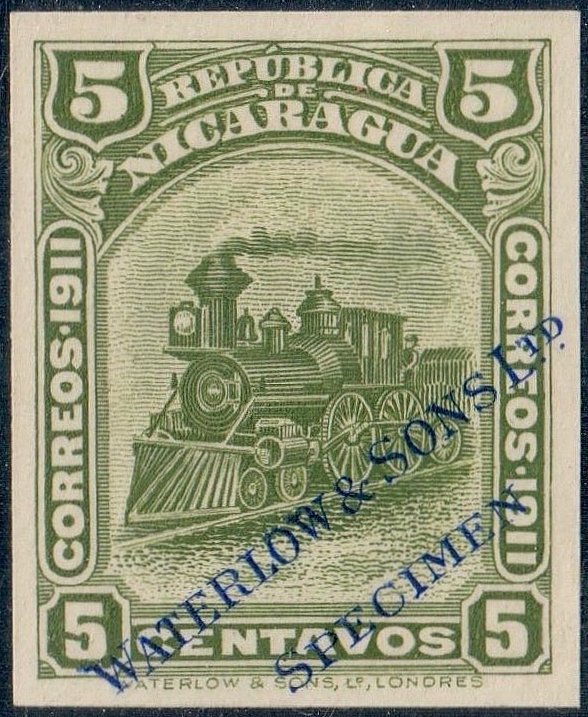
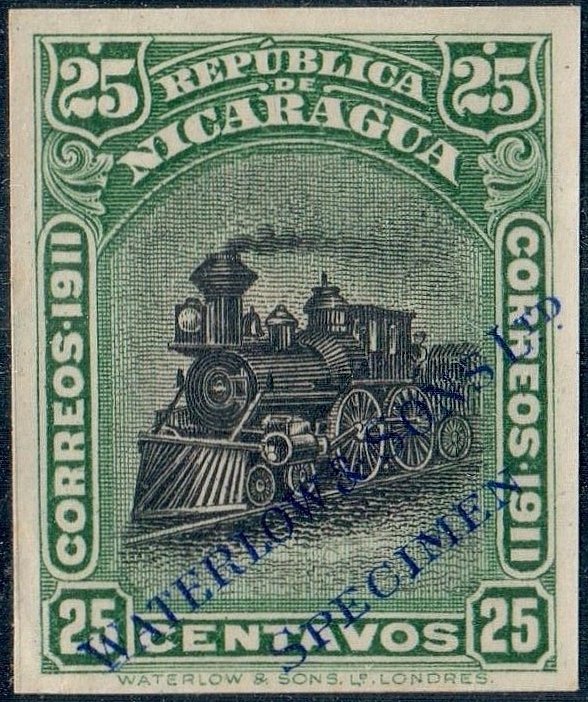
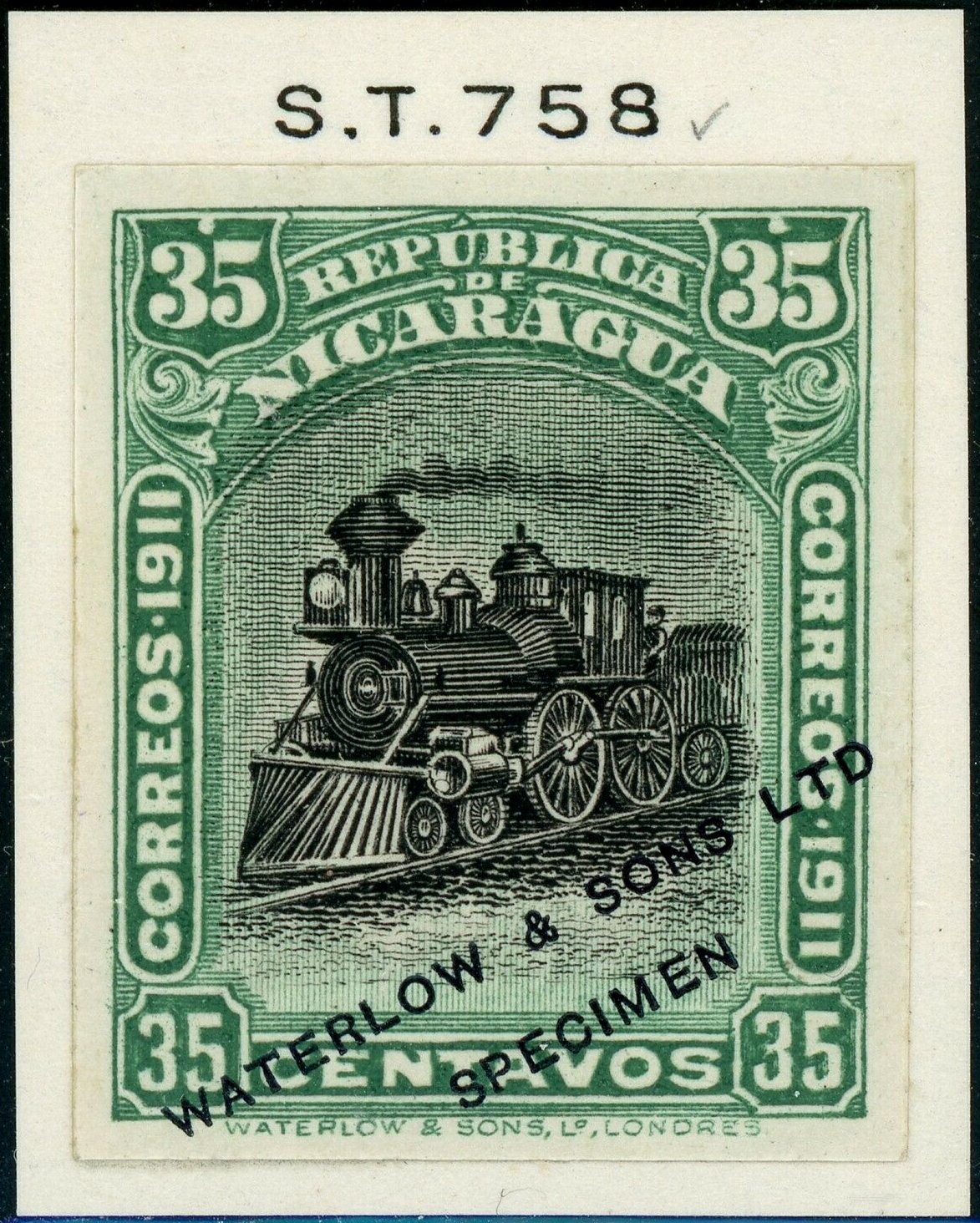
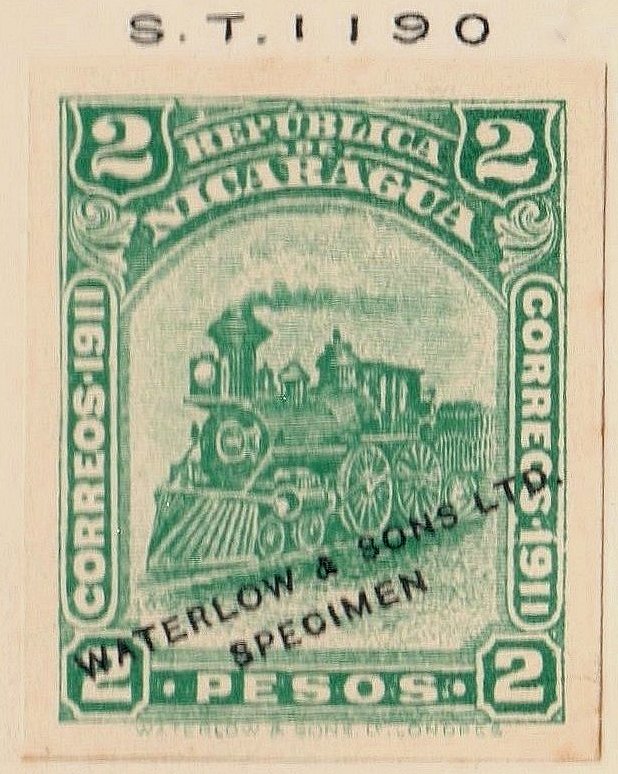
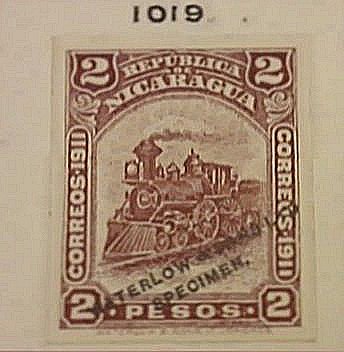
Broadly, these were typically stamps issued in new colours and overprinted with the company name. Their original purpose was for affixing into books carried by the Company's salesmen as examples of the Company's stamp production, each stamp having a S.T. code number by which it could be identified.
Still in general (there are many exceptions), imperforate examples are usually from salesmen's books (or prepared for them but never used), whilst many of the perforated examples were produced for collectors, such as those to celebrate Waterlow's centenary of stamp production in 1952.
We have not numbered or priced sample stamps in this article. We have listed the sheetlets/9, which come either as a composite sheet of one each of M1-M9 or a composite sheet containing 3 x M10 + 6 x M11. We have not seen individual perforated sample stamps from these sheets, though some will presumably have been broken up. We display, but do not attempt to list, individual imperforate stamps that we have seen. It can probably never be known which imperforate values in which colours have survived.
Unsurcharged stamps are prefixed 'M' for Mosquito Coast.
M1 : 1c Yellow-Green [ . ] [ . ] £6.00 / £2.50
M2 : 2c Vermilion [ . ] [ . ] £5.00 / £3.00
M3 : 3c Yellow-Brown [ . ] [ . ] £4.50 / £2.50
M4 : 4c Deep Rose-Carmine [ . ] [ . ] £7.50 / £3.50
M5 : 5c Blue [ . ] [ . ] £7.00 / £1.50
M6 : 6c Pale Claret [ . ] [ . ] £35.00 / £20.00
M7 : 10c Slate [ . ] [ . ] £2.00 / £2.00
M8 : 15c Greyish-Lilac [ . ] [ . ] £2.00 / £4.00
M9 : 20c Deep Blue [ . ] [ . ] £11.00 / £2.50
M10 : 25c Green & Black [ . ] [ . ] £22.00 / £11.00
M11 : 35c Brown & Black [ . ] [ . ] £4.00 / £4.50
M12 : 50c Olive-Green [ . ] [ . ] £4.00 / £5.50
M13 : 1 Peso Yellow-Orange [ . ] [ . ] £2.00 / £8.00
M14 : 2 Pesos Yellow-Chestnut [ . ] [ . ] £8.50 / £11.00
M15 : 5 Pesos Deep Blue-Green [ . ] [ . ] £8.50 / £11.00
M1-15 : Set Price £130.00 / £92.00
.
Waterlow Sample Stamps :
Broadly, these were typically stamps issued in new colours and overprinted with the company name. Their original purpose was for affixing into books carried by the Company's salesmen as examples of the Company's stamp production, each stamp having a S.T. code number by which it could be identified.
Still in general (there are many exceptions), imperforate examples are usually from salesmen's books (or prepared for them but never used), whilst many of the perforated examples were produced for collectors, such as those to celebrate Waterlow's centenary of stamp production in 1952.
We have not numbered or priced sample stamps in this article. We have listed the sheetlets/9, which come either as a composite sheet of one each of M1-M9 or a composite sheet containing 3 x M10 + 6 x M11. We have not seen individual perforated sample stamps from these sheets, though some will presumably have been broken up. We display, but do not attempt to list, individual imperforate stamps that we have seen. It can probably never be known which imperforate values in which colours have survived.
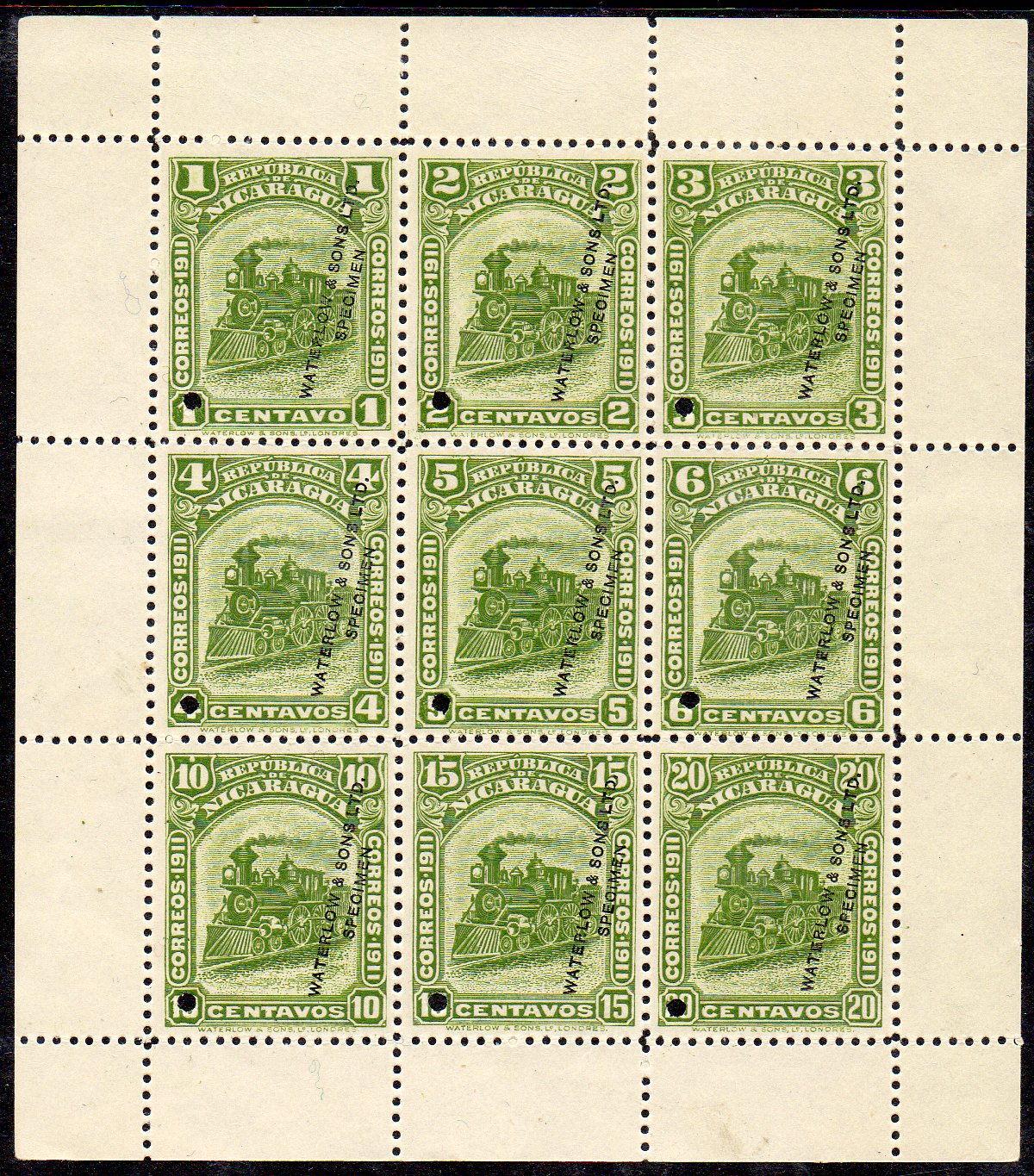
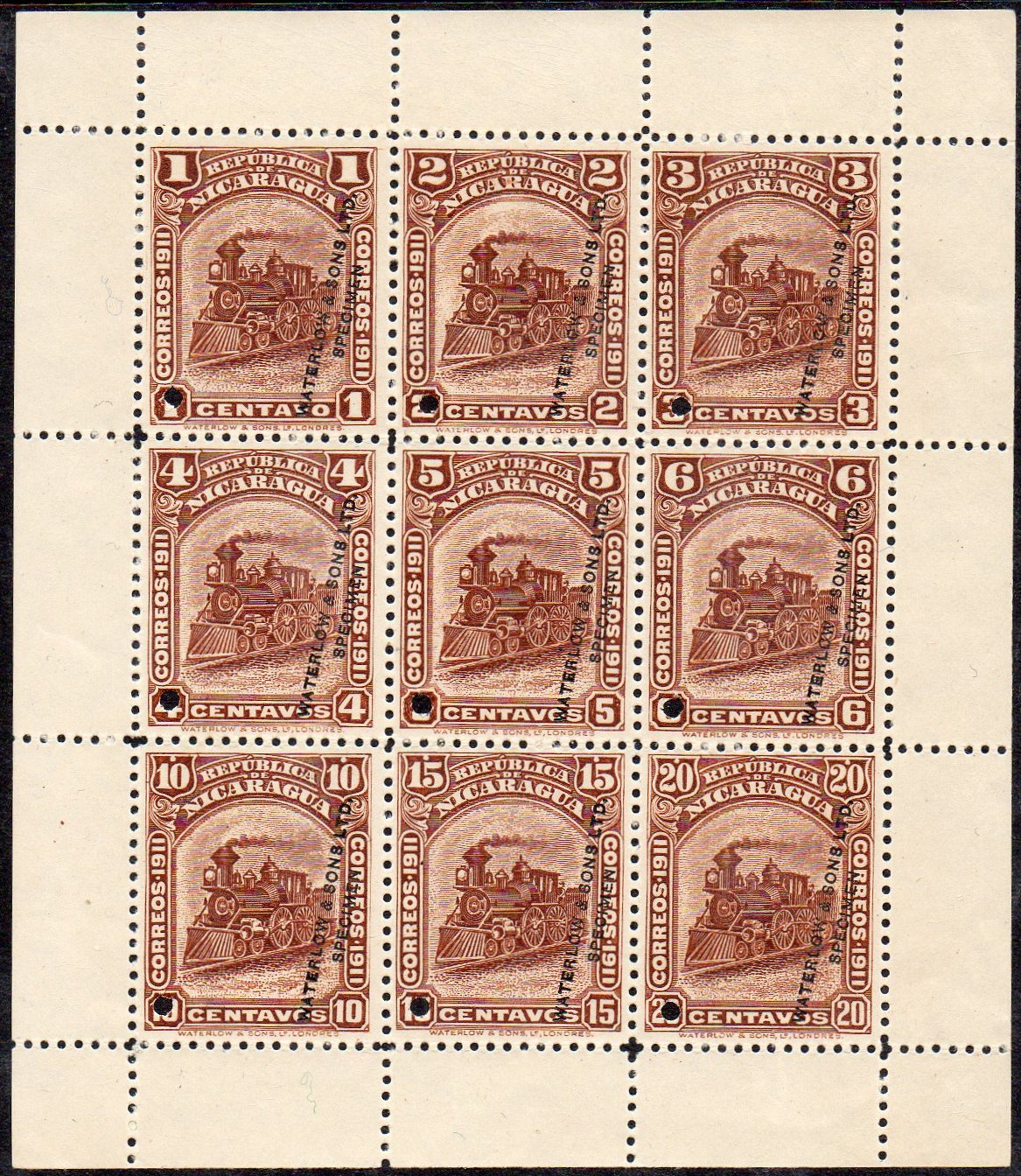 Low Value Sheetlets/9 1c - 20c :
Waterlow sample sheetlet/9 1c-20c Perf in GREEN [ . ]
Waterlow sample sheetlet/9 1c-20c Perf in BROWN [ . ]
Low Value Sheetlets/9 1c - 20c :
Waterlow sample sheetlet/9 1c-20c Perf in GREEN [ . ]
Waterlow sample sheetlet/9 1c-20c Perf in BROWN [ . ]
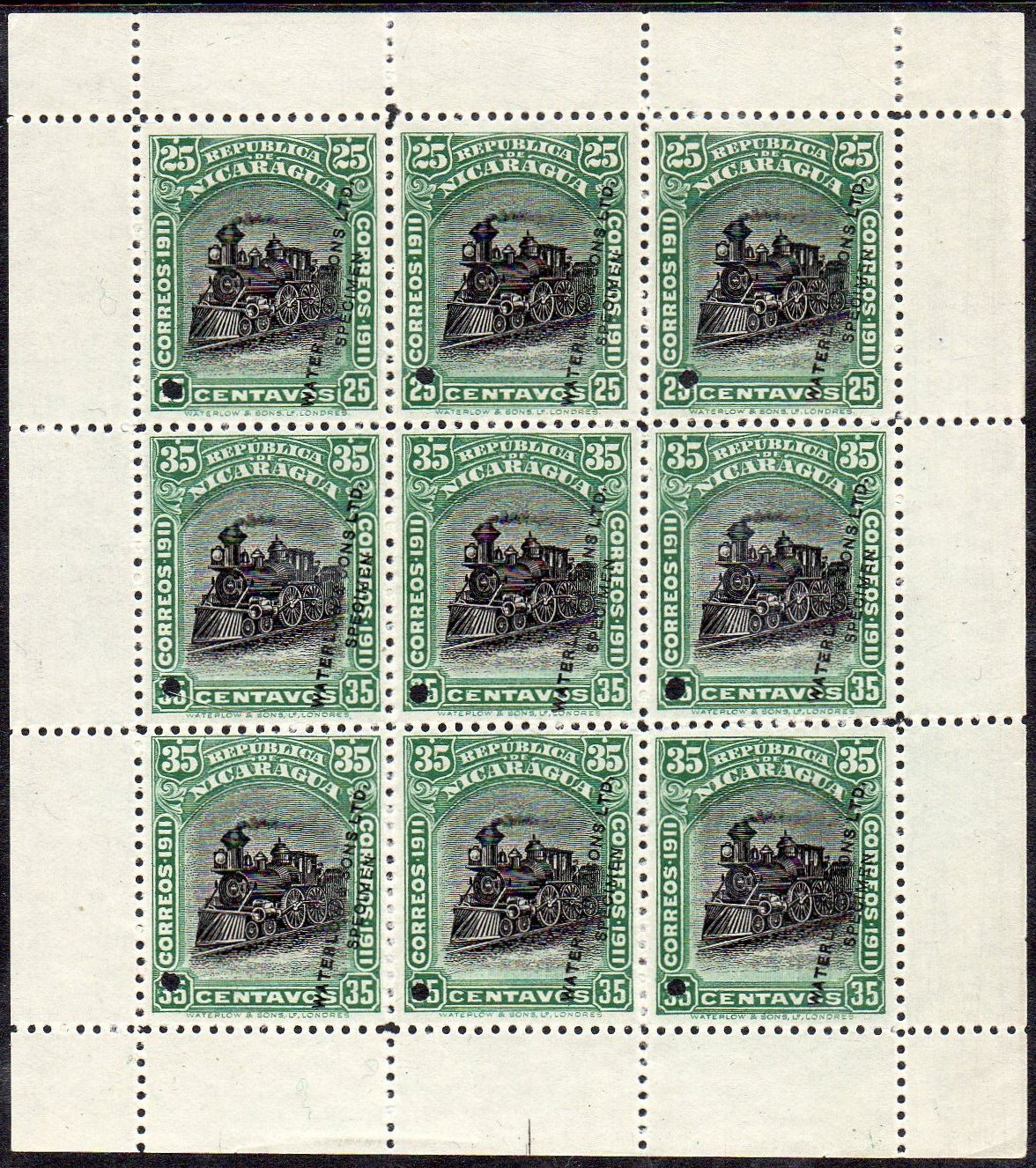
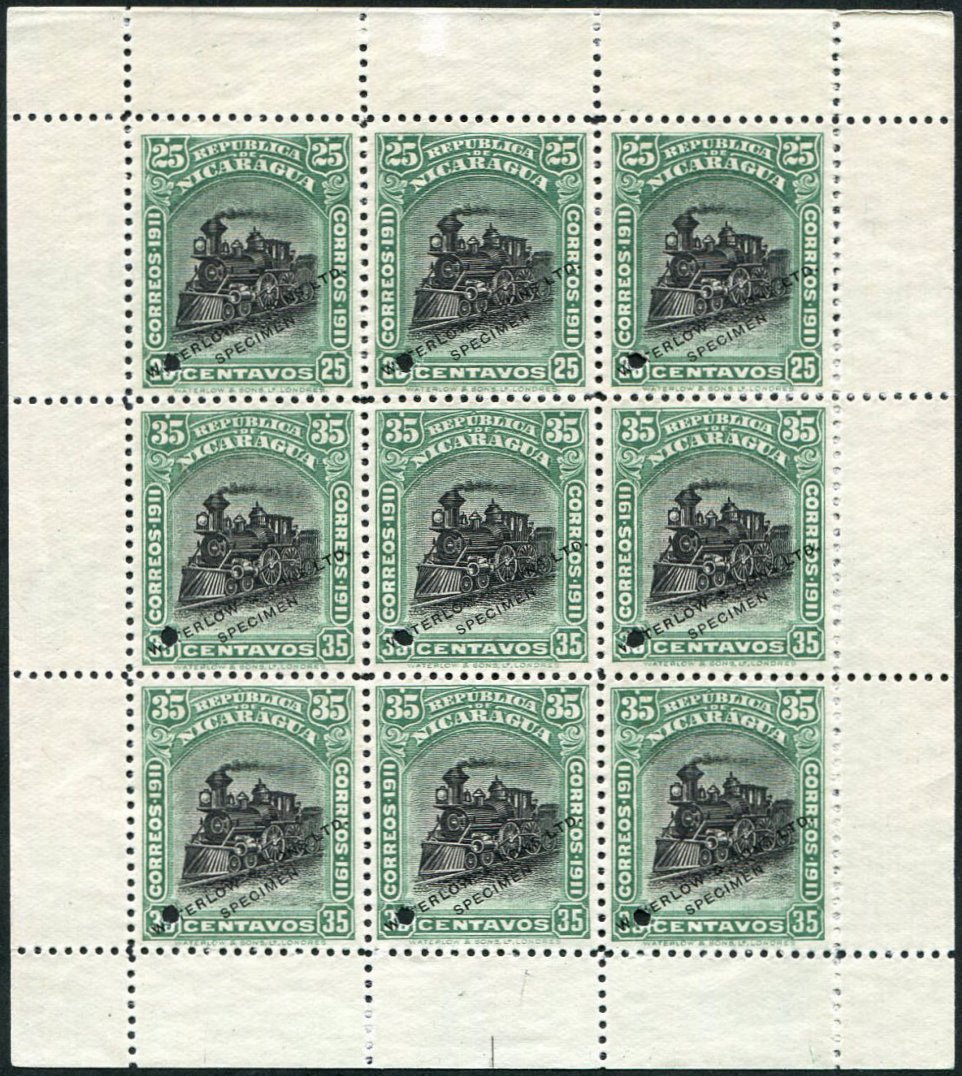 Medium Value Sheetlets/9 25c & 35c in Green & Black :
Waterlow sample sheetlet/9 25c & 35c Perf : OPT almost VERTICAL [ . ]
Waterlow sample sheetlet/9 25c & 35c Perf : OPT Diagonal [ . ]
.
Medium Value Sheetlets/9 25c & 35c in Green & Black :
Waterlow sample sheetlet/9 25c & 35c Perf : OPT almost VERTICAL [ . ]
Waterlow sample sheetlet/9 25c & 35c Perf : OPT Diagonal [ . ]
.
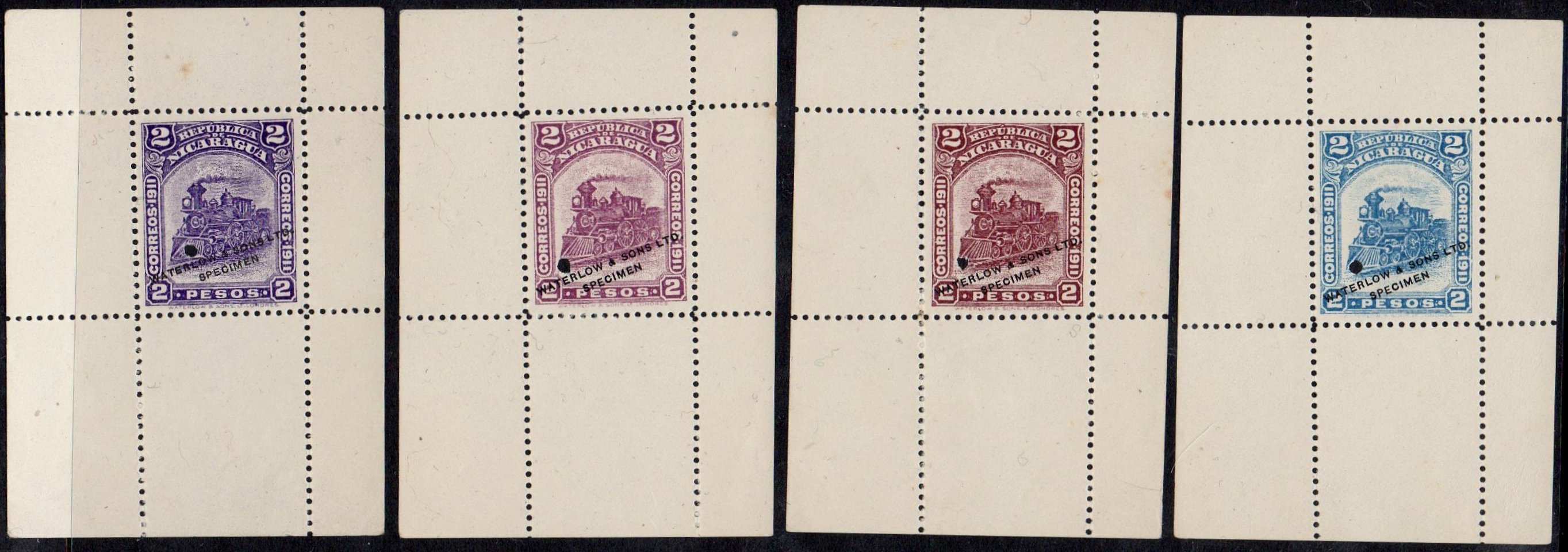 Above are four single stamp sheetlets of the 2 Pesos design; a fifth sheetlet in blue-green also exists.
Below are all the imperforate sample stamps for which we have images; others face values will exist - and with various styles of overprint:
Above are four single stamp sheetlets of the 2 Pesos design; a fifth sheetlet in blue-green also exists.
Below are all the imperforate sample stamps for which we have images; others face values will exist - and with various styles of overprint:
 .
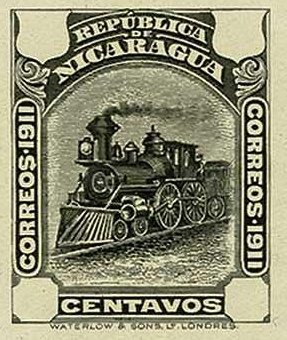
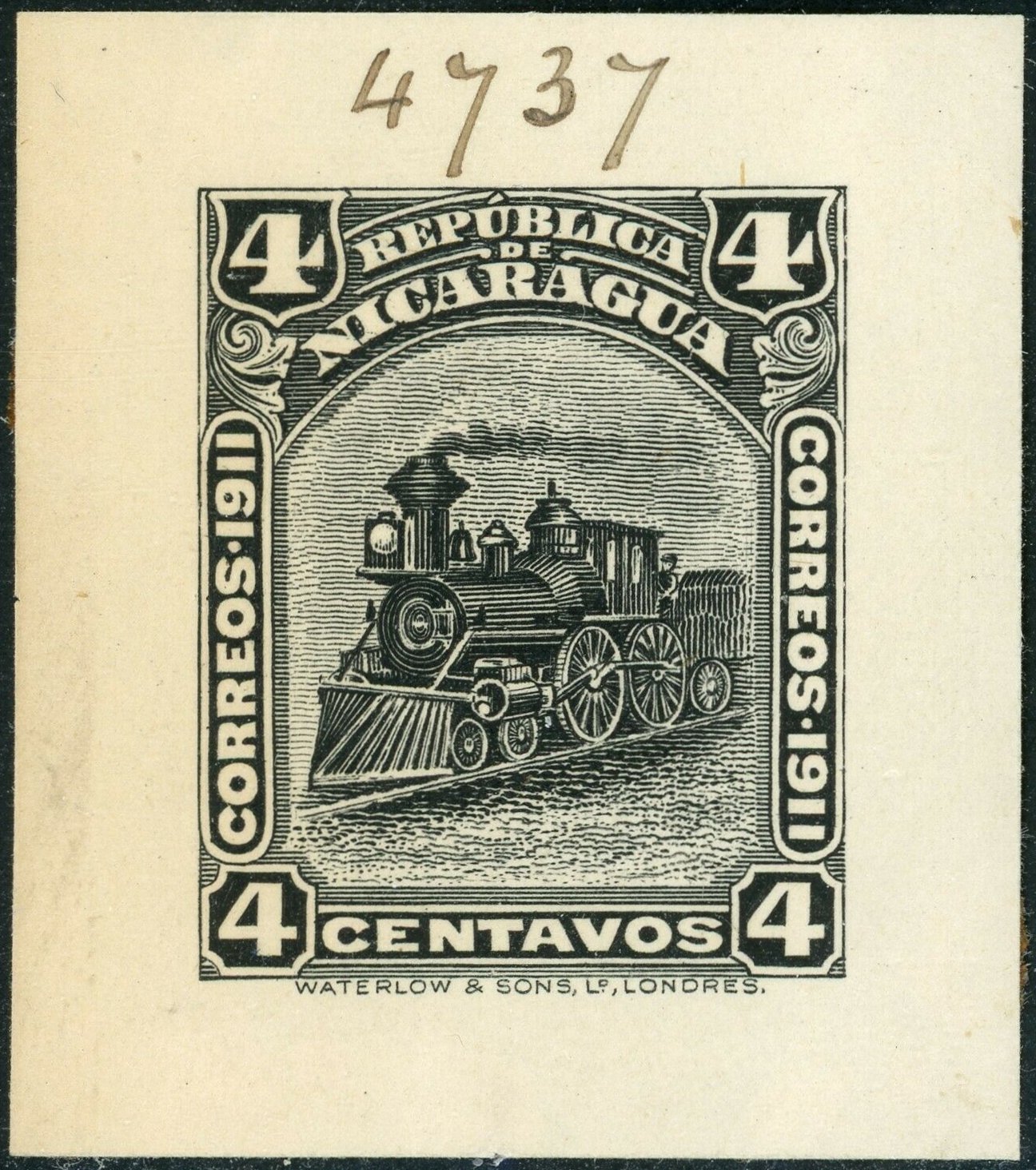
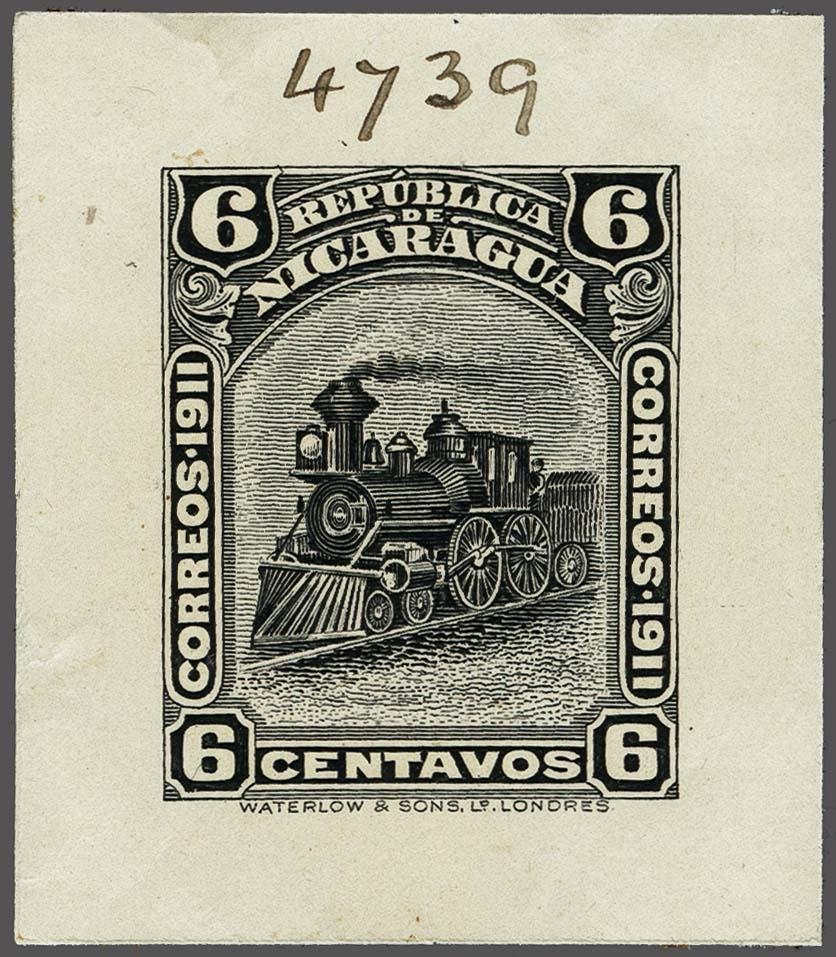
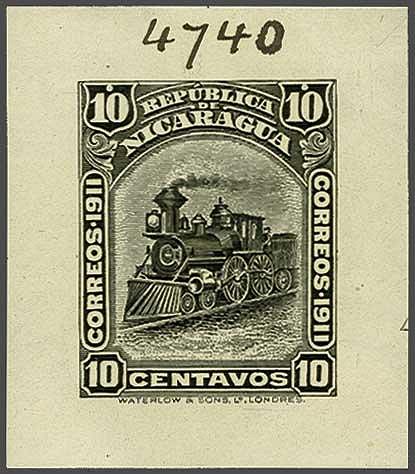
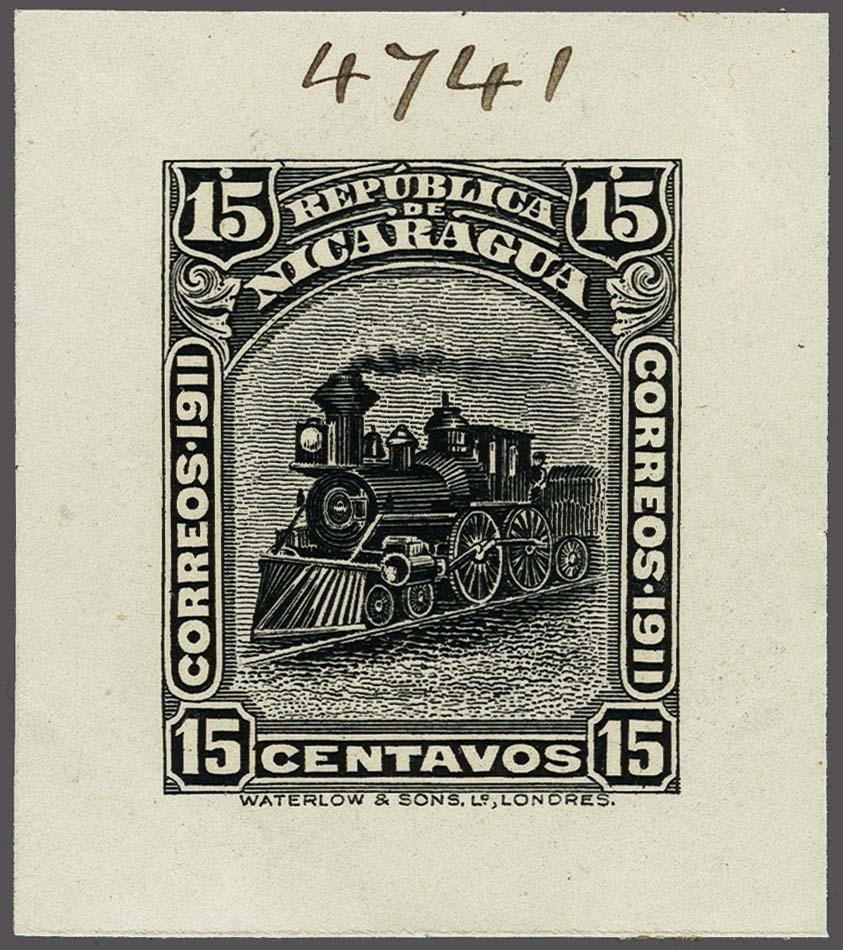
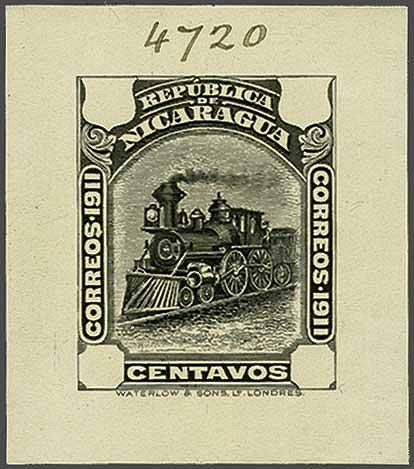
Before moving on to the surcharges, we provide images of a selection of die proofs, the last of them undenominated. Waterlow's reference numbers above them differ from the S.T. numbers of their salesmen's sample stamps.
.
Before moving on to the surcharges, we provide images of a selection of die proofs, the last of them undenominated. Waterlow's reference numbers above them differ from the S.T. numbers of their salesmen's sample stamps.
 .
The 1913 National Surcharges (Gold Currency).
As mentioned higher up, the surcharges are not a simple conversion from the old silver currency rate to the new rate on the gold standard. As with many surcharges in Guatemala, El Salvador and elsewhere in Latin America, nearly all the surcharges are to make good a shortage of low value stamps. Many countries appear consistently to have over-ordered the high values and bought far too few of the lower denominations.
To judge from the face value of the original locomotive stamps that were available for surcharging, however, it may be that Zelaya province with its silver currency bucked the trend as there appear to have been a good number of lower denominations still available to surcharge. Middle values though seem to have been exhausted. Of the original 15 locomotive values, 12 were surcharged. The 5c, 10c and 15c are the exceptions.
There are 13, rather than 12, surcharges on the locomotive stamps as the 25c had both 1c and 2c surcharges applied. These 13 values are best examined as a set/12 from 1913 and a single stamp, the 2c/1c from 1914.
We list most surcharge varieties of significance known to us, but, even though it is collectible, we have decided not to include the inverted 'u' for 'n' variety, which is very difficult to identify with confidence. We have, however, included the inverted 's' variety, which is a little easier to spot.
.
The 1913 National Surcharges (Gold Currency).
As mentioned higher up, the surcharges are not a simple conversion from the old silver currency rate to the new rate on the gold standard. As with many surcharges in Guatemala, El Salvador and elsewhere in Latin America, nearly all the surcharges are to make good a shortage of low value stamps. Many countries appear consistently to have over-ordered the high values and bought far too few of the lower denominations.
To judge from the face value of the original locomotive stamps that were available for surcharging, however, it may be that Zelaya province with its silver currency bucked the trend as there appear to have been a good number of lower denominations still available to surcharge. Middle values though seem to have been exhausted. Of the original 15 locomotive values, 12 were surcharged. The 5c, 10c and 15c are the exceptions.
There are 13, rather than 12, surcharges on the locomotive stamps as the 25c had both 1c and 2c surcharges applied. These 13 values are best examined as a set/12 from 1913 and a single stamp, the 2c/1c from 1914.
We list most surcharge varieties of significance known to us, but, even though it is collectible, we have decided not to include the inverted 'u' for 'n' variety, which is very difficult to identify with confidence. We have, however, included the inverted 's' variety, which is a little easier to spot.
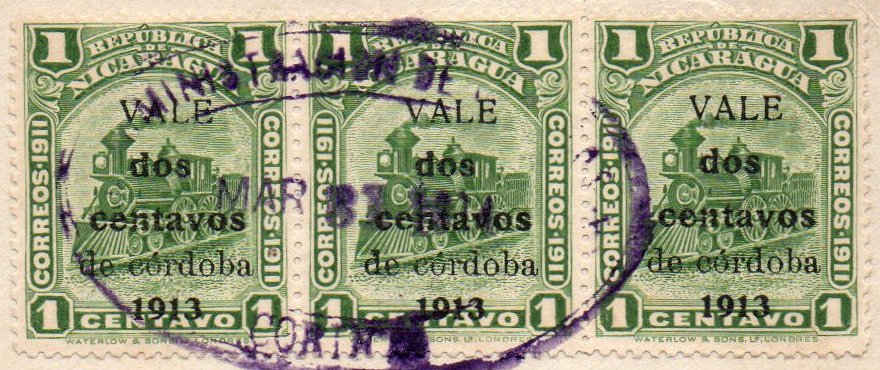 The last-issued gold surcharge on the locomotive design, the 2c/1c used in 1914 at Corinto, on the west coast of Nicaragua, demonstrating that the surcharged locomotive stanmps were in use throughout the country, not just in the east.
We do not repeat stamp colours in this section; they are the same as the Silver Currency listing above. The surcharges are all in Black, which, for legibility, is not ideal on some values. All stamps were printed in sheets of 100 (10x10). The different styles of surcharge used in 1913 on the locomotive design are conveniently grouped such that we can simply work through them by face value, viz. in the same order as many catalogues. The stamps are considered in groups as follows:
'medio centavo' surcharge in 5 lines (1 value) : ½c/2c
'un cent' surcharges in 4 lines (5 values) : 1c/3c; 1c/4c; 1c/6c; 1c/20c; 1c/25c
'2c /25c ' surcharge in 5 lines (1 value) : 2c/25c
Other 'centavos' surcharges in 5 lines (4 values) : 5c/35c; 5c/50c; 6c/1P; 10c/2P
'un peso' surcharge in 4 lines (1 value) : 1P/5P
.
One further stamp was surcharged in 1914 :
'dos centavos' surcharge in 5 lines (1 value) : 2c/1c
.
In listing surcharge varieties, our general listing method has been to order them by examining each line of surcharge in turn. With so many small varieties amongst these stamps, we had to assess each one and assign a level of 'collectibility' to it. This leads inevitably to a very subjective choice as to which varieties are 'worthy' of a listing, a choice with which others are, of course, free to disagree.
We have excluded most minor examples of damaged letters and surcharge smudges as well as anomalies that may not be constant. A few varieties, stamps we think worthy of mention but perhaps not a full listing, are listed with check-boxes but neither priced nor numbered.
This brings us to the stamps for which we provide a full listing with mint and used check-boxes and a catalogue number. These are also given an estimated market value in Pounds Sterling for mint hinged condition. Used examples of the varieties will, on average, be cheaper. However, where the stamp is usually scarcer used, the variety may have a similar price in either state.
Whilst mint never hinged may carry a small premium, other considerations, most notable legibility of a variety, should carry far more weight. This is very evidently a key benchmark when, for example, searching for varieties on the stamps with centres printed in black.
Gold currency surcharges, where numbered and priced, have an initial 'G' as prefix to their catalogue number.
.
The 'medio centavo' surcharges:
This stamp is by far the most prolific of these surcharges for varieties, although only two of them normally find their way into mainstream catalogues. Additionally, and applicable only to the ½ centavo, we have information which describes the surcharge as having six settings, based on spacing and alignment of the rows of surcharge, see scans below:
The last-issued gold surcharge on the locomotive design, the 2c/1c used in 1914 at Corinto, on the west coast of Nicaragua, demonstrating that the surcharged locomotive stanmps were in use throughout the country, not just in the east.
We do not repeat stamp colours in this section; they are the same as the Silver Currency listing above. The surcharges are all in Black, which, for legibility, is not ideal on some values. All stamps were printed in sheets of 100 (10x10). The different styles of surcharge used in 1913 on the locomotive design are conveniently grouped such that we can simply work through them by face value, viz. in the same order as many catalogues. The stamps are considered in groups as follows:
'medio centavo' surcharge in 5 lines (1 value) : ½c/2c
'un cent' surcharges in 4 lines (5 values) : 1c/3c; 1c/4c; 1c/6c; 1c/20c; 1c/25c
'2c /25c ' surcharge in 5 lines (1 value) : 2c/25c
Other 'centavos' surcharges in 5 lines (4 values) : 5c/35c; 5c/50c; 6c/1P; 10c/2P
'un peso' surcharge in 4 lines (1 value) : 1P/5P
.
One further stamp was surcharged in 1914 :
'dos centavos' surcharge in 5 lines (1 value) : 2c/1c
.
In listing surcharge varieties, our general listing method has been to order them by examining each line of surcharge in turn. With so many small varieties amongst these stamps, we had to assess each one and assign a level of 'collectibility' to it. This leads inevitably to a very subjective choice as to which varieties are 'worthy' of a listing, a choice with which others are, of course, free to disagree.
We have excluded most minor examples of damaged letters and surcharge smudges as well as anomalies that may not be constant. A few varieties, stamps we think worthy of mention but perhaps not a full listing, are listed with check-boxes but neither priced nor numbered.
This brings us to the stamps for which we provide a full listing with mint and used check-boxes and a catalogue number. These are also given an estimated market value in Pounds Sterling for mint hinged condition. Used examples of the varieties will, on average, be cheaper. However, where the stamp is usually scarcer used, the variety may have a similar price in either state.
Whilst mint never hinged may carry a small premium, other considerations, most notable legibility of a variety, should carry far more weight. This is very evidently a key benchmark when, for example, searching for varieties on the stamps with centres printed in black.
Gold currency surcharges, where numbered and priced, have an initial 'G' as prefix to their catalogue number.
.
The 'medio centavo' surcharges:
This stamp is by far the most prolific of these surcharges for varieties, although only two of them normally find their way into mainstream catalogues. Additionally, and applicable only to the ½ centavo, we have information which describes the surcharge as having six settings, based on spacing and alignment of the rows of surcharge, see scans below:
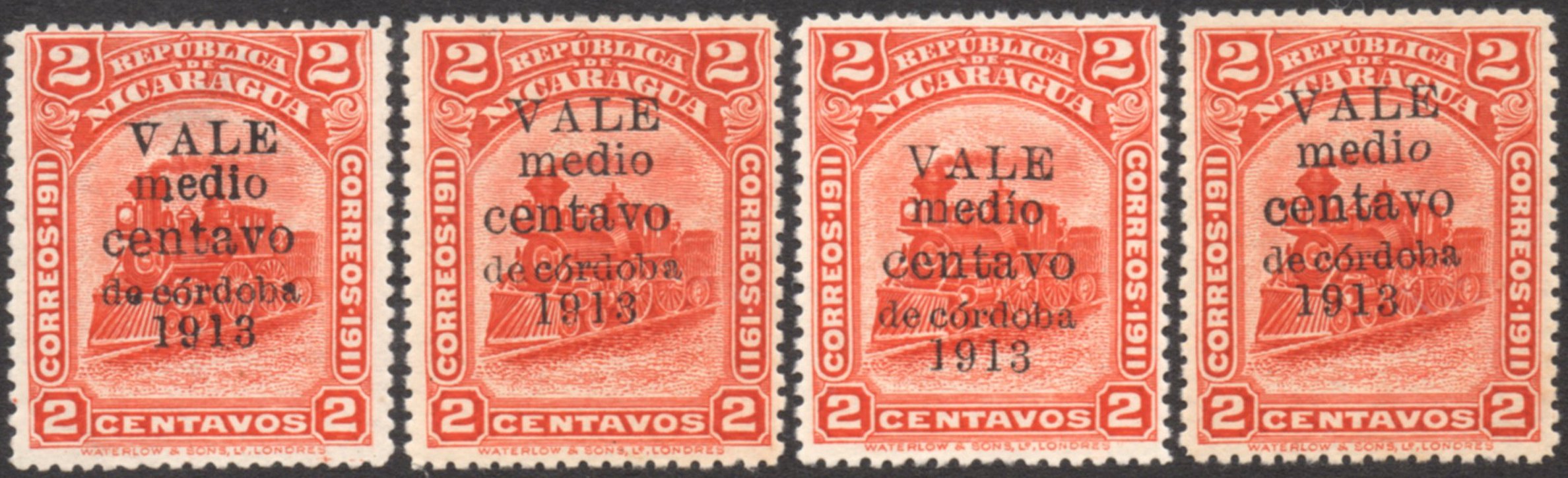
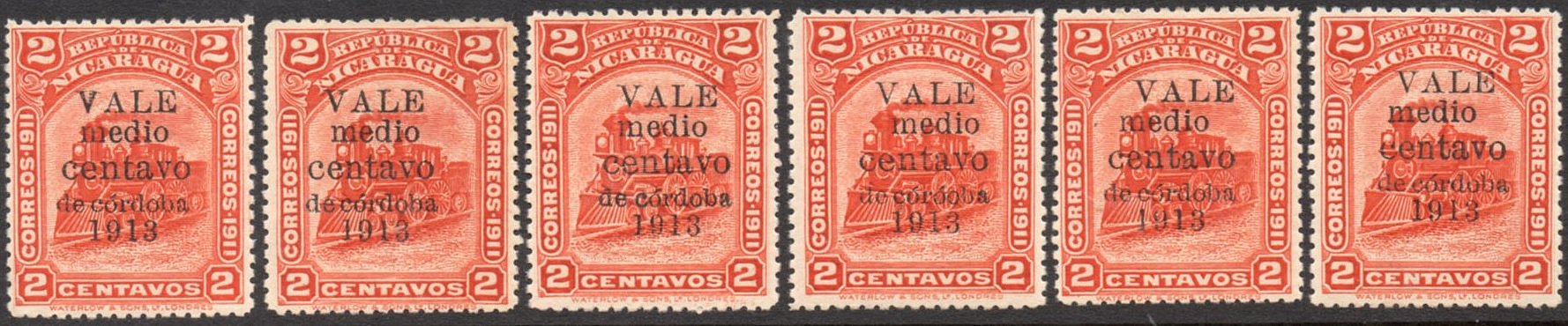 We do not know who posited these six settings, nor exactly how they were described in writing. They seem mostly, perhaps entirely, to relate to the relative alignments of 'VALE to medio' and 'medio to centavo'. The 4th stamp above includes the desirable 'corooba' error and is shown singly later.
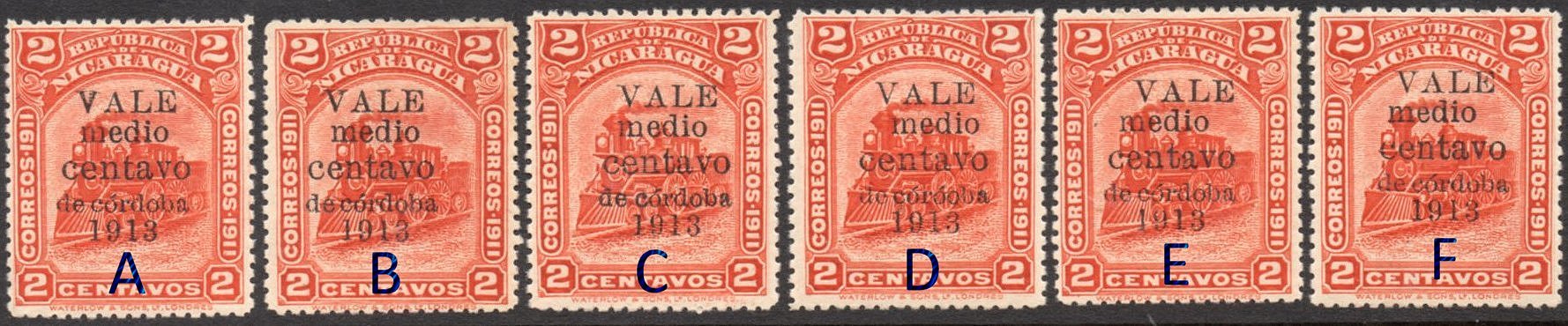 This is a repeat scan with identifying setting letters A-F added, copied from a display sheet in our possession.
Varieties of VALE:
This is a repeat scan with identifying setting letters A-F added, copied from a display sheet in our possession.
Varieties of VALE:
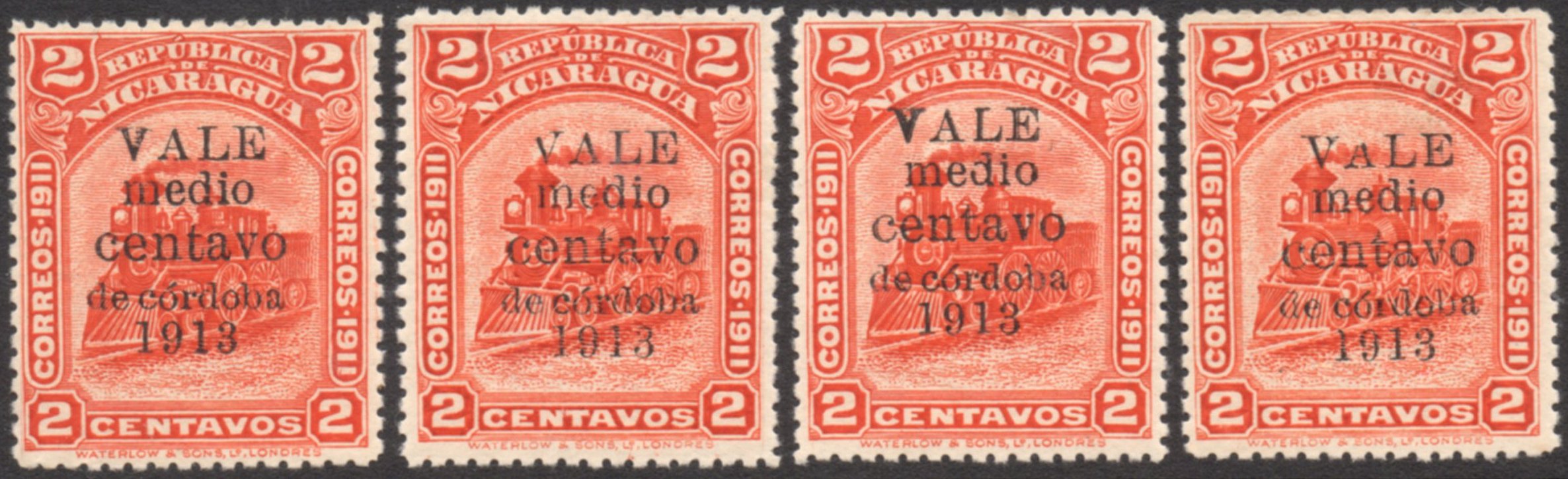 Normal Stamp & Varieties of VALE :
G16 : ½c / 2c : NORMAL STAMP [ . ] [ . ] £4.50 / £5.00
G16a : ½c / 2c : Broken top (left) to 'V' [ . ] [ . ] £7.50 / -
G16b : ½c / 2c : Thick 'V' in 'VALE' [ . ] [ . ] £10.00 / -
G16c : ½c / 2c : Broken 'A' in 'VALE' [ . ] [ . ] £8.50 / -
.
Varieties of medio:
Normal Stamp & Varieties of VALE :
G16 : ½c / 2c : NORMAL STAMP [ . ] [ . ] £4.50 / £5.00
G16a : ½c / 2c : Broken top (left) to 'V' [ . ] [ . ] £7.50 / -
G16b : ½c / 2c : Thick 'V' in 'VALE' [ . ] [ . ] £10.00 / -
G16c : ½c / 2c : Broken 'A' in 'VALE' [ . ] [ . ] £8.50 / -
.
Varieties of medio:
 Varieties of medio :
G16d : ½c / 2c : Thick 'i' in medio [ . ] [ . ] £5.00 / -
G16e : ½c / 2c : Antique 'e' in medio [ . ] [ . ] £6.50 / -
G16g : ½c / 2c : Acute accent on 'i' in medio [ . ] [ . ] £15.00 / -
G16h : ½c / 2c : Italic 'o' in medio [ . ] [ . ] £14.00 / -
Varieties of medio :
G16d : ½c / 2c : Thick 'i' in medio [ . ] [ . ] £5.00 / -
G16e : ½c / 2c : Antique 'e' in medio [ . ] [ . ] £6.50 / -
G16g : ½c / 2c : Acute accent on 'i' in medio [ . ] [ . ] £15.00 / -
G16h : ½c / 2c : Italic 'o' in medio [ . ] [ . ] £14.00 / -
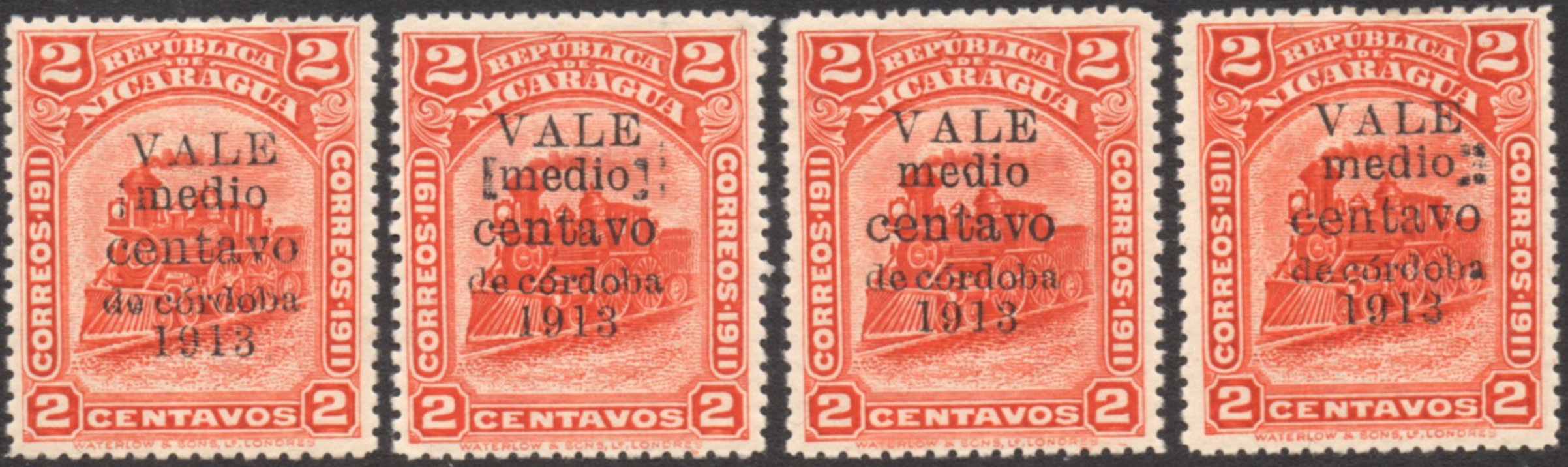 Minor or non-constant varieties of medio :
½c / 2c : Vertical bar before medio [ . ] [ . ]
½c / 2c : Brackets around medio [ . ] [ . ]
½c / 2c : Damaged 'd' in medio (probably constant) [ . ] [ . ]
½c / 2c : Two colons after medio [ . ] [ . ]
.
Varieties of centavo:
Minor or non-constant varieties of medio :
½c / 2c : Vertical bar before medio [ . ] [ . ]
½c / 2c : Brackets around medio [ . ] [ . ]
½c / 2c : Damaged 'd' in medio (probably constant) [ . ] [ . ]
½c / 2c : Two colons after medio [ . ] [ . ]
.
Varieties of centavo:
 Varieties of centavo :
G16i : ½c / 2c : Thick 't' in centavo [ . ] [ . ] £6.00 / -
G16j : ½c / 2c : Small 'v' in centavo [ . ] [ . ] £8.50 / -
Varieties of centavo :
G16i : ½c / 2c : Thick 't' in centavo [ . ] [ . ] £6.00 / -
G16j : ½c / 2c : Small 'v' in centavo [ . ] [ . ] £8.50 / -
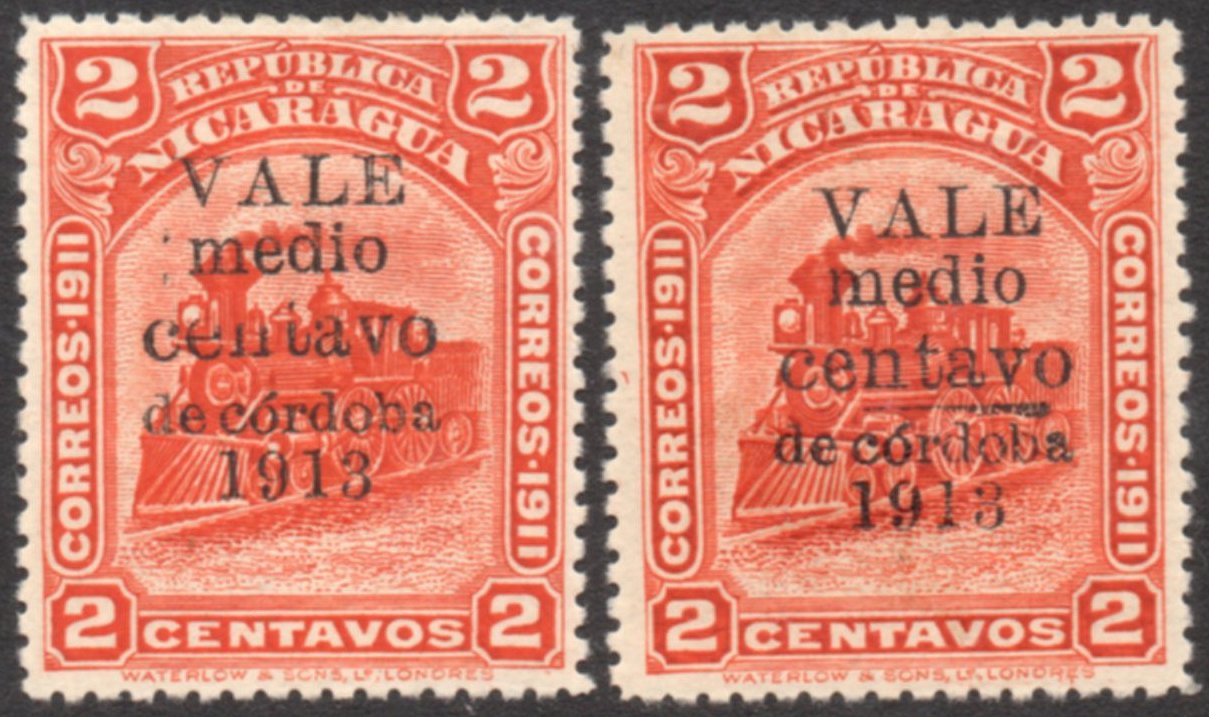 Non-Constant(?) Varieties of centavo :
½c / 2c : No bar to 't' & no top to 'n' in centavo [ . ] [ . ]
½c / 2c : Long line under ntavo [ . ] [ . ]
.
Varieties of 'de':
Non-Constant(?) Varieties of centavo :
½c / 2c : No bar to 't' & no top to 'n' in centavo [ . ] [ . ]
½c / 2c : Long line under ntavo [ . ] [ . ]
.
Varieties of 'de':


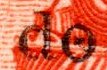
 First detail scan: The 'e' of 'de' is frequently ink-filled and resembling an 'o', However, there is at least one stamp per sheet where it is clearly an 'o', typically with a dot in the middle. Filled in letters 'd' and 'e' are shown under non-constant varieties.
Second detail scan (from the 3rd stamp above) : Smaller, italic 'd' in 'de'
Varieties of de :
G16k : ½c / 2c : 'do' for 'de' [ . ] [ . ] £22.00 / -
G16m : ½c / 2c : 'd' and 'e' widely-spaced [ . ] [ . ] £9.50 / -
G16p : ½c / 2c : Small Italic 'd' in 'de' [ . ] [ . ] £17.50 / -
First detail scan: The 'e' of 'de' is frequently ink-filled and resembling an 'o', However, there is at least one stamp per sheet where it is clearly an 'o', typically with a dot in the middle. Filled in letters 'd' and 'e' are shown under non-constant varieties.
Second detail scan (from the 3rd stamp above) : Smaller, italic 'd' in 'de'
Varieties of de :
G16k : ½c / 2c : 'do' for 'de' [ . ] [ . ] £22.00 / -
G16m : ½c / 2c : 'd' and 'e' widely-spaced [ . ] [ . ] £9.50 / -
G16p : ½c / 2c : Small Italic 'd' in 'de' [ . ] [ . ] £17.50 / -
 Varieties, mostly non-constant probably, of 'de' :
½c / 2c : Solid 'd', solid 'e' in 'de' [ . ] [ . ]
½c / 2c : Solid foot to 'e' [ . ] [ . ]
½c / 2c : Solid 'e' in 'de' [ . ] [ . ]
½c / 2c : Colon after 'de' [ . ] [ . ]
.
Varieties of córdoba:
Varieties, mostly non-constant probably, of 'de' :
½c / 2c : Solid 'd', solid 'e' in 'de' [ . ] [ . ]
½c / 2c : Solid foot to 'e' [ . ] [ . ]
½c / 2c : Solid 'e' in 'de' [ . ] [ . ]
½c / 2c : Colon after 'de' [ . ] [ . ]
.
Varieties of córdoba:

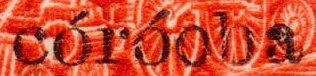 Varieties of córdoba :
G16q : ½c / 2c : Error córóoba [ . ] [ . ] £36.00 / -
G16r : ½c / 2c : Error 'córdova' for 'córdoba' [ . ] [ . ] £ 40.00 / -
We have not seen this but it is listed by Maxwell and Michel.
G16t : ½c / 2c : 'có' and 'rdoba' spaced [ . ] [ . ] £8.00 / -
Varieties of córdoba :
G16q : ½c / 2c : Error córóoba [ . ] [ . ] £36.00 / -
G16r : ½c / 2c : Error 'córdova' for 'córdoba' [ . ] [ . ] £ 40.00 / -
We have not seen this but it is listed by Maxwell and Michel.
G16t : ½c / 2c : 'có' and 'rdoba' spaced [ . ] [ . ] £8.00 / -
 Minor or non-constant varieties of córdoba :
½c / 2c : 'a' of córdoba wide-spaced [ . ] [ . ]
½c / 2c : Line above 'oba' [ . ] [ . ]
.
G16v :
Varieties of 1913:
Minor or non-constant varieties of córdoba :
½c / 2c : 'a' of córdoba wide-spaced [ . ] [ . ]
½c / 2c : Line above 'oba' [ . ] [ . ]
.
G16v :
Varieties of 1913:
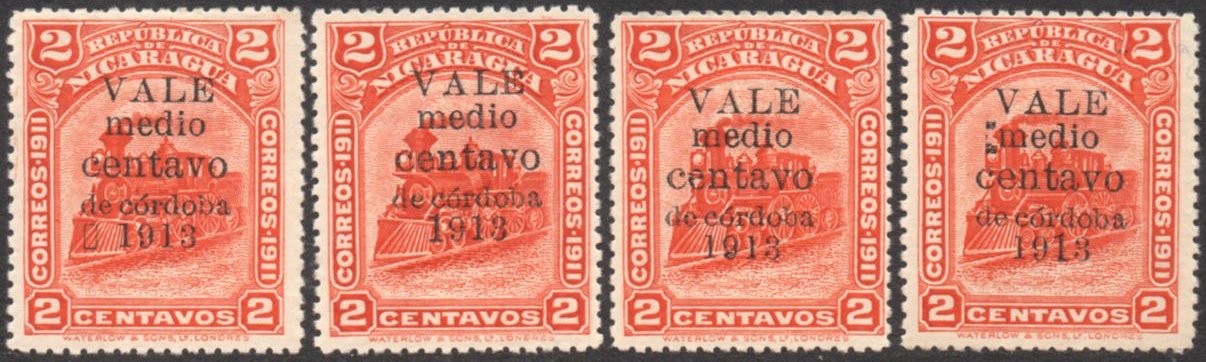 Varieties of 1913:
G16v : ½c / 2c : Spacing box before 1913 [ . ] [ . ] £22.50 / -
G16w : ½c / 2c : Large first '1' in '1913' [ . ] [ . ] £14.00 / -
G16x : ½c / 2c : Curled, nearly closed, tail to '9' in '1913' [ . ] [ . ] £7.00 / -
G16y : ½c / 2c : Large second '1' in '1913' [ . ] [ . ] £14.00 / -
Varieties of 1913:
G16v : ½c / 2c : Spacing box before 1913 [ . ] [ . ] £22.50 / -
G16w : ½c / 2c : Large first '1' in '1913' [ . ] [ . ] £14.00 / -
G16x : ½c / 2c : Curled, nearly closed, tail to '9' in '1913' [ . ] [ . ] £7.00 / -
G16y : ½c / 2c : Large second '1' in '1913' [ . ] [ . ] £14.00 / -
Numbering :
Minor or non-constant varieties have not been assigned a catalogue number in this article.
The sub-numbers used for varieties on some of the surcharged stamps in this article have some structure, rather than random sub-lettering. The five 'un cent' surcharges, which follow now, are the most obviously visible example of this, since all five stamps exhibit only the same three varieties.
There is also structure to our sub-lettering of many of the varieties in the 5c/35c, 5c/50c, 6c/1P and 10c/2P group of four stamps, as will be described immediately above that group lower down.
As a general rule, we avoid sub-letters 'l', 'o', 's' and 'z' which can be mistaken for numbers. We also leave some alphabetic gaps in the lettering to permit of additions to the catalogue later, hopefully without re-numbering of any stamps.
.
The 'un cent' surcharges:
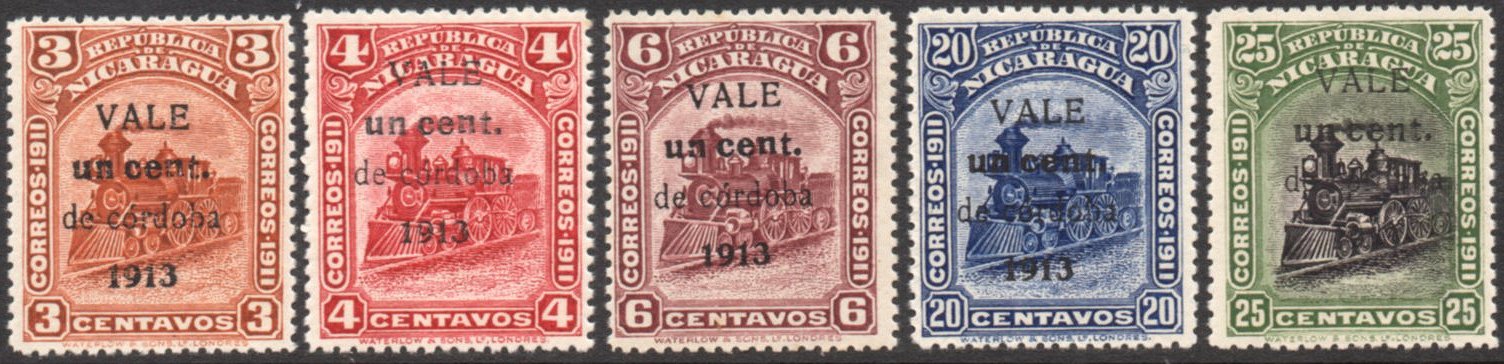 Rather more straightforward than the medio centavo, there are three varieties found on these stamps although we have not yet found any of them on the 1c/25c, where the black surcharge on a black centre hampers identification of errors in many cases.
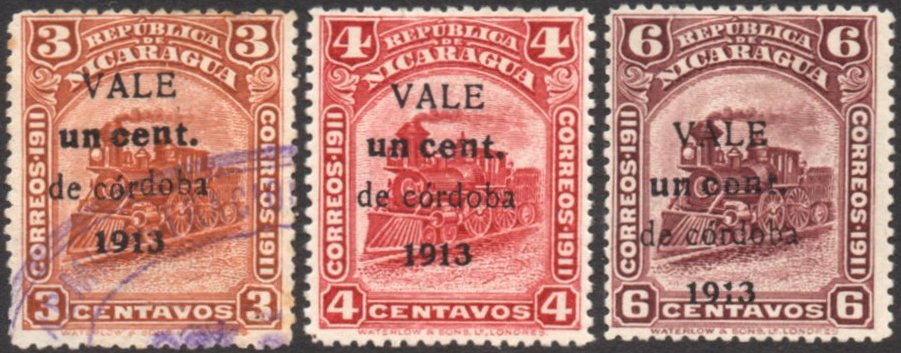
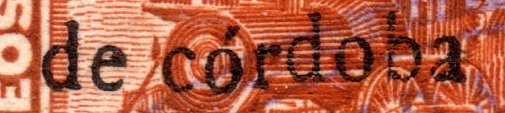
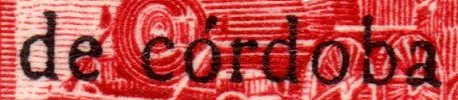
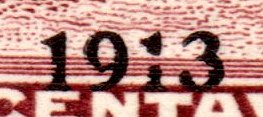 Varieties : Raised 'doba' . . . . . . . . . second 'o' in córdoba italic . . . . broken second 1' in '1913'.
A general feature of the stamps in this set is that, with the exception of the medio centavo, the low values are usually much scarcer mint. By contrast, quite large blocks of some of the higher values can be found on the market.
G17 : 1c / 3c [ . ] [ . ] £6.00 / £3.00
G17a : - ditto - Raised 'doba' variety [ . ] [ . ] £18.00
G17b : - ditto - Italic second 'o' in 'córdoba [ . ] [ . ] £11.00
G17c : - ditto - Broken second '1' in '1913' [ . ] [ . ] £13.00
G18 : 1c / 4c [ . ] [ . ] £6.00 / £1.50
G18a : - ditto - Raised 'doba' variety [ . ] [ . ] £18.00
G18b : - ditto - Italic second 'o' in 'córdoba [ . ] [ . ] £11.00
G18c : - ditto - Broken second '1' in '1913' [ . ] [ . ] £13.00
G19 : 1c / 6c [ . ] [ . ] £6.00 / £1.00
G19a : - ditto - Raised 'doba' variety [ . ] [ . ] £16.00
G19b : - ditto - Italic second 'o' in 'córdoba [ . ] [ . ] £10.00
G19c : - ditto - Broken second '1' in '1913' [ . ] [ . ] £11.50
G20 : 1c / 20c [ . ] [ . ] £7.50 / £3.00
G20a : - ditto - Raised 'doba' variety [ . ] [ . ] £20.00
G20b : - ditto - Italic second 'o' in 'córdoba [ . ] [ . ] £13.00
G20c : - ditto - Broken second '1' in '1913' [ . ] [ . ] £14.00
G21 : 1c / 25c [ . ] [ . ] £7.50 / £3.00
G21a : - ditto - Raised 'doba' variety [ . ] [ . ] £26.00
G21b : - ditto - Italic second 'o' in 'córdoba [ . ] [ . ] £17.50
G21c : - ditto - Broken second '1' in '1913' [ . ] [ . ] £19.00
2c / 25c surcharge :
Varieties : Raised 'doba' . . . . . . . . . second 'o' in córdoba italic . . . . broken second 1' in '1913'.
A general feature of the stamps in this set is that, with the exception of the medio centavo, the low values are usually much scarcer mint. By contrast, quite large blocks of some of the higher values can be found on the market.
G17 : 1c / 3c [ . ] [ . ] £6.00 / £3.00
G17a : - ditto - Raised 'doba' variety [ . ] [ . ] £18.00
G17b : - ditto - Italic second 'o' in 'córdoba [ . ] [ . ] £11.00
G17c : - ditto - Broken second '1' in '1913' [ . ] [ . ] £13.00
G18 : 1c / 4c [ . ] [ . ] £6.00 / £1.50
G18a : - ditto - Raised 'doba' variety [ . ] [ . ] £18.00
G18b : - ditto - Italic second 'o' in 'córdoba [ . ] [ . ] £11.00
G18c : - ditto - Broken second '1' in '1913' [ . ] [ . ] £13.00
G19 : 1c / 6c [ . ] [ . ] £6.00 / £1.00
G19a : - ditto - Raised 'doba' variety [ . ] [ . ] £16.00
G19b : - ditto - Italic second 'o' in 'córdoba [ . ] [ . ] £10.00
G19c : - ditto - Broken second '1' in '1913' [ . ] [ . ] £11.50
G20 : 1c / 20c [ . ] [ . ] £7.50 / £3.00
G20a : - ditto - Raised 'doba' variety [ . ] [ . ] £20.00
G20b : - ditto - Italic second 'o' in 'córdoba [ . ] [ . ] £13.00
G20c : - ditto - Broken second '1' in '1913' [ . ] [ . ] £14.00
G21 : 1c / 25c [ . ] [ . ] £7.50 / £3.00
G21a : - ditto - Raised 'doba' variety [ . ] [ . ] £26.00
G21b : - ditto - Italic second 'o' in 'córdoba [ . ] [ . ] £17.50
G21c : - ditto - Broken second '1' in '1913' [ . ] [ . ] £19.00
2c / 25c surcharge :
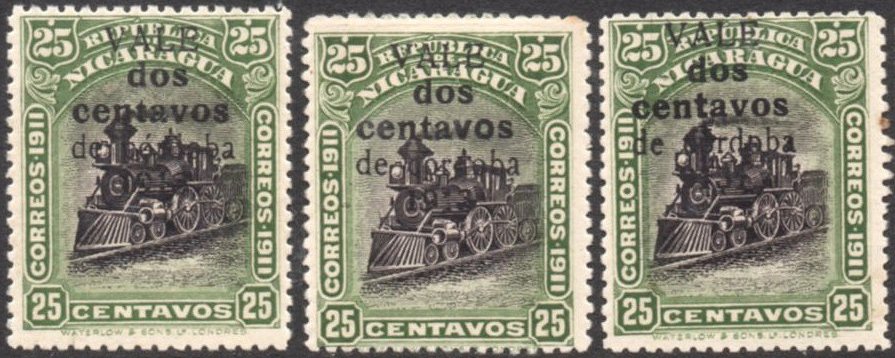
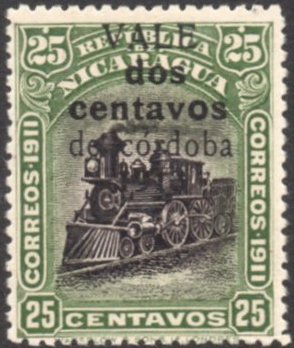

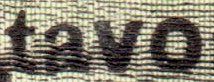
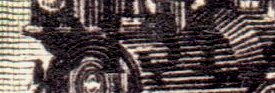
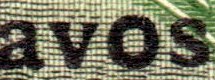
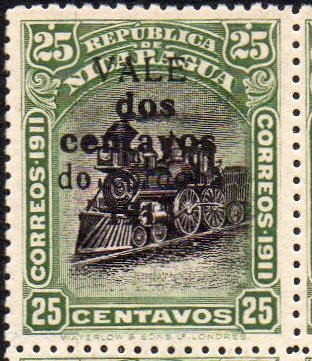
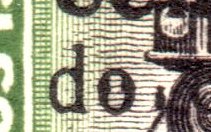
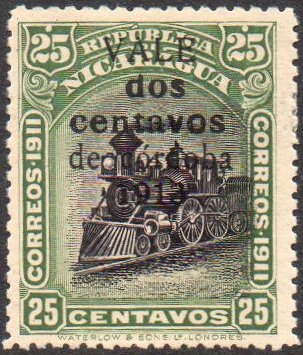
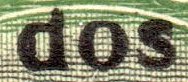 The 'do' variety above is a fully-listed variety below; the broken 'd' in 'dos' is listed only as a minor variety.
G22 : 2c / 25c [ . ] [ . ] £8.00 / £5.50
G22a : - ditto - Thick 'v' without serifs & round 'o' in 'centavos' varieties [ . ] [ . ] £12.00
G22b : - ditto - Error : surcharged '9131' for '1913'; also thick 't' (posn. 100) [ . ] [ . ] £30.00
G22c : - ditto - Normal 'v' and round 'o' in 'centavos' [ . ] [ . ] £10.50
G22d : - ditto - 'do' for 'de' variety (posn.89)[ . ] [ . ] £ 28.00
We suspect the variety 'thick v' will also exist with a normal 'o' in 'centavos' but have not seen or listed it.
We do not know whether the 'thick t' exists on stamps other than the one with the '9131' variety.
Minor, probably constant, variety:
2c / 25c : Truncated top to 'd' in 'dos' [ . ] [ . ]
.
The 'do' variety above is a fully-listed variety below; the broken 'd' in 'dos' is listed only as a minor variety.
G22 : 2c / 25c [ . ] [ . ] £8.00 / £5.50
G22a : - ditto - Thick 'v' without serifs & round 'o' in 'centavos' varieties [ . ] [ . ] £12.00
G22b : - ditto - Error : surcharged '9131' for '1913'; also thick 't' (posn. 100) [ . ] [ . ] £30.00
G22c : - ditto - Normal 'v' and round 'o' in 'centavos' [ . ] [ . ] £10.50
G22d : - ditto - 'do' for 'de' variety (posn.89)[ . ] [ . ] £ 28.00
We suspect the variety 'thick v' will also exist with a normal 'o' in 'centavos' but have not seen or listed it.
We do not know whether the 'thick t' exists on stamps other than the one with the '9131' variety.
Minor, probably constant, variety:
2c / 25c : Truncated top to 'd' in 'dos' [ . ] [ . ]
.
We now move onto the next group of surcharges, comprising FOUR values, 5c/35c, 5c/50c, 6c/1P and 10c/2P.
They appear to have very similar or identical settings except, of course, for the letters or figures for the new value. A feature of these stamps is the struggle of the printer either to extract the correct font or, more often we think, to source 100 examples of the same letter or number. This results in many font varieties, to which can be added some constant damaged letters or numbers.
This is most evident for the letter 'v' in 'centavos'. Each stamp in the first vertical column of ten stamps has a slightly smaller and clearly thinner 'v' (with serifs). Each of the 30 stamps in the 2nd, 3rd & 4th vertical coloumn has a thick 'v' without serifs, except for position 2 in which the printer placed his 11th (and last) small, thin 'v'. The thick 'v' in Position 22 is badly damaged.
This first column has an additional variety in that the accent on the first 'o' of 'córdoba' on all 10 stamps is more horizontal and the 'o' itself and the accent are slightly thicker than on the other stamps. The stamp in position 2 is unique in having the thin 'v' but a regular 'ó' in 'córdoba'. We have not listed stamps in Position 2 in our check-lists but they have a unique combination of variants within the sheet.
We have approached the 1P/5P surcharges alone in this article because it lacks the word 'centavos' and, further, we have had few examples available for study. However, many setting features seem to be the same. Notably, we have seen the same thicker 'ó' with the more horizontal accent on a 1P/5P stamp, suggesting this variety affects 10% of that stamp's printing as well (viz. the first vertical column). With no thin 'v' in 'centavos' font error on this value, we have instead listed these stamps as an accent variety on the 1P/5P.
Other font varieties also appear to be constant, such as a large 'a' in 'centavos' in Position 21, a broken 'L' in 'VALE' in Position 44 and a broken second figure '1' in '1913' (Position 27).
We made the assumption that the 'cinco' varieties on the 5c/35c and 5c/50c would be the same, even though we were not able to confirm them all. Where we have proof of existence for each variety for each value, we have provided an image.
As with other surcharged stamps, there are also smaller constant flaws such as damaged letters but we have not chosen to list any of them for these four values.
5c / 35c surcharge :
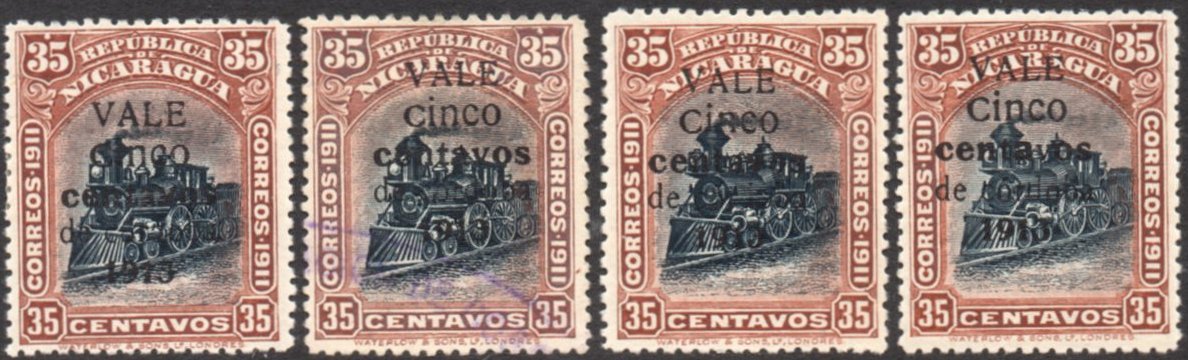
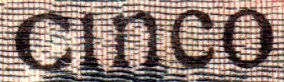
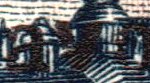
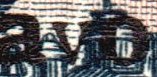 The normal 'v' and the small 'v' variety both have serifs and are hard to identify with confidence when the overprint is poorly applied. By contrast the thick 'v' variety has no serifs. This note is also applicable to the 5c/50c below.
G23 : 5c / 35c [ . ] [ . ] £4.50 / £2.50
G23j : - ditto - Small first 'c' in 'cinco' variety [ . ] [ . ] £11.00
G23m : - ditto - Thick non-serif 'v' in 'centavos' variety [ . ] [ . ] £7.00
G23n : - ditto - Small 'v' in 'centavos' variety [ . ] [ . ] £7.00
G23p : - ditto - Broken 'L' in 'VALE' (posn.44) (no scan) [ . ] [ . ] £17.50
In the variety small first 'c' in 'cinco', the first 'c' is still larger than the second 'c', but significantly smaller than the standard size for the first 'c' in this surcharge.
Further varieties (no scans):
G23q : 5c / 35c : Large 'a' in 'centavos' (posn. 21) [ . ] [ . ] £20.00
G23t : - ditto - Broken second '1' in 1913 (posn.27) [ . ] [ . ] £14.00
G23v : - ditto - Broken / shortened 'v' in 'centavo' (posn.22) [ . ] [ . ] £14.00
G23w : - ditto - Inverted 's' in 'centavos' (posn.70) [ . ] [ . ] £22.00
G23x : - ditto - Thick 't' in 'centavos' (posn.37) [ . ] [ . ] £16.00
Clear examples of the five additional varieties above are shown on the 6c/1P (and some other values) lower down.
.
5c / 50c surcharge :
The normal 'v' and the small 'v' variety both have serifs and are hard to identify with confidence when the overprint is poorly applied. By contrast the thick 'v' variety has no serifs. This note is also applicable to the 5c/50c below.
G23 : 5c / 35c [ . ] [ . ] £4.50 / £2.50
G23j : - ditto - Small first 'c' in 'cinco' variety [ . ] [ . ] £11.00
G23m : - ditto - Thick non-serif 'v' in 'centavos' variety [ . ] [ . ] £7.00
G23n : - ditto - Small 'v' in 'centavos' variety [ . ] [ . ] £7.00
G23p : - ditto - Broken 'L' in 'VALE' (posn.44) (no scan) [ . ] [ . ] £17.50
In the variety small first 'c' in 'cinco', the first 'c' is still larger than the second 'c', but significantly smaller than the standard size for the first 'c' in this surcharge.
Further varieties (no scans):
G23q : 5c / 35c : Large 'a' in 'centavos' (posn. 21) [ . ] [ . ] £20.00
G23t : - ditto - Broken second '1' in 1913 (posn.27) [ . ] [ . ] £14.00
G23v : - ditto - Broken / shortened 'v' in 'centavo' (posn.22) [ . ] [ . ] £14.00
G23w : - ditto - Inverted 's' in 'centavos' (posn.70) [ . ] [ . ] £22.00
G23x : - ditto - Thick 't' in 'centavos' (posn.37) [ . ] [ . ] £16.00
Clear examples of the five additional varieties above are shown on the 6c/1P (and some other values) lower down.
.
5c / 50c surcharge :
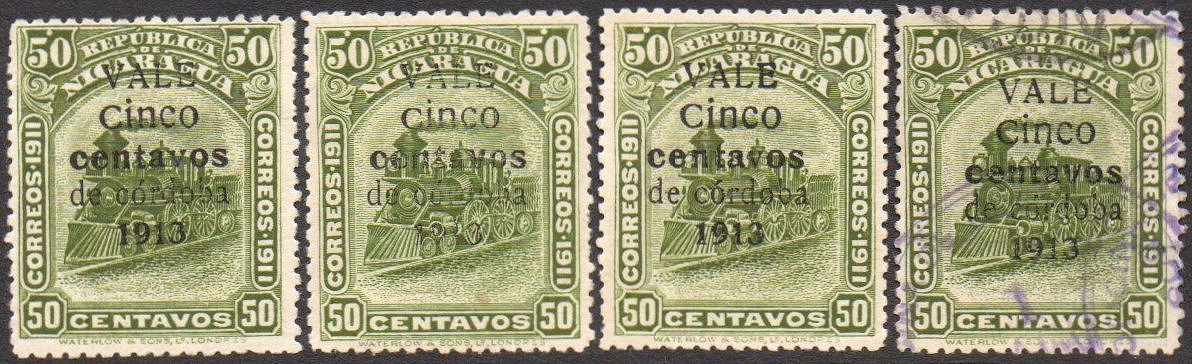

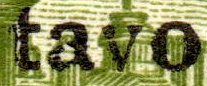
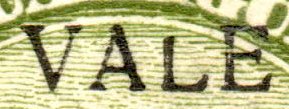 We have access to the top half of a sheet of this stamp and have also been assisted by information in Louis Repeta's article in Nicaro, April 2001.
G24 : 5c / 50c [ . ] [ . ] £4.00 / £2.50
G24j : - ditto - Small first 'c' in 'cinco' variety (posns. 72,82,96 ***) [ . ] [ . ] £10.00
G24m : - ditto - Thick non-serif 'v' in 'centavos' variety [ . ] [ . ] £6.50
G24n : - ditto - Small 'v' in 'centavos' variety [ . ] [ . ] £6.50
G24p : - ditto - Broken 'L' in 'VALE' (posn.44) [ . ] [ . ] £16.00
*** : Positions as reported by Louis Repeta. Note that the stamps in positions 72 and 82 have the thick 'v' variety as well, whilst that in position 96 has a normal 'v'. Our scan of the smaller capital 'C' in 'Cinco' above is one of those with the thick 'v' and we have not provided a scan of a thick 'v' with normal 'Cinco', of which there would be 17 examples in the sheet.
We have not provided a detail illustration of the thick 'v' in 'centavo' variety which occurs in several positions. It is visible above on the stamp with the small first 'C' in 'Cinco' but may also be found with at least one other style of 'v'. We have not listed all possible combinations of varieties.
Further 5c/50c surcharge varieties:
We have access to the top half of a sheet of this stamp and have also been assisted by information in Louis Repeta's article in Nicaro, April 2001.
G24 : 5c / 50c [ . ] [ . ] £4.00 / £2.50
G24j : - ditto - Small first 'c' in 'cinco' variety (posns. 72,82,96 ***) [ . ] [ . ] £10.00
G24m : - ditto - Thick non-serif 'v' in 'centavos' variety [ . ] [ . ] £6.50
G24n : - ditto - Small 'v' in 'centavos' variety [ . ] [ . ] £6.50
G24p : - ditto - Broken 'L' in 'VALE' (posn.44) [ . ] [ . ] £16.00
*** : Positions as reported by Louis Repeta. Note that the stamps in positions 72 and 82 have the thick 'v' variety as well, whilst that in position 96 has a normal 'v'. Our scan of the smaller capital 'C' in 'Cinco' above is one of those with the thick 'v' and we have not provided a scan of a thick 'v' with normal 'Cinco', of which there would be 17 examples in the sheet.
We have not provided a detail illustration of the thick 'v' in 'centavo' variety which occurs in several positions. It is visible above on the stamp with the small first 'C' in 'Cinco' but may also be found with at least one other style of 'v'. We have not listed all possible combinations of varieties.
Further 5c/50c surcharge varieties:
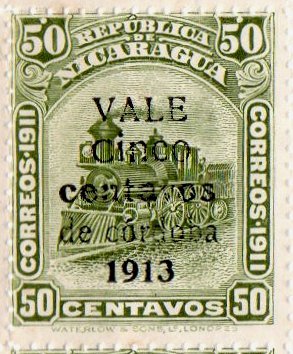
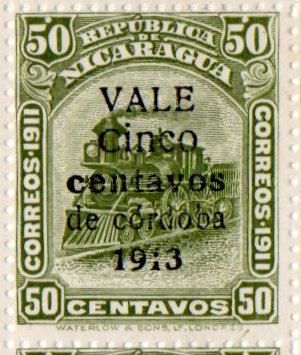
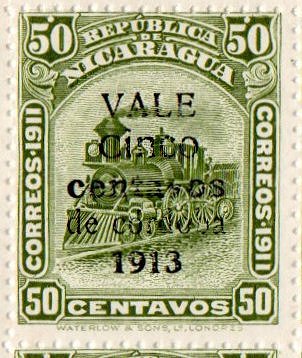
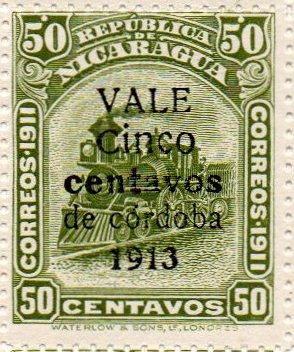
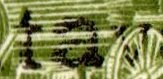
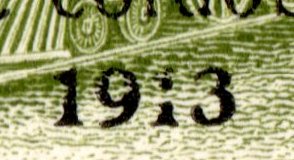
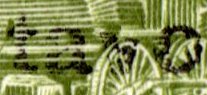
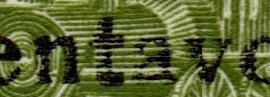 G24q : 5c / 50c Large 'a' in 'centavos' (posn. 21) [ . ] [ . ] £18.00
G24t : - ditto - Broken second '1' in 1913 (posn.27) [ . ] [ . ] £14.00
G24v : - ditto - Broken / shortened 'v' in 'centavo' (posn.22) [ . ] [ . ] £12.50
G24w : - ditto - Inverted 's' in 'centavos' (posn.70) (no scan) [ . ] [ . ] £20.00
G24x : - ditto - Thick 't' in 'centavos' (posn.37) [ . ] [ . ] £15.00
Note: For scans of varieties that are not illustrated above, please see images for other face values in this section lower down.
.
5c / 50c surcharge : SURCHARGE DOUBLE :
G24q : 5c / 50c Large 'a' in 'centavos' (posn. 21) [ . ] [ . ] £18.00
G24t : - ditto - Broken second '1' in 1913 (posn.27) [ . ] [ . ] £14.00
G24v : - ditto - Broken / shortened 'v' in 'centavo' (posn.22) [ . ] [ . ] £12.50
G24w : - ditto - Inverted 's' in 'centavos' (posn.70) (no scan) [ . ] [ . ] £20.00
G24x : - ditto - Thick 't' in 'centavos' (posn.37) [ . ] [ . ] £15.00
Note: For scans of varieties that are not illustrated above, please see images for other face values in this section lower down.
.
5c / 50c surcharge : SURCHARGE DOUBLE :
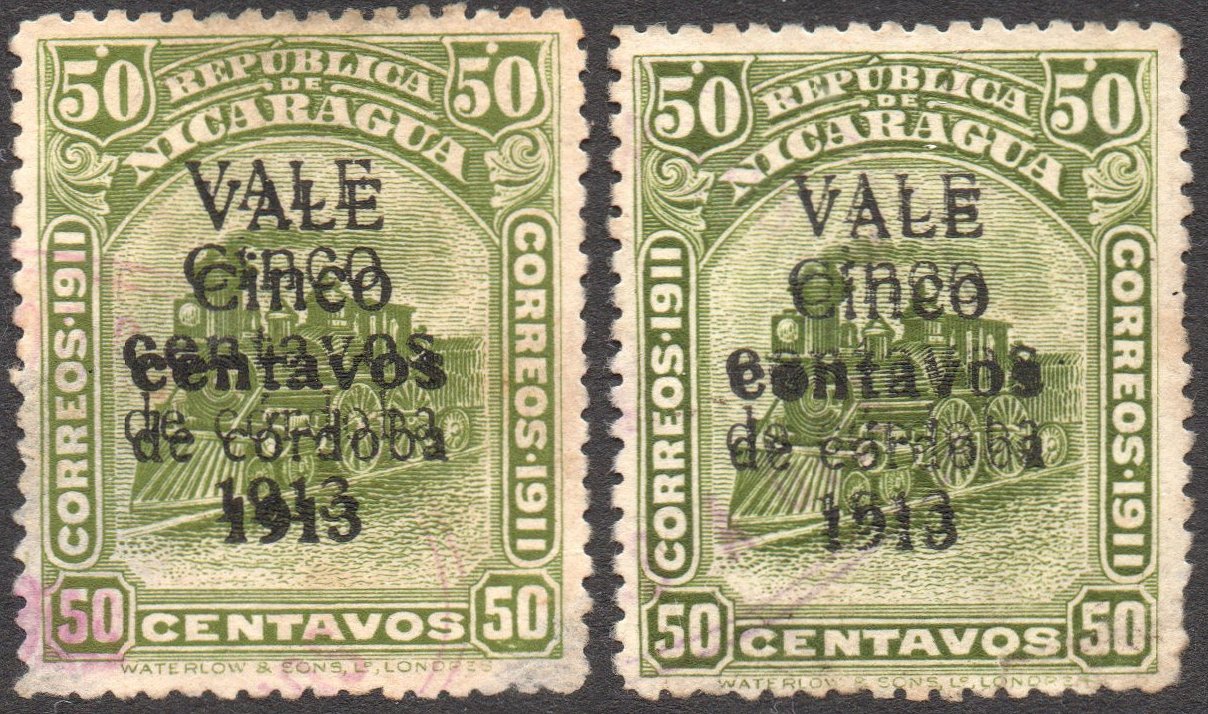 This stamp with surcharge double is, to our knowledge, unrecorded in mint condition and our prices are for used. In theory, all the varieties shown above could exist but 'surcharge double' stamps are rare. It is quite possible that only one sheet existed and, given the fact that mint copies are unrecorded, they may all have been sold originally to the general public, rather than collectors. Many will not have survived and it seems unwise to list stamps which could exist in theory without any actual proof. Our listing is therefore limited to the two shown above for the present.
G24 D : 5c / 50c : Surcharge DOUBLE : Normal 'v' [ . ] [ . ] £ - / £160.00
G24 Dm : 5c / 50c : Surcharge DOUBLE : Thick non-serif 'v' [ . ] [ . ] £ - / £175.00
.
6c / 1 Peso surcharge :
For this value we have two large blocks, one showing positions 1-50, the other positions 51-85 & 91-95. The setting again seems to be either very similar or identical but, for this value, with the added bonus of good contrast between the stamp and the surcharge. The figures of value 'seis' are in a different thicker font in the last two columns at least up to row 9.
This stamp with surcharge double is, to our knowledge, unrecorded in mint condition and our prices are for used. In theory, all the varieties shown above could exist but 'surcharge double' stamps are rare. It is quite possible that only one sheet existed and, given the fact that mint copies are unrecorded, they may all have been sold originally to the general public, rather than collectors. Many will not have survived and it seems unwise to list stamps which could exist in theory without any actual proof. Our listing is therefore limited to the two shown above for the present.
G24 D : 5c / 50c : Surcharge DOUBLE : Normal 'v' [ . ] [ . ] £ - / £160.00
G24 Dm : 5c / 50c : Surcharge DOUBLE : Thick non-serif 'v' [ . ] [ . ] £ - / £175.00
.
6c / 1 Peso surcharge :
For this value we have two large blocks, one showing positions 1-50, the other positions 51-85 & 91-95. The setting again seems to be either very similar or identical but, for this value, with the added bonus of good contrast between the stamp and the surcharge. The figures of value 'seis' are in a different thicker font in the last two columns at least up to row 9.
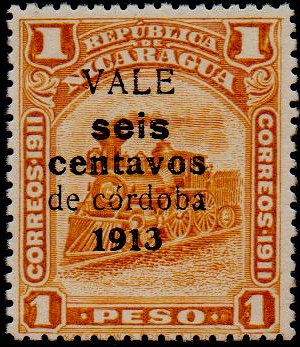
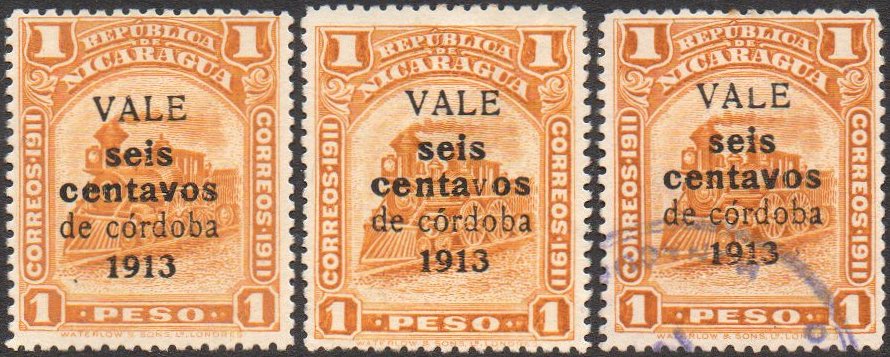 Above : Normal stamp (medium 'v' in centavos) . . . thick 'v' . . . thin 'v' . . . broken 'L' in 'VALE'
 . . .
. . .
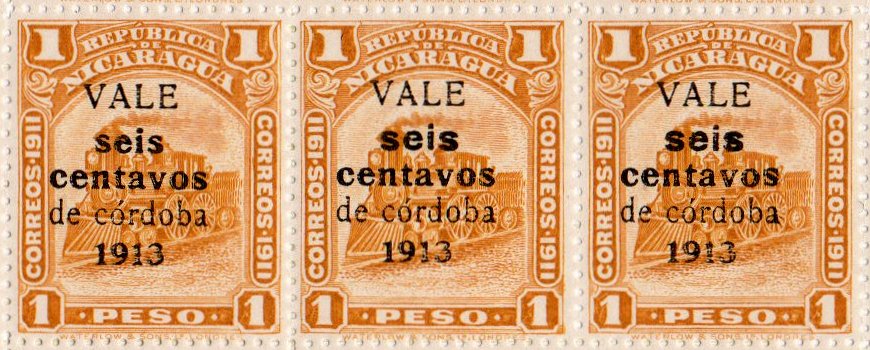
 The strip/3 is of stamps 68-70 (with repeat enlarged scan) and shows the normal 'seis' in position 68 and the larger, thicker 'seis' in the last two positions. The 's' of 'centavos' in position 70 is inverted, a difficult variety to identify and something we have only been able to illustrate here and on the next stamp, the 10c/2P.
G25 : 6c / 1 Peso [ . ] [ . ] £2.00 / £3.00
G25j : - ditto - Larger 'seis' [ . ] [ . ] £4.50
G25m : - ditto - Thick non-serif 'v' in 'centavos' variety [ . ] [ . ] £3.00
G25n : - ditto - Small 'v' in 'centavos' variety [ . ] [ . ] £4.00
G25p : - ditto - Broken 'L' in 'VALE' (posn.44) (no scan) [ . ] [ . ] £14.00
Further varieties :
The strip/3 is of stamps 68-70 (with repeat enlarged scan) and shows the normal 'seis' in position 68 and the larger, thicker 'seis' in the last two positions. The 's' of 'centavos' in position 70 is inverted, a difficult variety to identify and something we have only been able to illustrate here and on the next stamp, the 10c/2P.
G25 : 6c / 1 Peso [ . ] [ . ] £2.00 / £3.00
G25j : - ditto - Larger 'seis' [ . ] [ . ] £4.50
G25m : - ditto - Thick non-serif 'v' in 'centavos' variety [ . ] [ . ] £3.00
G25n : - ditto - Small 'v' in 'centavos' variety [ . ] [ . ] £4.00
G25p : - ditto - Broken 'L' in 'VALE' (posn.44) (no scan) [ . ] [ . ] £14.00
Further varieties :
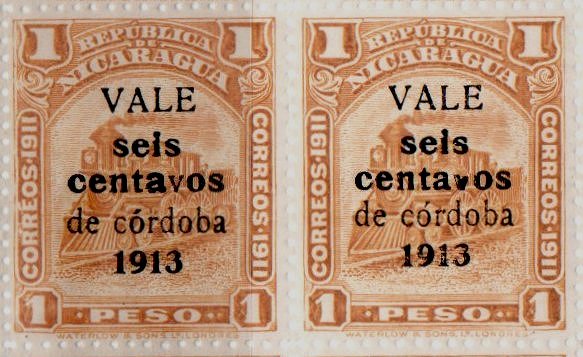
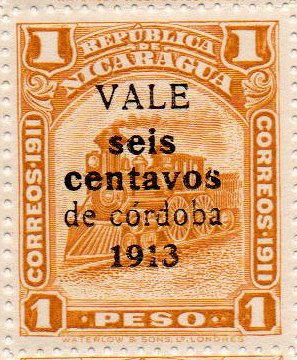 Above : Left : Large 'a' . . . Centre : Broken thick 'v' . . . Right: Broken 2nd '1' in '1913'
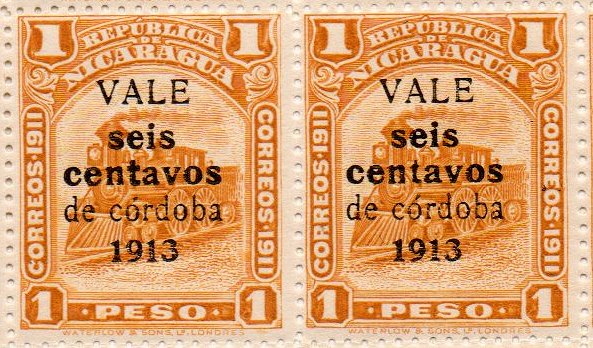
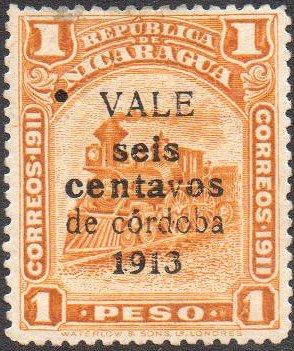
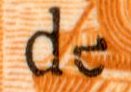
 G25q : 6c / 1 Peso : Large 'a' in 'centavos' (posn. 21) [ . ] [ . ] £14.00
G25t : - ditto - Broken second '1' in 1913 (posn.27) [ . ] [ . ] £8.50
G25v : - ditto - Broken / shortened 'v' in 'centavo' (posn.22) [ . ] [ . ] £10.00
G25w : - ditto - Inverted 's' in 'centavos' (posn.70) [ . ] [ . ] £16.50
G25x : - ditto - Thick 't' in 'centavos' (posn.37) [ . ] [ . ] £10.00
There are two scans above of stamps not given a catalogue listing by us:
One shows a non-constant curiosity, a black spot that appears to a part of the surcharging process. The stamp is mint despite appearances.
The scan of just the word 'de' shows a constant variety which is found on all four stamps in this group, in Position 77. It is not an under-inking flaw; the 'e' is defective. We pondered it and eventually decided not to list it but it is certainly a constant variety and collectible.
.
10c / 2 Pesos surcharge :
G25q : 6c / 1 Peso : Large 'a' in 'centavos' (posn. 21) [ . ] [ . ] £14.00
G25t : - ditto - Broken second '1' in 1913 (posn.27) [ . ] [ . ] £8.50
G25v : - ditto - Broken / shortened 'v' in 'centavo' (posn.22) [ . ] [ . ] £10.00
G25w : - ditto - Inverted 's' in 'centavos' (posn.70) [ . ] [ . ] £16.50
G25x : - ditto - Thick 't' in 'centavos' (posn.37) [ . ] [ . ] £10.00
There are two scans above of stamps not given a catalogue listing by us:
One shows a non-constant curiosity, a black spot that appears to a part of the surcharging process. The stamp is mint despite appearances.
The scan of just the word 'de' shows a constant variety which is found on all four stamps in this group, in Position 77. It is not an under-inking flaw; the 'e' is defective. We pondered it and eventually decided not to list it but it is certainly a constant variety and collectible.
.
10c / 2 Pesos surcharge :
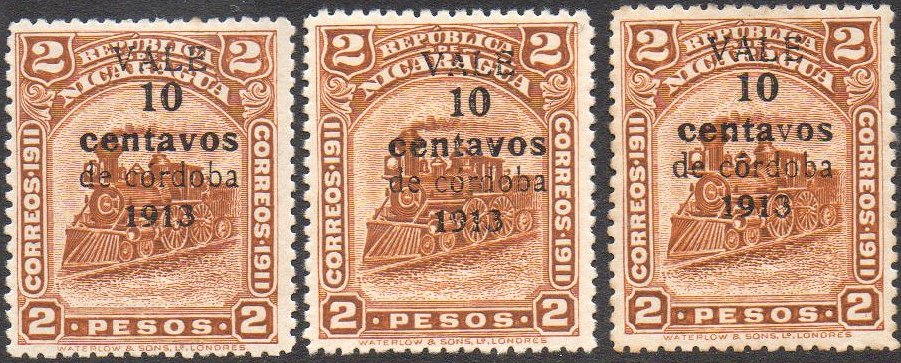
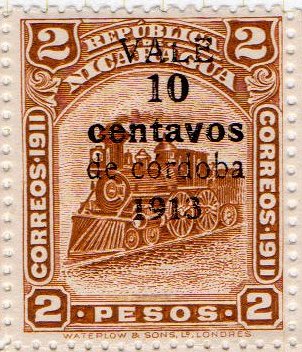 Detail scan of broken 'L' in 'VALE' (right-hand stamp above) . . .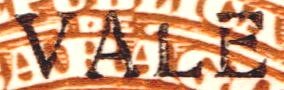
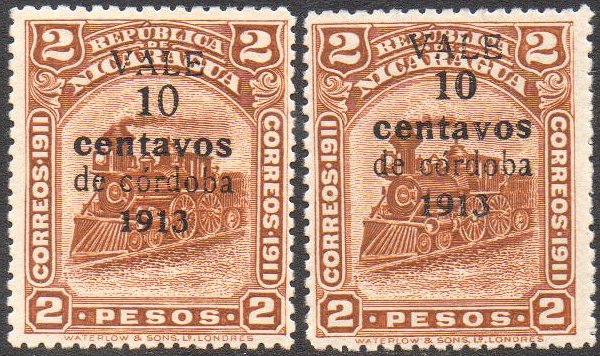
 The large '0' in '10' occurs only once per sheet/100 in Position 59 (Row 6,9).
G26 : 10c / 2 Pesos [ . ] [ . ] £5.00 / £4.00
G26j : - ditto - Larger '0' in '10' [ . ] [ . ] £38.00
G26m : - ditto - Thick non-serif 'v' in 'centavos' variety [ . ] [ . ] £6.00
G26n : - ditto - Small 'v' in 'centavos' variety [ . ] [ . ] £6.50
G26p : - ditto - Broken 'L' in 'VALE' (posn.44) (no scan) [ . ] [ . ] £20.00
Further varieties :
The large '0' in '10' occurs only once per sheet/100 in Position 59 (Row 6,9).
G26 : 10c / 2 Pesos [ . ] [ . ] £5.00 / £4.00
G26j : - ditto - Larger '0' in '10' [ . ] [ . ] £38.00
G26m : - ditto - Thick non-serif 'v' in 'centavos' variety [ . ] [ . ] £6.00
G26n : - ditto - Small 'v' in 'centavos' variety [ . ] [ . ] £6.50
G26p : - ditto - Broken 'L' in 'VALE' (posn.44) (no scan) [ . ] [ . ] £20.00
Further varieties :
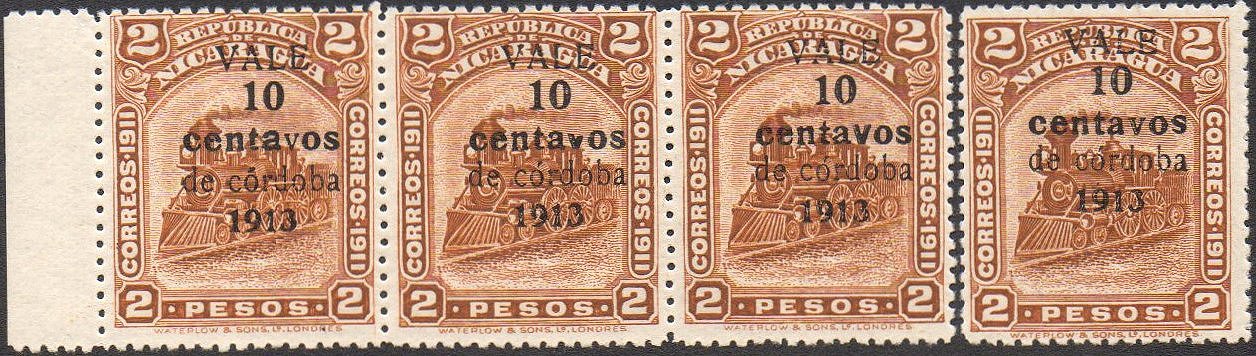

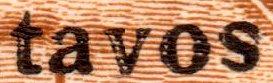 Above : The large, bulbous 'a' .... the broken 'v' .... and .... inverted 's' varieties.
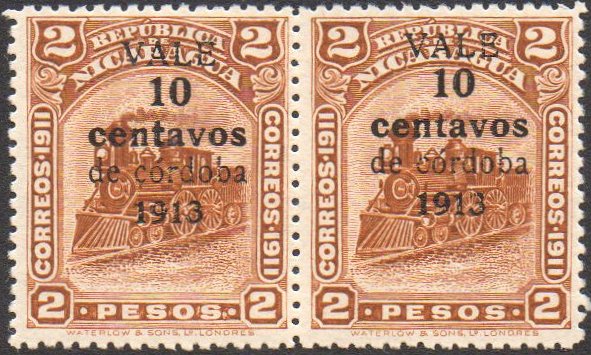
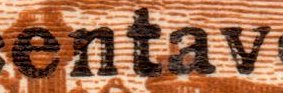 Above : The thick 't' variety, with normal 't' alongside (right).
G26q : 10c / 2 Pesos : Large 'a' in 'centavos' (posn. 21) [ . ] [ . ] £14.00
G26t : - ditto - Broken second '1' in 1913 (posn.27) (no scan) [ . ] [ . ] £8.50
G26v : - ditto - Broken / shortened 'v' in 'centavo' (posn.22) [ . ] [ . ] £10.00
G26w : - ditto - Inverted 's' in 'centavos' (posn.70) [ . ] [ . ] £16.50
G26x : - ditto - Thick 't' in 'centavos' (posn.37) [ . ] [ . ] £10.00
.
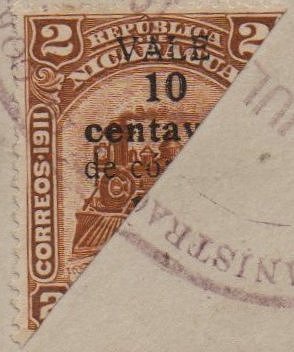
10c/2P stamps bisected in Bluefields to meet a shortage of 5c stamps.
Above : The thick 't' variety, with normal 't' alongside (right).
G26q : 10c / 2 Pesos : Large 'a' in 'centavos' (posn. 21) [ . ] [ . ] £14.00
G26t : - ditto - Broken second '1' in 1913 (posn.27) (no scan) [ . ] [ . ] £8.50
G26v : - ditto - Broken / shortened 'v' in 'centavo' (posn.22) [ . ] [ . ] £10.00
G26w : - ditto - Inverted 's' in 'centavos' (posn.70) [ . ] [ . ] £16.50
G26x : - ditto - Thick 't' in 'centavos' (posn.37) [ . ] [ . ] £10.00
.
10c/2P stamps bisected in Bluefields to meet a shortage of 5c stamps.
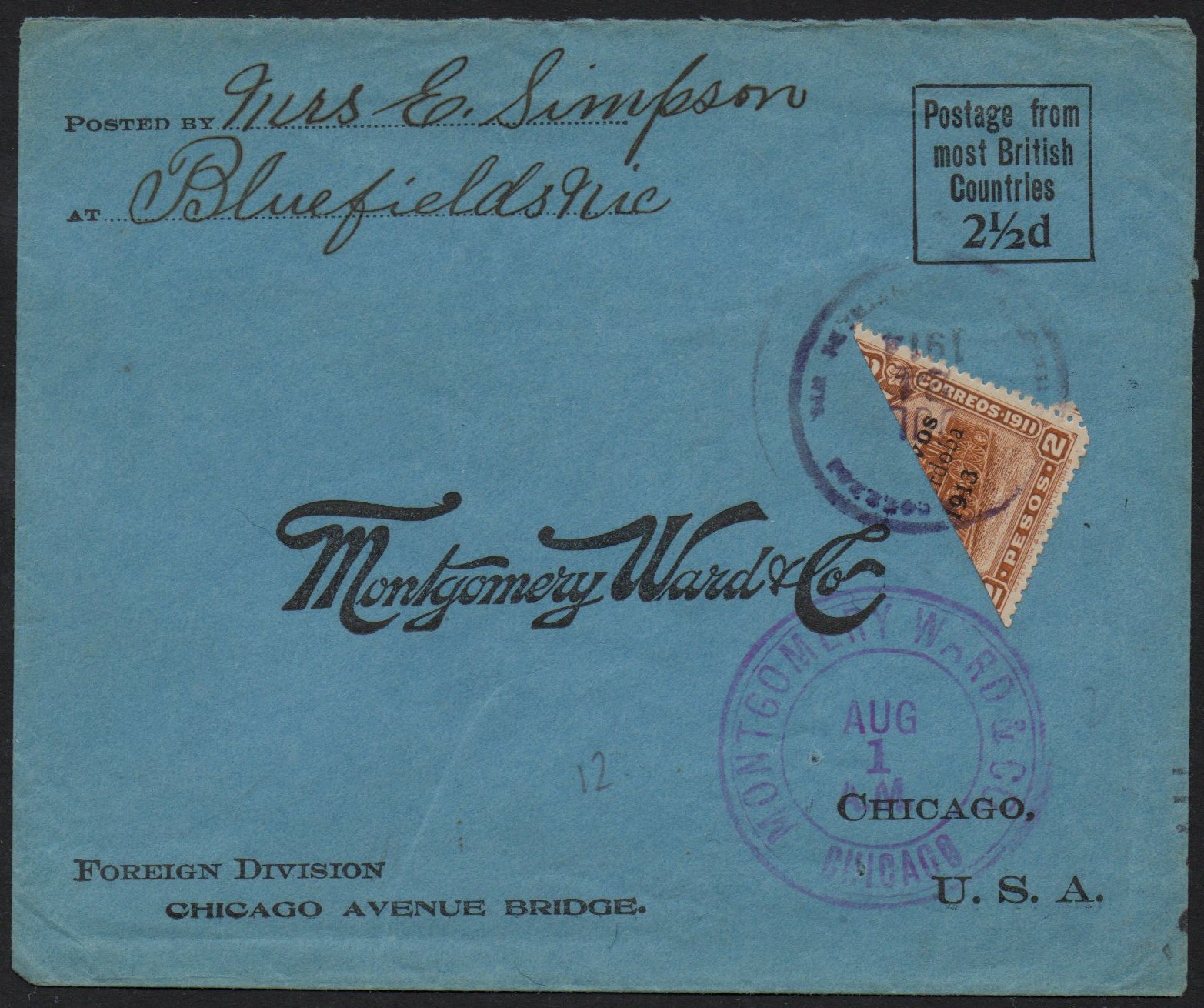
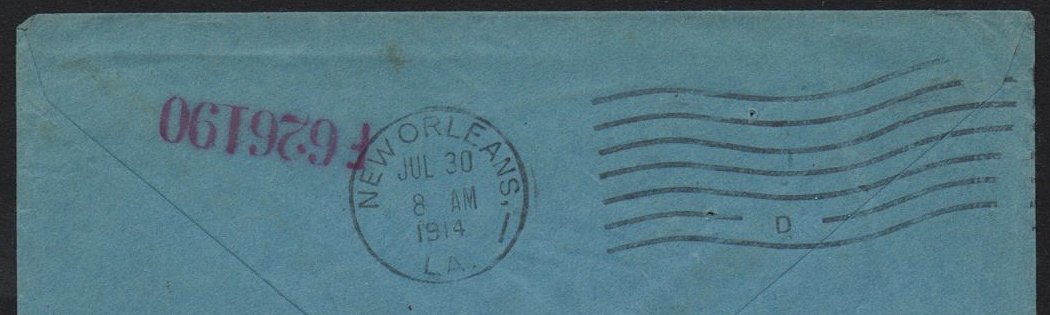
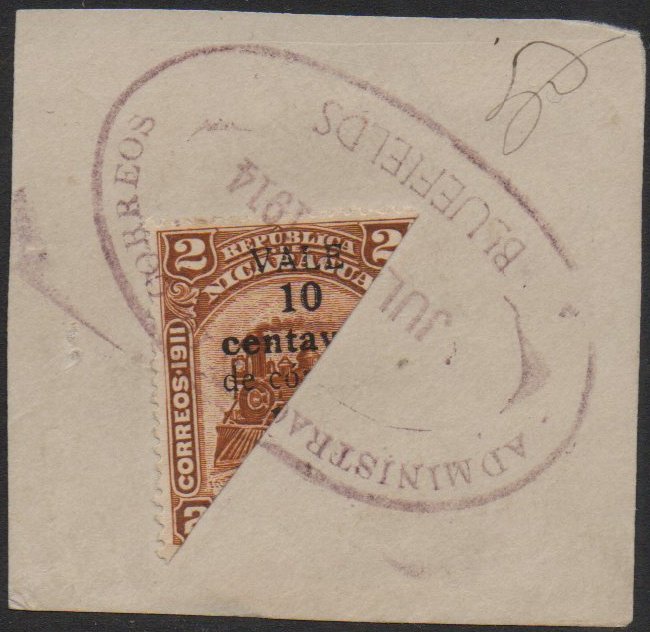 Both the above date from July 1914. They are unlisted in main catalogues, presumably because un-authorised, but several certainly travelled through the mails. Our prices are a broad guide only, especially for the cover, as cover prices are affected by many features.
G26 Bc: 10c/2P bisect (5c) on cover [ . ] £120.00
G26 Bp: 10c/2P bisect (5c) on piece [ . ] £24.00
.
.
1 Peso / 5 Pesos surcharge :
This stamp is quoted as having the same basic setting as the 'un cent' surcharges. We have no reason to disbelieve this but have not found satisfactory evidence that this is the case. We have failed to find an example with raised 'doba', nor one with italic second 'o' in 'córdoba', but these are scarce, probably only occurring once per sheet. We have found the broken second '1' in '1913' but that appears to occur on all values in the set, with the possible exception of the medio centavo surcharge.
The words 'peso' is entirely new on this stamp with its own varieties. There are examples of letters either inverted deliberately due to a shortage of letters at the printers' or perhaps in error. It is very hard to be categorical with varieties of this nature. We have endeavoured to provide extra comparative imagery where helpful below.
Both the above date from July 1914. They are unlisted in main catalogues, presumably because un-authorised, but several certainly travelled through the mails. Our prices are a broad guide only, especially for the cover, as cover prices are affected by many features.
G26 Bc: 10c/2P bisect (5c) on cover [ . ] £120.00
G26 Bp: 10c/2P bisect (5c) on piece [ . ] £24.00
.
.
1 Peso / 5 Pesos surcharge :
This stamp is quoted as having the same basic setting as the 'un cent' surcharges. We have no reason to disbelieve this but have not found satisfactory evidence that this is the case. We have failed to find an example with raised 'doba', nor one with italic second 'o' in 'córdoba', but these are scarce, probably only occurring once per sheet. We have found the broken second '1' in '1913' but that appears to occur on all values in the set, with the possible exception of the medio centavo surcharge.
The words 'peso' is entirely new on this stamp with its own varieties. There are examples of letters either inverted deliberately due to a shortage of letters at the printers' or perhaps in error. It is very hard to be categorical with varieties of this nature. We have endeavoured to provide extra comparative imagery where helpful below.
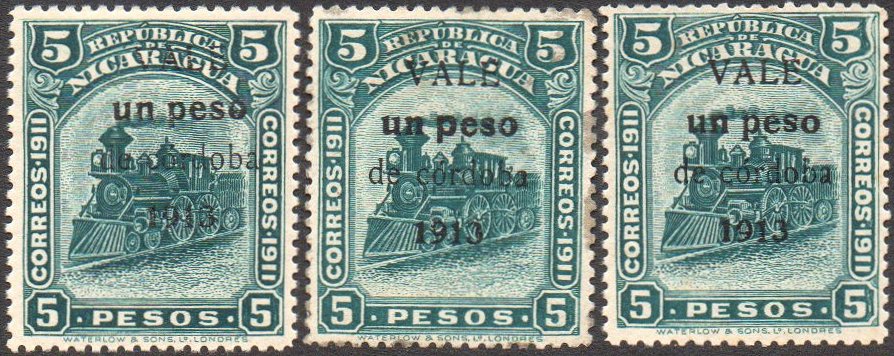
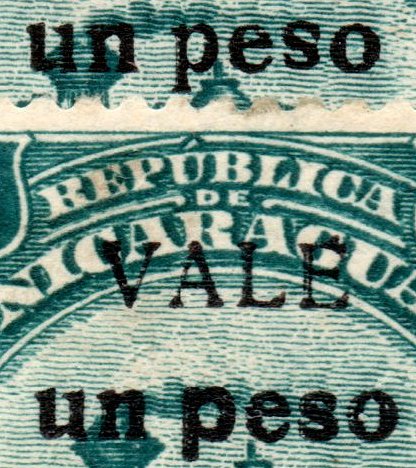
Shown at right above are overlaid stamps, the invertd 's' variety above the 'inverted 'd' for 'p' variety. Below, left to right, we show detail scans for : The normal stamp . . . . the inverted 'd' for 'p' . . . . the inverted 's'.
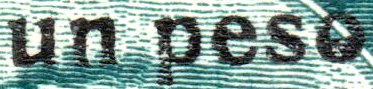
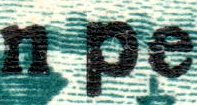
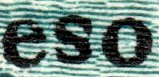
G27 : 1 Peso / 5 Pesos [ . ] [ . ] £4.00 / £8.00
G27a : - ditto - inverted 'd' for 'p' in Peso [ . ] £17.00
G27b : - ditto - inverted 'd' for 'p' in Peso [ . ] £12.00
.
Further varieties (1P / 5P):


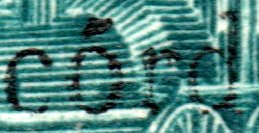
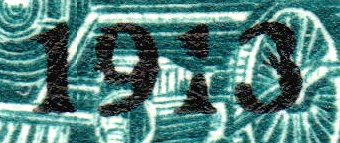 Above: 1st : Apparent inverted 'p' for 'd' in 'de' . . . 2nd : Damaged 'e' in 'de' as seen on the previous group of stamps . . . 3rd : More horizontal, thicker, accent on 'ó' of 'córdoba' . . . 4th : Broken second '1' in '1913'
As mentioned above, this damaged 'e' in 'de' (Position 77) is not a variety that we have chosen to list.
G27e : 1 Peso / 5 Pesos : Inverted 'p' for 'd' in 'de' [ . ] £6.50
G27f : - ditto - Accent on 'ó' of 'córdoba' thicker and more horizontal (1st column in sheet) [ . ] £7.50
G27g : - ditto - Broken second '1' in '1913' [ . ] £12.50
.
Set price for G 16-27 (12 vals) : [ . ] [ . ] £65.00 / £42.00
The 2c/1c below does not form part of this set.
.
.
1914 : 2c / 1c :
We have been unable to source enough material to study this final stamp in depth. It was a later issue, January 1914, despite the date shown in the surcharge. It is typically catalogued as being close to the 'un cent' surcharges in style of surcharge but we cannot confirm this from what we have seen. There will almost certainly be more varieties than we have un-earthed. Mint examples of this stamp are quite scarce.
Above: 1st : Apparent inverted 'p' for 'd' in 'de' . . . 2nd : Damaged 'e' in 'de' as seen on the previous group of stamps . . . 3rd : More horizontal, thicker, accent on 'ó' of 'córdoba' . . . 4th : Broken second '1' in '1913'
As mentioned above, this damaged 'e' in 'de' (Position 77) is not a variety that we have chosen to list.
G27e : 1 Peso / 5 Pesos : Inverted 'p' for 'd' in 'de' [ . ] £6.50
G27f : - ditto - Accent on 'ó' of 'córdoba' thicker and more horizontal (1st column in sheet) [ . ] £7.50
G27g : - ditto - Broken second '1' in '1913' [ . ] £12.50
.
Set price for G 16-27 (12 vals) : [ . ] [ . ] £65.00 / £42.00
The 2c/1c below does not form part of this set.
.
.
1914 : 2c / 1c :
We have been unable to source enough material to study this final stamp in depth. It was a later issue, January 1914, despite the date shown in the surcharge. It is typically catalogued as being close to the 'un cent' surcharges in style of surcharge but we cannot confirm this from what we have seen. There will almost certainly be more varieties than we have un-earthed. Mint examples of this stamp are quite scarce.
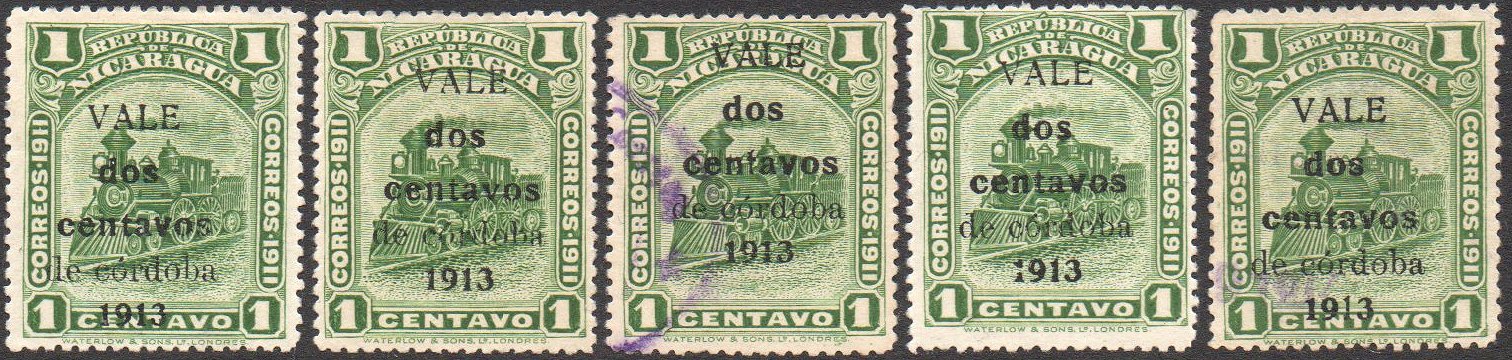
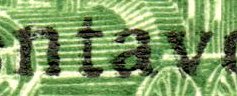
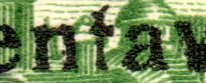
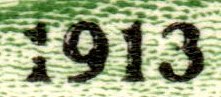
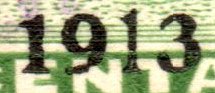 The first stamp in the top row above is the normal stamp. The four detail scans are of stamps 2-5 of the top row in order :
Thin 't' in 'centavos' . . . . Gothic 't' in 'centavos' . . . . Broken first '1' in '1913' . . . . Tall second '1' in 1913.
The first stamp in the top row above is the normal stamp. The four detail scans are of stamps 2-5 of the top row in order :
Thin 't' in 'centavos' . . . . Gothic 't' in 'centavos' . . . . Broken first '1' in '1913' . . . . Tall second '1' in 1913.
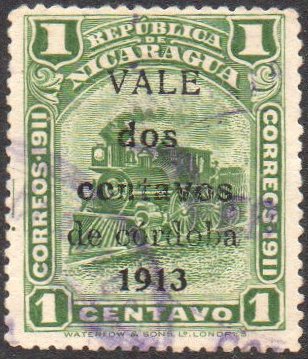
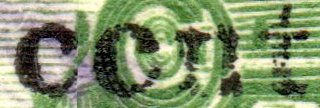 This variety, 'ccntavo' for 'centavo' is listed by Stanley Gibbons. Looking at the shape of the second 'c', this does appear to be a very badly damaged 'e' rather than a true 'c', unless this letter is a 'c' from a different font entirely. However, it clearly reads as 'ccntavos' and we therefore list it.
As, for this final stamp, used are noticeably more common than mint, we have provided both mint and used prices for the varieties.
G28 : 2c / 1c [ . ] [ . ] £18.00 / £5.50
G28a : - ditto - thin 't' in 'centavos' [ . ] £24.00 / £8.50
G28b : - ditto - Gothic 't' in 'centavos' [ . ] £44.00 / £17.00
G28d : - ditto - Broken first '1' in '1913' [ . ] £27.00 / £9.50
G28e : - ditto - Tall second '1' in '1913' [ . ] £35.00 / £11.00
G28f : - ditto - 'ccntavos' for 'centavos' [ . ] £58.00 / £27.00
.
.
POSTAL STATIONERY : Locomotive Design
The locomotive design was used for a number of postal stationery cards and an occasional P.S. envelope in 1912/13. Initial issues without surcharge, all 1912, would have been issued only in Bluefields and Cabo but the 1913 surcharges were used throughout the country.
We show those for which we have images and list them along with other reported issues as well. We have not attempted to price these items. Even mint P.S. items in this design can have very erratic prices and used examples naturally have a range of valuations depending on multiple factors.
For the double cards (message card and reply card), we have provided listings for the double cards and both halves separately, as they can be thus encountered, even mint. Double cards, still intact, with outward half used are scarce; double cards still se-tenant and with both halves genuinely used would be very rare, if they exist at all.
This variety, 'ccntavo' for 'centavo' is listed by Stanley Gibbons. Looking at the shape of the second 'c', this does appear to be a very badly damaged 'e' rather than a true 'c', unless this letter is a 'c' from a different font entirely. However, it clearly reads as 'ccntavos' and we therefore list it.
As, for this final stamp, used are noticeably more common than mint, we have provided both mint and used prices for the varieties.
G28 : 2c / 1c [ . ] [ . ] £18.00 / £5.50
G28a : - ditto - thin 't' in 'centavos' [ . ] £24.00 / £8.50
G28b : - ditto - Gothic 't' in 'centavos' [ . ] £44.00 / £17.00
G28d : - ditto - Broken first '1' in '1913' [ . ] £27.00 / £9.50
G28e : - ditto - Tall second '1' in '1913' [ . ] £35.00 / £11.00
G28f : - ditto - 'ccntavos' for 'centavos' [ . ] £58.00 / £27.00
.
.
POSTAL STATIONERY : Locomotive Design
The locomotive design was used for a number of postal stationery cards and an occasional P.S. envelope in 1912/13. Initial issues without surcharge, all 1912, would have been issued only in Bluefields and Cabo but the 1913 surcharges were used throughout the country.
We show those for which we have images and list them along with other reported issues as well. We have not attempted to price these items. Even mint P.S. items in this design can have very erratic prices and used examples naturally have a range of valuations depending on multiple factors.
For the double cards (message card and reply card), we have provided listings for the double cards and both halves separately, as they can be thus encountered, even mint. Double cards, still intact, with outward half used are scarce; double cards still se-tenant and with both halves genuinely used would be very rare, if they exist at all.
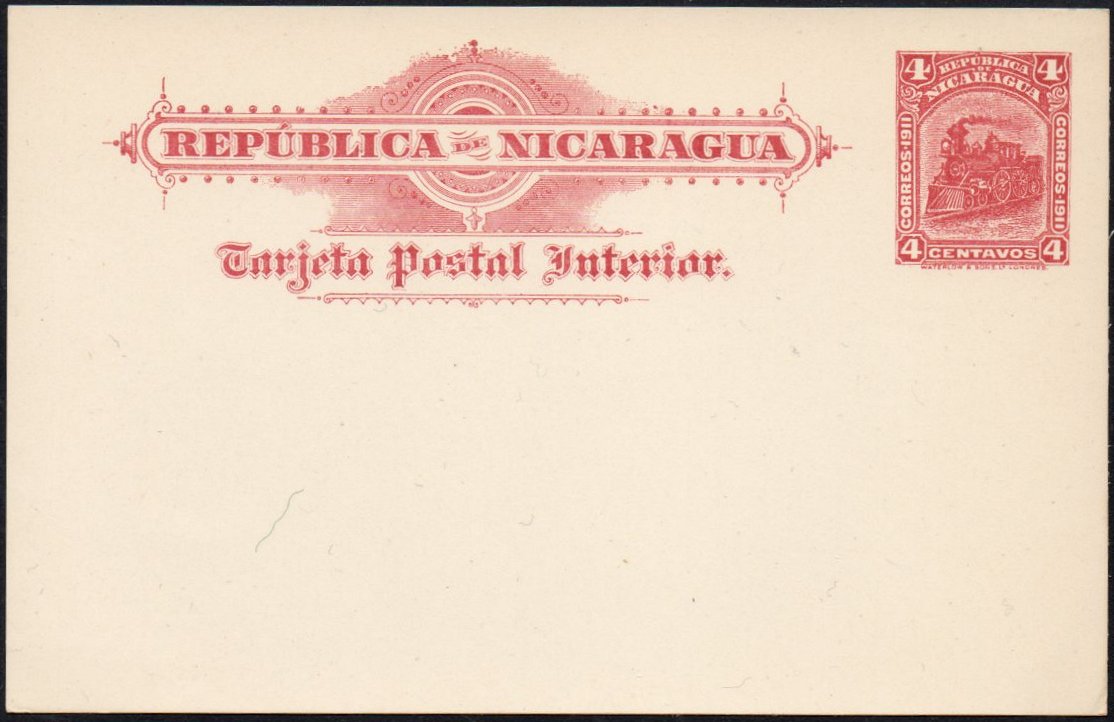
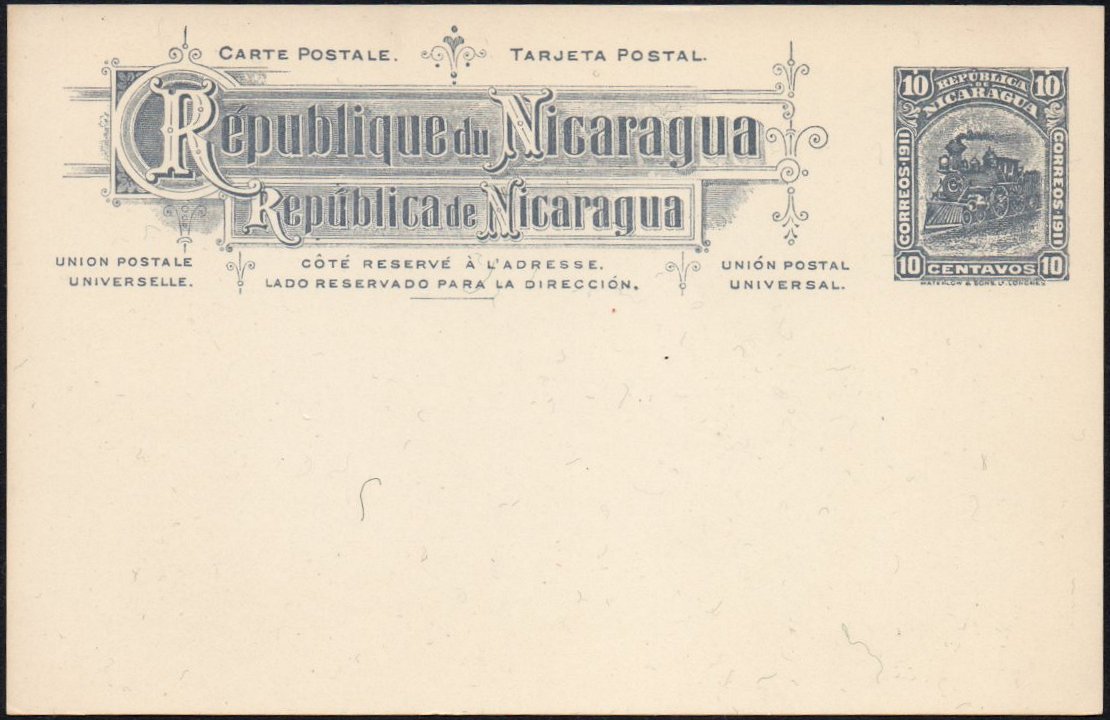 P31 : 1912 : PS Card : 4c Red (single card) [ . ] [ . ]
P32 : 1912 : PS Card : 10c Grey (single card) [ . ] [ . ]
.
P31 : 1912 : PS Card : 4c Red (single card) [ . ] [ . ]
P32 : 1912 : PS Card : 10c Grey (single card) [ . ] [ . ]
.
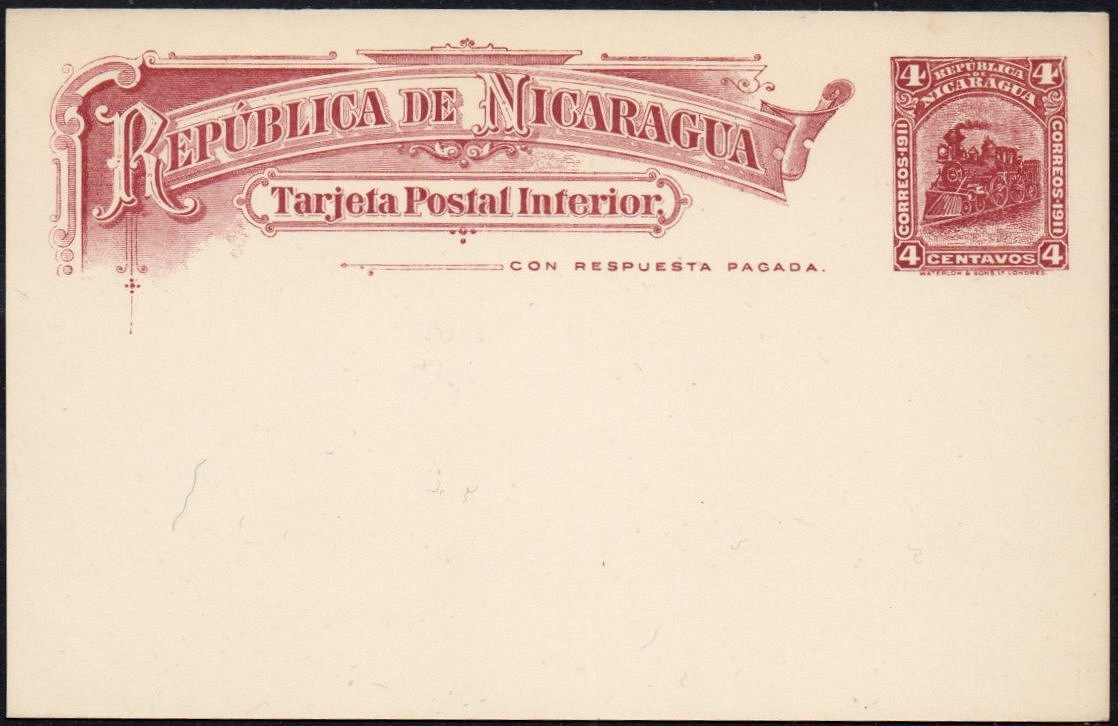
 P33 : 1912 : PS Card : 4c + 4c Red (reply paid double card) [ . ] [ . ]
P33m : 1912 : PS Card : 4c (split card, outward - message - card, inscr. con respuesta pagada) [ . ] [ . ]
P33r : 1912 : PS Card : 4c (split card, reply card, inscr. respuesta) [ . ] [ . ]
.
P33 : 1912 : PS Card : 4c + 4c Red (reply paid double card) [ . ] [ . ]
P33m : 1912 : PS Card : 4c (split card, outward - message - card, inscr. con respuesta pagada) [ . ] [ . ]
P33r : 1912 : PS Card : 4c (split card, reply card, inscr. respuesta) [ . ] [ . ]
.
 Immediately above: Detail scan of the reply half of the 10c+10c card. Only the text along the top is different.
P34 : 1912 : PS Card : 10c + 10c Grey (reply paid double card) [ . ] [ . ]
P34m : 1912 : PS Card : 10c Grey (split card, message card, inscr. con respuesta pagada) [ . ] [ . ]
P34r : 1912 : PS Card : 10c Grey (split card, reply card, inscr. réponse / respuesta) [ . ] [ . ]
P35 : 1912 : PS Envelope : 10c Grey : [ . ] [ . ]
.
Immediately above: Detail scan of the reply half of the 10c+10c card. Only the text along the top is different.
P34 : 1912 : PS Card : 10c + 10c Grey (reply paid double card) [ . ] [ . ]
P34m : 1912 : PS Card : 10c Grey (split card, message card, inscr. con respuesta pagada) [ . ] [ . ]
P34r : 1912 : PS Card : 10c Grey (split card, reply card, inscr. réponse / respuesta) [ . ] [ . ]
P35 : 1912 : PS Envelope : 10c Grey : [ . ] [ . ]
.
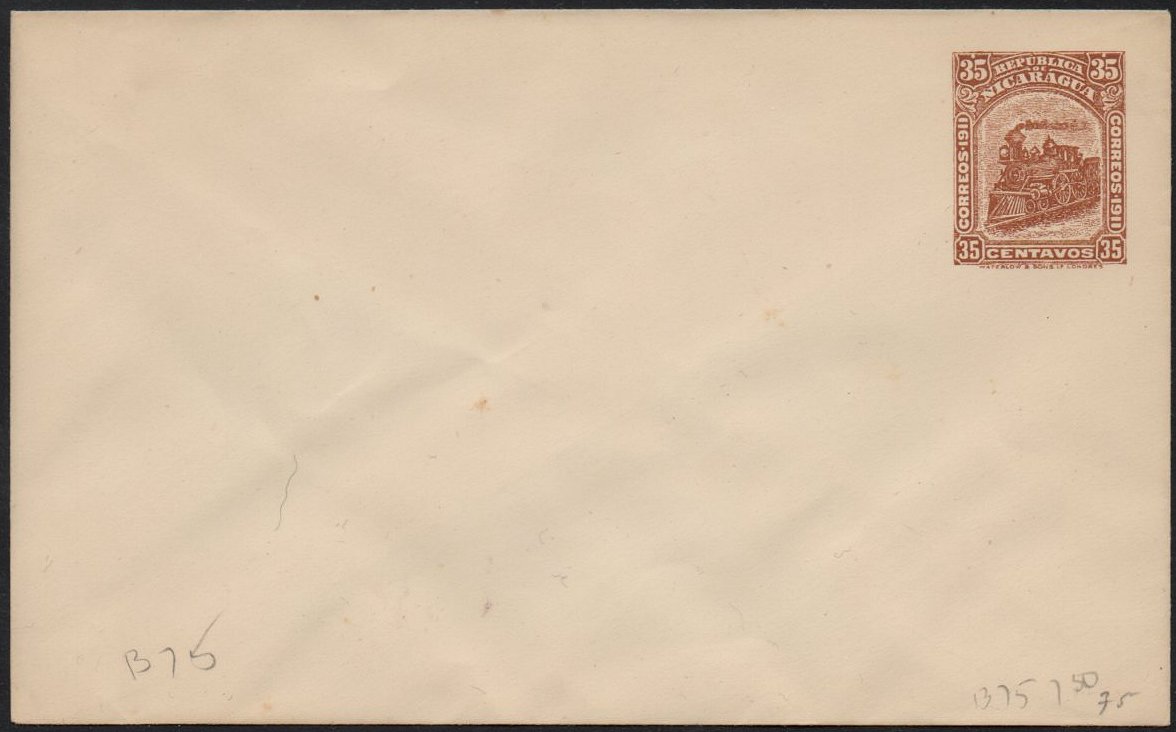
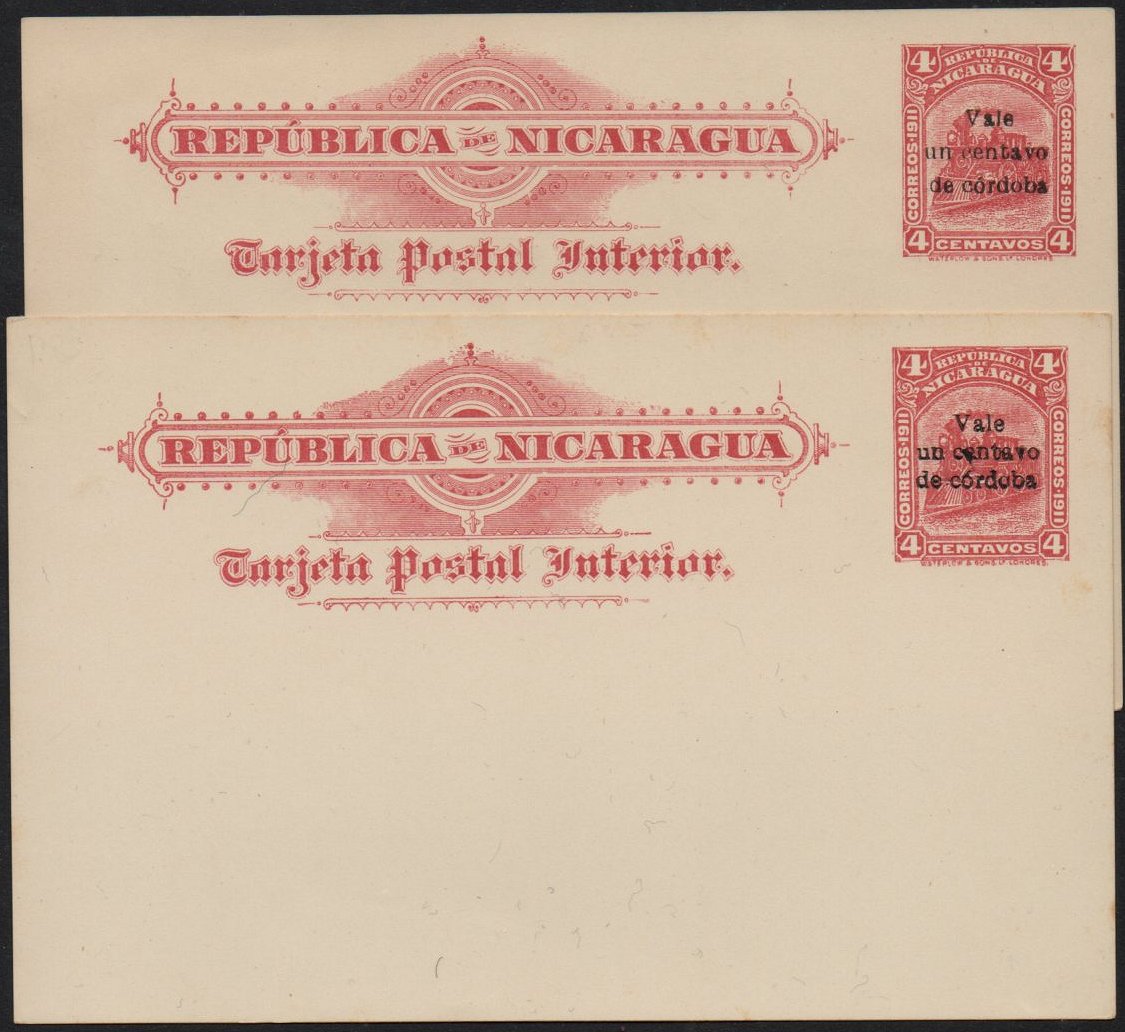 P36 : 1912 : PS Envelope : 35c Yellow-Brown [ . ] [ . ]
P37 : 1913 : PS Card : 1c/4c : height of surcharge 10.5 mms [ . ] [ . ]
P38 : 1913 : PS Card : 1c/4c : height if surcharge 9 mms [ . ] [ . ]
P36 : 1912 : PS Envelope : 35c Yellow-Brown [ . ] [ . ]
P37 : 1913 : PS Card : 1c/4c : height of surcharge 10.5 mms [ . ] [ . ]
P38 : 1913 : PS Card : 1c/4c : height if surcharge 9 mms [ . ] [ . ]
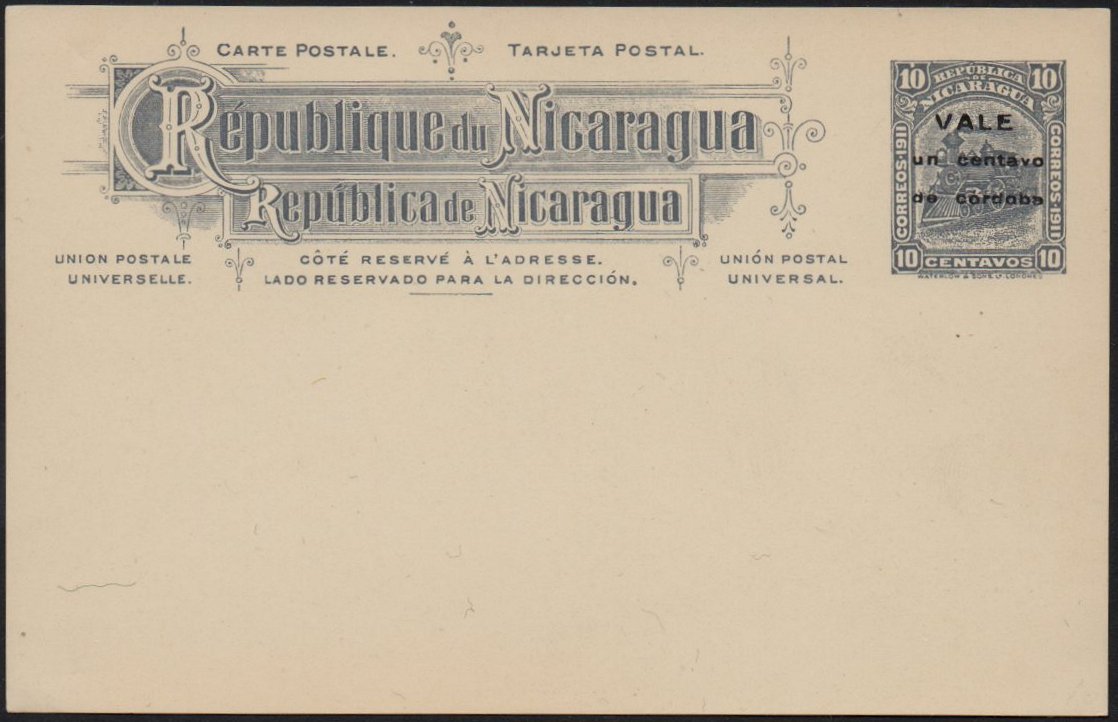 The post office split the 10c+10c cards in-house and surcharged both halves, which were sold separately. They also surcharged the original single card, the only one for which we have a scan. We give individual numbers (rather than sub-letters) to the single cards, as they were issued thus by the post office, already separated.
P39 : 1913 : PS Card : 1c/10c : surcharge on the single card [ . ] [ . ]
P40 : 1913 : PS Card : 1c/10c : surcharge on message card [ . ] [ . ]
P41 : 1913 : PS Card : 1c/10c : surcharge on reply card [ . ] [ . ]
The post office split the 10c+10c cards in-house and surcharged both halves, which were sold separately. They also surcharged the original single card, the only one for which we have a scan. We give individual numbers (rather than sub-letters) to the single cards, as they were issued thus by the post office, already separated.
P39 : 1913 : PS Card : 1c/10c : surcharge on the single card [ . ] [ . ]
P40 : 1913 : PS Card : 1c/10c : surcharge on message card [ . ] [ . ]
P41 : 1913 : PS Card : 1c/10c : surcharge on reply card [ . ] [ . ]
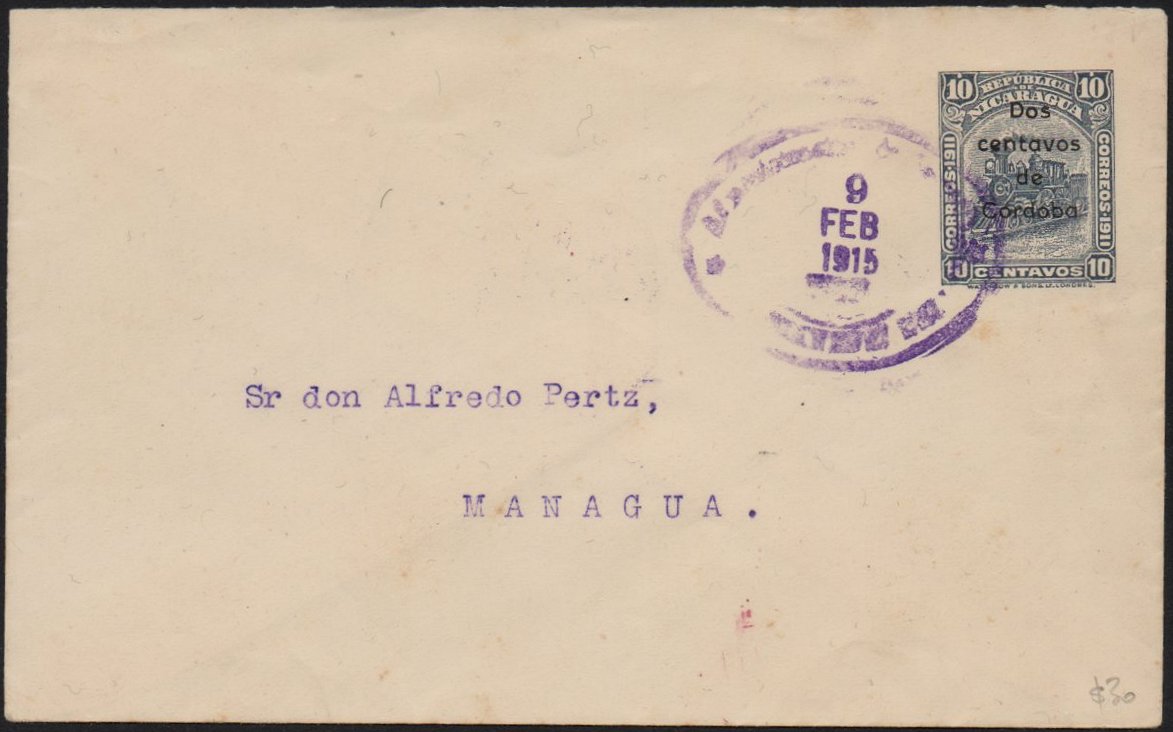 There are three styles of 2c/10c surcharge, all on envelopes, inscriptions described in the catalogue listing. We have only seen the 'Dos centavos' design.
P42 : 1913 : PS Envelope : 2c/10c : surcharge reads 'dos' etc.[ . ] [ . ]
P43 : 1913 : PS Envelope : 2c/10c : surcharge reads 'Dos' etc. [ . ] [ . ]
P44 : 1913 : PS Envelope : 2c/10c : surcharge reads '2 cts.' etc. [ . ] [ . ]
.
That concludes our coverage of the postage stamps and postal stationery. Appendix 1 below contains a few selected extracts from the extensive financial report of the era that led to the change of currency.
.
.
Appendix 1. (Our) Selected Extracts from the Currency Reform report for Nicaragua :
We have highlighted selected passages in the report with bold typeface.
.
Such silver coins of Nicaragua as are still in existence, are reported to be in circulation to some extent in Honduras, and others have gone to the melting pot or otherwise disappeared. Silver is still the money of the East Coast, which has refused to have anything whatsoever (Our Note: Page 40 of article starts here) to do with the government paper money, even preferring to pay dues in silver rather than snatch a temporary profit by tendering paper, and so encourage its introduction. There appears to be no doubt that silver coins, having a fixed gold value, whether they were full legal tender or only limited tender, would be readily accepted on the East Coast, and eventually in the western part of Nicaragua, where paper is now (with the exception of a few nickel coins of small value) the only medium of exchange.
The present paper currency, especially the pieces of low denomination, which pass from hand to hand in small transactions, is in many cases in a filthy condition. Much of it is so torn and defaced that even the denominations are recognizable with difficulty…….
…. They should be retired and destroyed as soon as they can be replaced by metallic currency. Moreover, silver is less destructible than paper. While paper is easily carried, it is often welded into an undistinguishable mass when subjected to tropical rains or other accidents. In the hands of a laborer or small producer who receives money in payment for wages or produce, silver would undoubtedly be preferred in many cases to paper. It can be hidden in a closet or under a piece of flooring, or even buried, without risk, which exists in the case of paper, of destruction by moisture and insects.
On the East Coast, where silver is now practically the only form of currency, the existing preference for silver over paper may even prevail after the paper is recognized as good. We have, therefore, recommended an experimental coinage of a few silver cordobas. But we hope that the highest coin in general use will be the 50-cent piece. We have a strong preference in matters of money for following the line of least resistance that is to say, giving the people what they need.
Should they find the silver cordoba less convenient than the note, they will abandon its use. On the other hand, if experience teaches them that it is a better medium, they ought to have it. Contrariwise, we have no prejudice against the fifty-cent note, if there appears to be a demand for it, in which case an experimental issue can be made.
In monetary matters, the paradox holds that to promote the acceptance of any currency, it is wiser to be eager to receive than anxious to part with it. At present Nicaragua is adverse to its introduction. After recent bitter experience the people on both coasts want something they can bite, and on the Atlantic side they will at present have none of the “unclean thing " paper currency.
With the paper peso reduced as it has been by over-issue to a value of less than six cents gold, 50 cents gold is equivalent to about nine pesos. A coin having a gold value of 50 cents would represent, therefore, among the laboring classes, a high denomination. In these circumstances there is likely to be room for a considerable quantity of smaller coins......
In the foregoing no allusion has yet been made to the profit resulting from the silver currency costing less than its face value, for we feel strongly that it is wisest to approach the question as far as it is practicable without any bias of this nature. There will be a very considerable profit, amounting to not less than 50 per cent, of the face value of the silver currency maintained in the circulation, after deducting all costs of manufacture and supervision.
We recommend that the whole of this revenue be carried to the exchange fund until the reserve in gold and commercial paper is not less than 70 per cent, of the net circulation. The allocation of this revenue thereafter is discussed later on.
XIX. PRINCIPLES OF THE NOTE ISSUE.
It was originally intended that we should study local conditions on the spot for two or three weeks, and then return to New York and prepare a report, after consultation with you. The next step would have been the presentation by you of a currency plan to Nicaragua for passage into law. Circumstances, however, arose which made this sequence of events impracticable, if not impossible.
The condition of Nicaragua's current finances was desperate. The Treasury was empty and the government was near the end of its resources. The government also desired a rate of exchange which could not be attained without further resources. All this spelt time and delay, for it was necessary to examine the position to see how much more was required on Treasury and currency account, and what security could be assigned.
Meanwhile Nicaragua had parted with the control of its customs and the revenues therefrom, and the bankers had parted with the moneys which they had agreed to loan Nicaragua, but which could not be released under the Treasury Bills Agreement until a currency plan was agreed upon and had become statute law.
In these circumstances, it was decided to formulate the currency reform in detail sufficient to admit of the proceeds of the loan becoming available.
.
There are three styles of 2c/10c surcharge, all on envelopes, inscriptions described in the catalogue listing. We have only seen the 'Dos centavos' design.
P42 : 1913 : PS Envelope : 2c/10c : surcharge reads 'dos' etc.[ . ] [ . ]
P43 : 1913 : PS Envelope : 2c/10c : surcharge reads 'Dos' etc. [ . ] [ . ]
P44 : 1913 : PS Envelope : 2c/10c : surcharge reads '2 cts.' etc. [ . ] [ . ]
.
That concludes our coverage of the postage stamps and postal stationery. Appendix 1 below contains a few selected extracts from the extensive financial report of the era that led to the change of currency.
.
.
Appendix 1. (Our) Selected Extracts from the Currency Reform report for Nicaragua :
We have highlighted selected passages in the report with bold typeface.
.
Such silver coins of Nicaragua as are still in existence, are reported to be in circulation to some extent in Honduras, and others have gone to the melting pot or otherwise disappeared. Silver is still the money of the East Coast, which has refused to have anything whatsoever (Our Note: Page 40 of article starts here) to do with the government paper money, even preferring to pay dues in silver rather than snatch a temporary profit by tendering paper, and so encourage its introduction. There appears to be no doubt that silver coins, having a fixed gold value, whether they were full legal tender or only limited tender, would be readily accepted on the East Coast, and eventually in the western part of Nicaragua, where paper is now (with the exception of a few nickel coins of small value) the only medium of exchange.
The present paper currency, especially the pieces of low denomination, which pass from hand to hand in small transactions, is in many cases in a filthy condition. Much of it is so torn and defaced that even the denominations are recognizable with difficulty…….
…. They should be retired and destroyed as soon as they can be replaced by metallic currency. Moreover, silver is less destructible than paper. While paper is easily carried, it is often welded into an undistinguishable mass when subjected to tropical rains or other accidents. In the hands of a laborer or small producer who receives money in payment for wages or produce, silver would undoubtedly be preferred in many cases to paper. It can be hidden in a closet or under a piece of flooring, or even buried, without risk, which exists in the case of paper, of destruction by moisture and insects.
On the East Coast, where silver is now practically the only form of currency, the existing preference for silver over paper may even prevail after the paper is recognized as good. We have, therefore, recommended an experimental coinage of a few silver cordobas. But we hope that the highest coin in general use will be the 50-cent piece. We have a strong preference in matters of money for following the line of least resistance that is to say, giving the people what they need.
Should they find the silver cordoba less convenient than the note, they will abandon its use. On the other hand, if experience teaches them that it is a better medium, they ought to have it. Contrariwise, we have no prejudice against the fifty-cent note, if there appears to be a demand for it, in which case an experimental issue can be made.
In monetary matters, the paradox holds that to promote the acceptance of any currency, it is wiser to be eager to receive than anxious to part with it. At present Nicaragua is adverse to its introduction. After recent bitter experience the people on both coasts want something they can bite, and on the Atlantic side they will at present have none of the “unclean thing " paper currency.
With the paper peso reduced as it has been by over-issue to a value of less than six cents gold, 50 cents gold is equivalent to about nine pesos. A coin having a gold value of 50 cents would represent, therefore, among the laboring classes, a high denomination. In these circumstances there is likely to be room for a considerable quantity of smaller coins......
In the foregoing no allusion has yet been made to the profit resulting from the silver currency costing less than its face value, for we feel strongly that it is wisest to approach the question as far as it is practicable without any bias of this nature. There will be a very considerable profit, amounting to not less than 50 per cent, of the face value of the silver currency maintained in the circulation, after deducting all costs of manufacture and supervision.
We recommend that the whole of this revenue be carried to the exchange fund until the reserve in gold and commercial paper is not less than 70 per cent, of the net circulation. The allocation of this revenue thereafter is discussed later on.
XIX. PRINCIPLES OF THE NOTE ISSUE.
It was originally intended that we should study local conditions on the spot for two or three weeks, and then return to New York and prepare a report, after consultation with you. The next step would have been the presentation by you of a currency plan to Nicaragua for passage into law. Circumstances, however, arose which made this sequence of events impracticable, if not impossible.
The condition of Nicaragua's current finances was desperate. The Treasury was empty and the government was near the end of its resources. The government also desired a rate of exchange which could not be attained without further resources. All this spelt time and delay, for it was necessary to examine the position to see how much more was required on Treasury and currency account, and what security could be assigned.
Meanwhile Nicaragua had parted with the control of its customs and the revenues therefrom, and the bankers had parted with the moneys which they had agreed to loan Nicaragua, but which could not be released under the Treasury Bills Agreement until a currency plan was agreed upon and had become statute law.
In these circumstances, it was decided to formulate the currency reform in detail sufficient to admit of the proceeds of the loan becoming available.
.
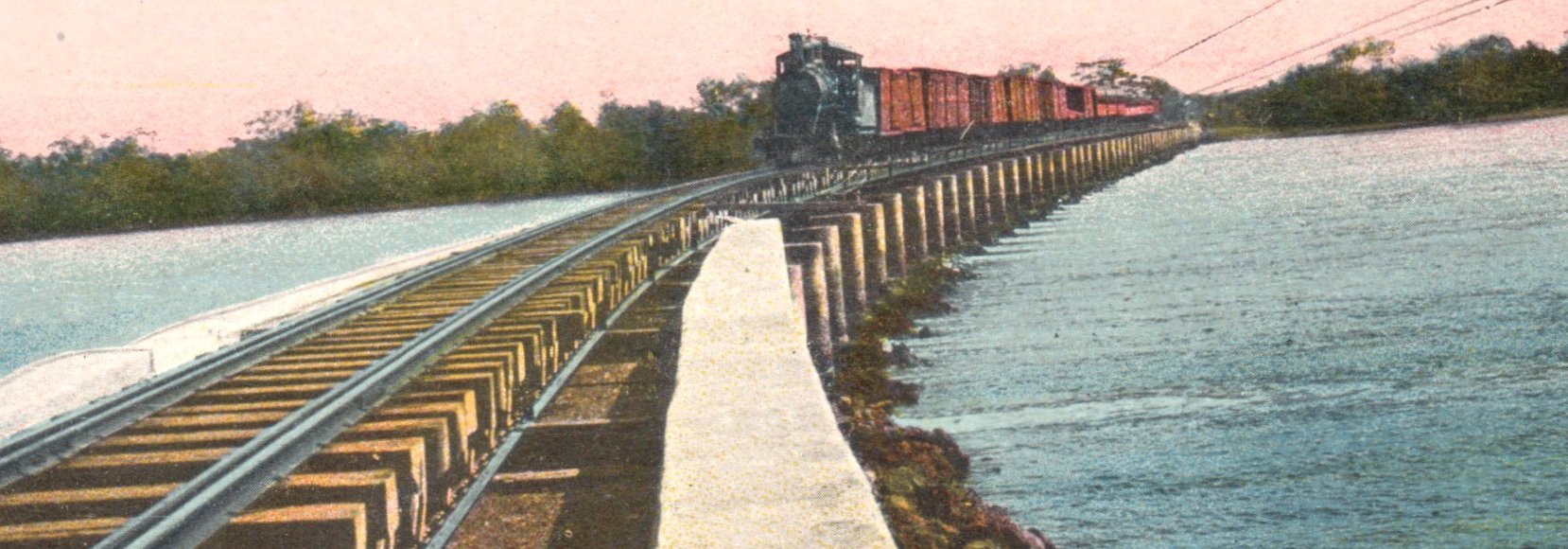 Postcard view of a long mixed train near Corinto, circa 1905-1925, hard to date. There have been no trains in Nicaragua since the last decade of the 20th century.
Return to Listing of all Railway Articles (with links). Note: You may already have an open tab