Philately : El Salvador stamps 1916 Theatre & Tram Tracks
. . . . . . . . . . . ABN Co. Archive artwork & working proofs
.
This is an appendix to our main article of the 1916 Theatre issue. There is a link back to the main article in the left panel. This page principally covers the American Banknote Company's archive working proofs for the issue, including some original artwork.
1916 Issue: American Banknote Company Photographic Source, Artwork & Proofs.
We are fortunate in having images of some outstanding ABN Co. archive material for the 1916 design (tram tracks in front of the National Theatre). The primary source for the design was a photograph, which accompanied the philatelic material in the ABN Co. archive sale. The engraver who worked off this photograph copied it fairly faithfully, making only amendments of the type one might digitally 'photoshop' today; removal of the telegraph pole and some pedestrians from the front of the building. The animation which remains adds much to the attraction of the finished stamp.
However, when it came to the frames of the stamps, imagination was allowed to flourish more. All ten of the 1916 values have a different frame in predominantly floral styles. The different location and frame-style of the figures of value on each stamp facilitates quite broad variety in the decorative borders.
We repeat below the image of the issued postage values from the main article.
 .
Photographic Source for the 1916 National Theatre design:
.
Photographic Source for the 1916 National Theatre design:
 Original ABN Co. Archive photograph, measuring 202x139 mms.

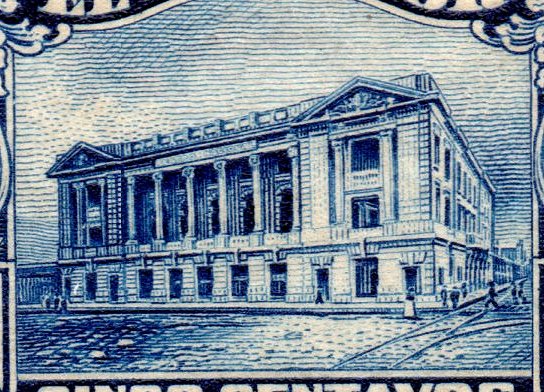 The back of the photo is inscribed with much ABN Co. information. Alongside, we show is a high quality scan of the centre of a (5c) issued stamp.
The back of the photograph identifies the engraver (Harold Osborne) and the finisher (Edwin Gunn?). Unlike engravers, finishers rarely get a mention, but they too are skilled engravers whose role is vital in producing a high quality printing plate. Usually, the first 'pull' of an image will reveal uneven depths in the engraving, damaged letters, blemishes etc. The finisher's job is to re-engrave unsatisfactory elements and to maintain high quality output across a print-run - and across any subsequent printings from the same plate.
.
Hand-painted essays of 1c, 6c & 17c values:
The back of the photo is inscribed with much ABN Co. information. Alongside, we show is a high quality scan of the centre of a (5c) issued stamp.
The back of the photograph identifies the engraver (Harold Osborne) and the finisher (Edwin Gunn?). Unlike engravers, finishers rarely get a mention, but they too are skilled engravers whose role is vital in producing a high quality printing plate. Usually, the first 'pull' of an image will reveal uneven depths in the engraving, damaged letters, blemishes etc. The finisher's job is to re-engrave unsatisfactory elements and to maintain high quality output across a print-run - and across any subsequent printings from the same plate.
.
Hand-painted essays of 1c, 6c & 17c values:
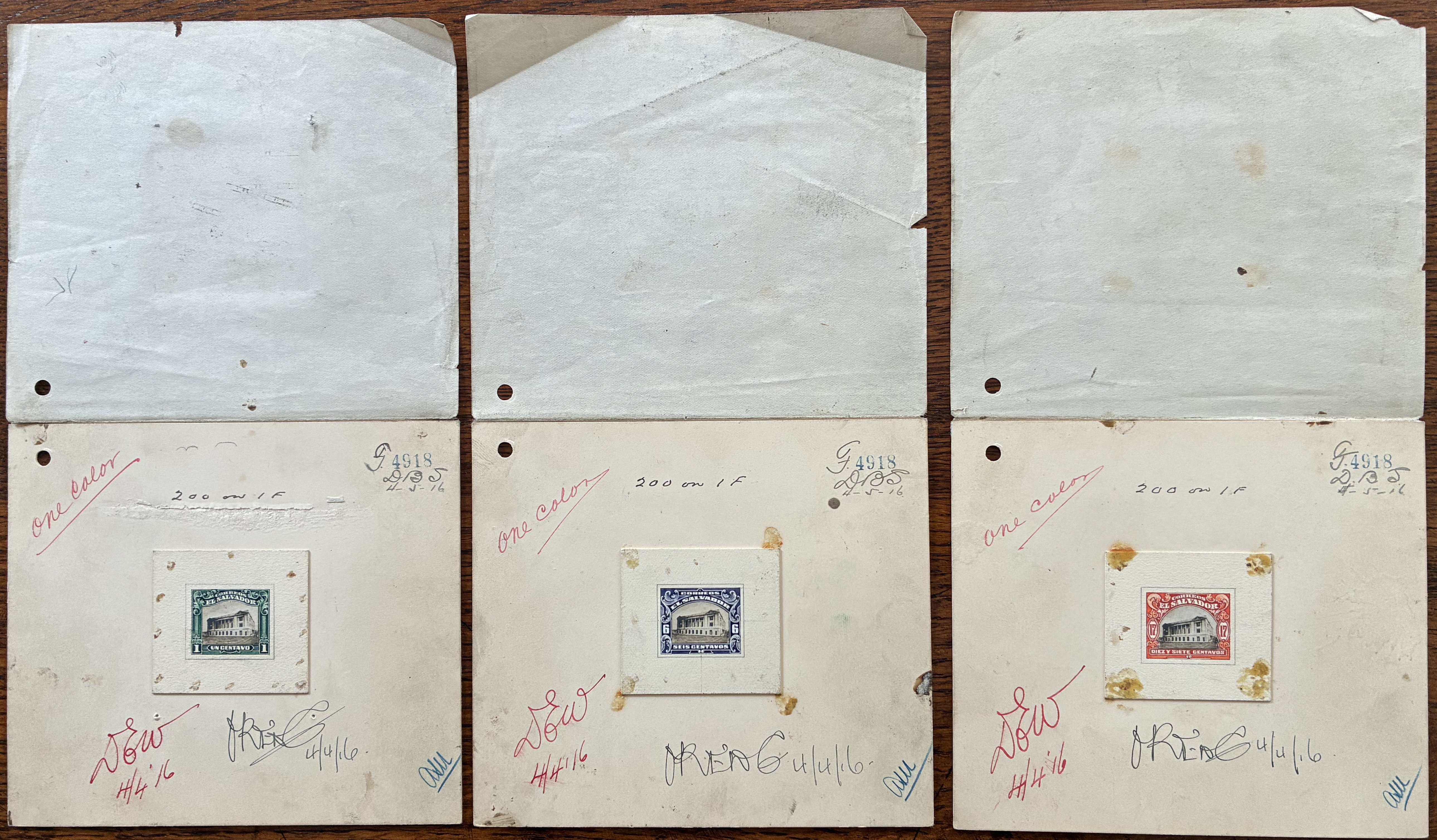 These carry the earliest date we have seen, April 4th 1916, in the production process. Larger images, showing just the stamps in the artwork above, are shown below alongside the die proofs of the 1c, 6c and 17c values. In the end, the Honduras Post Office opted for all ten of the Theatre design stamps to be printed in single colours.
Die Proofs in the Approval Process : Overview :
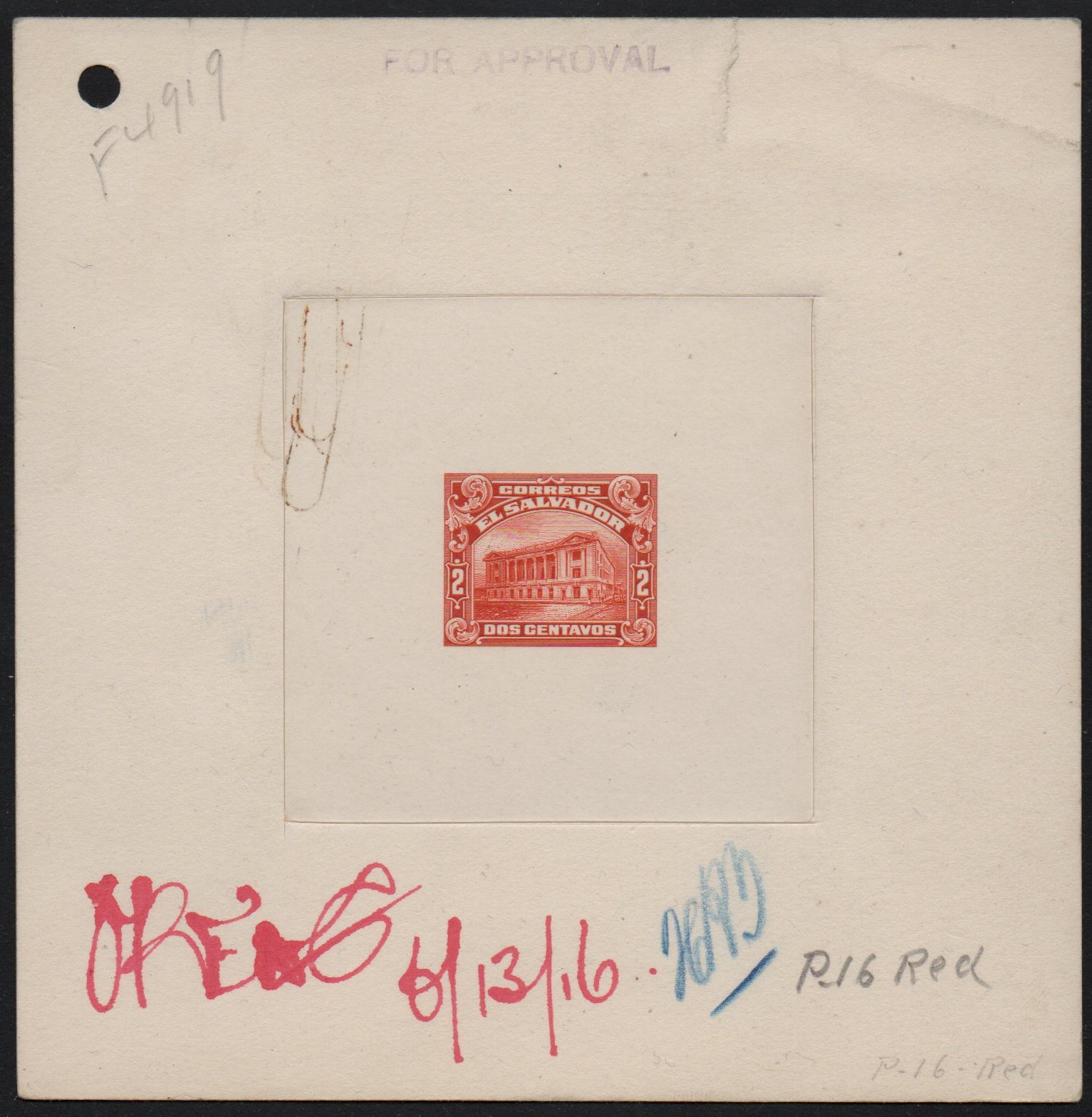
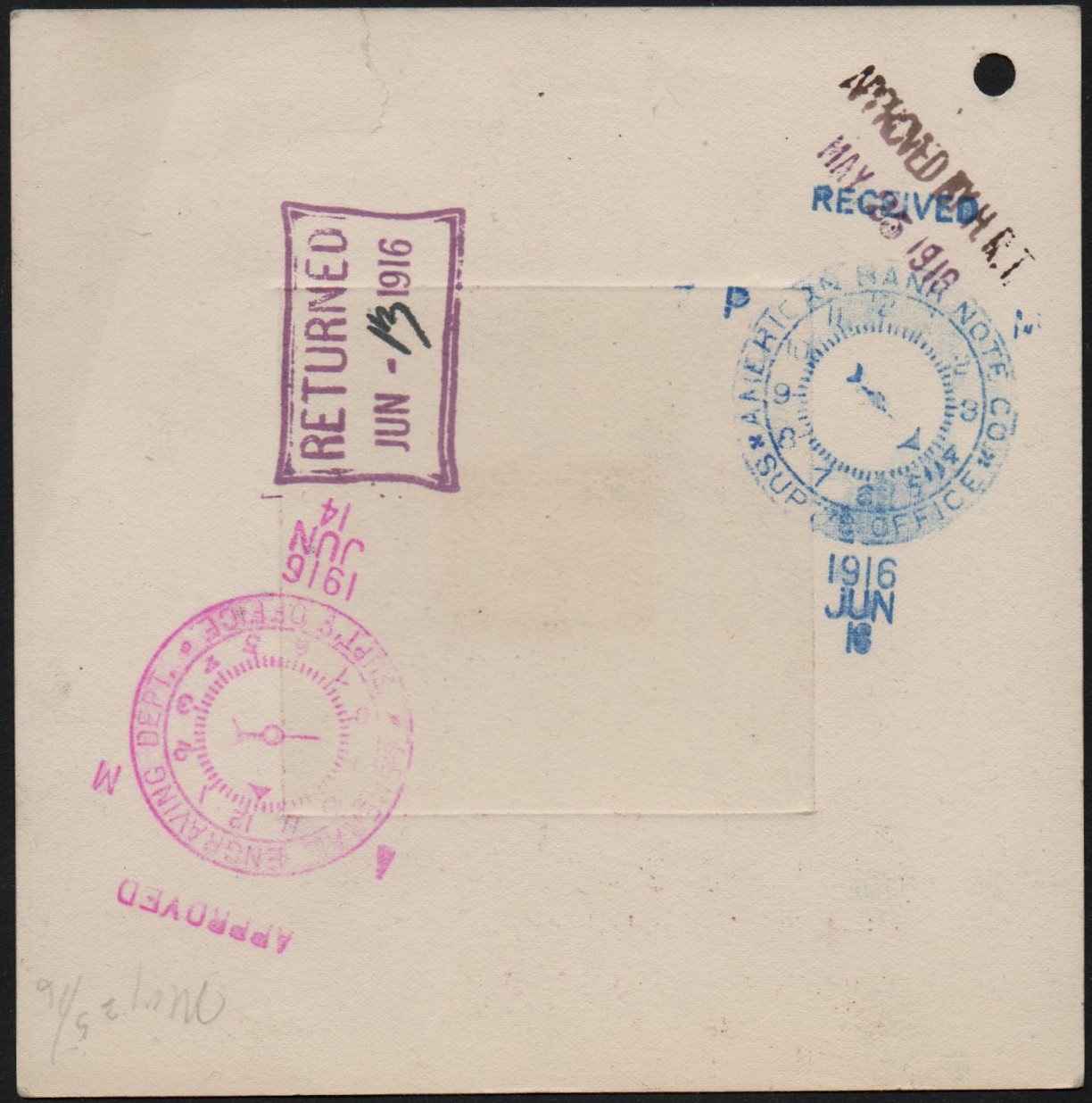
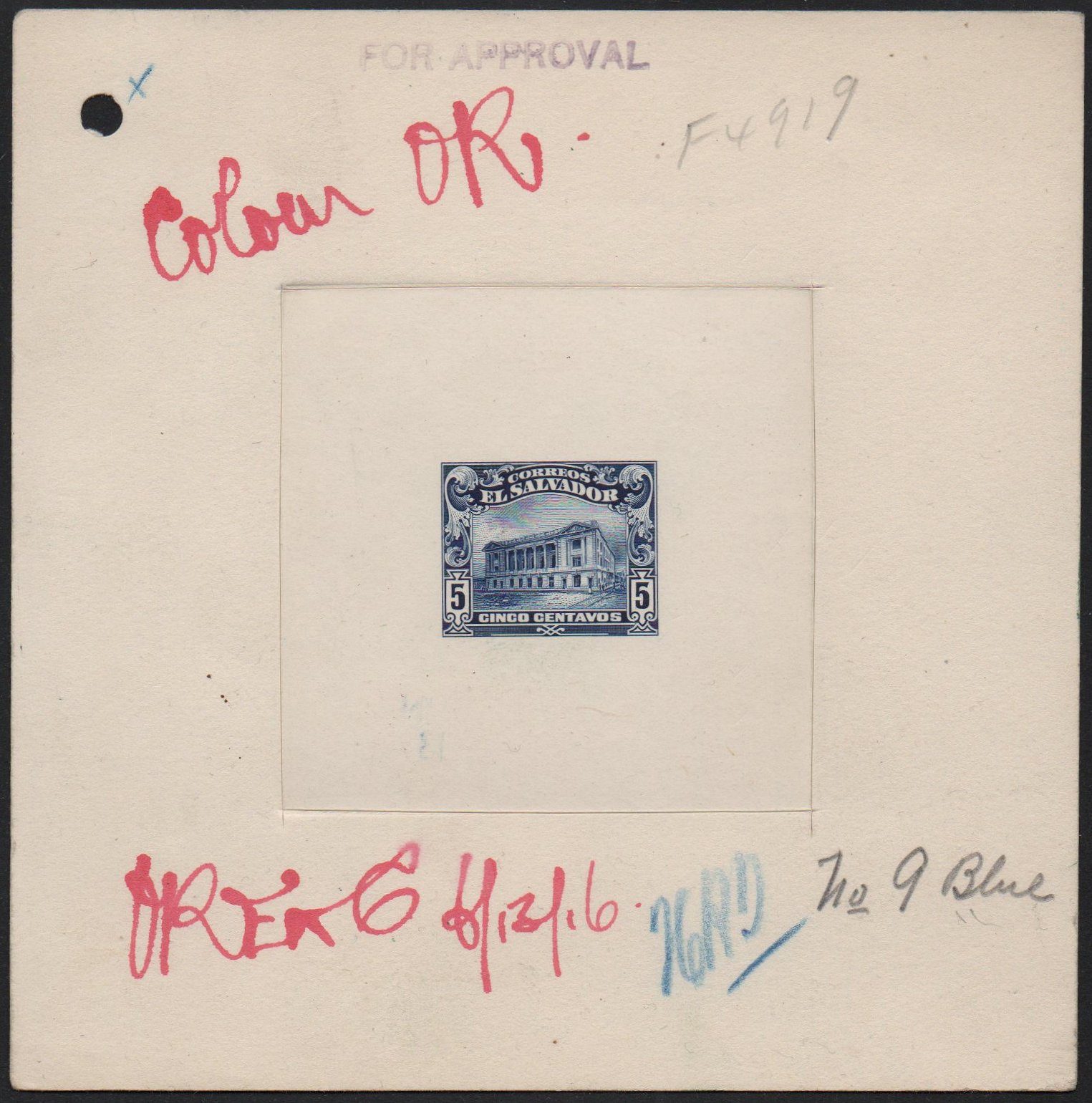
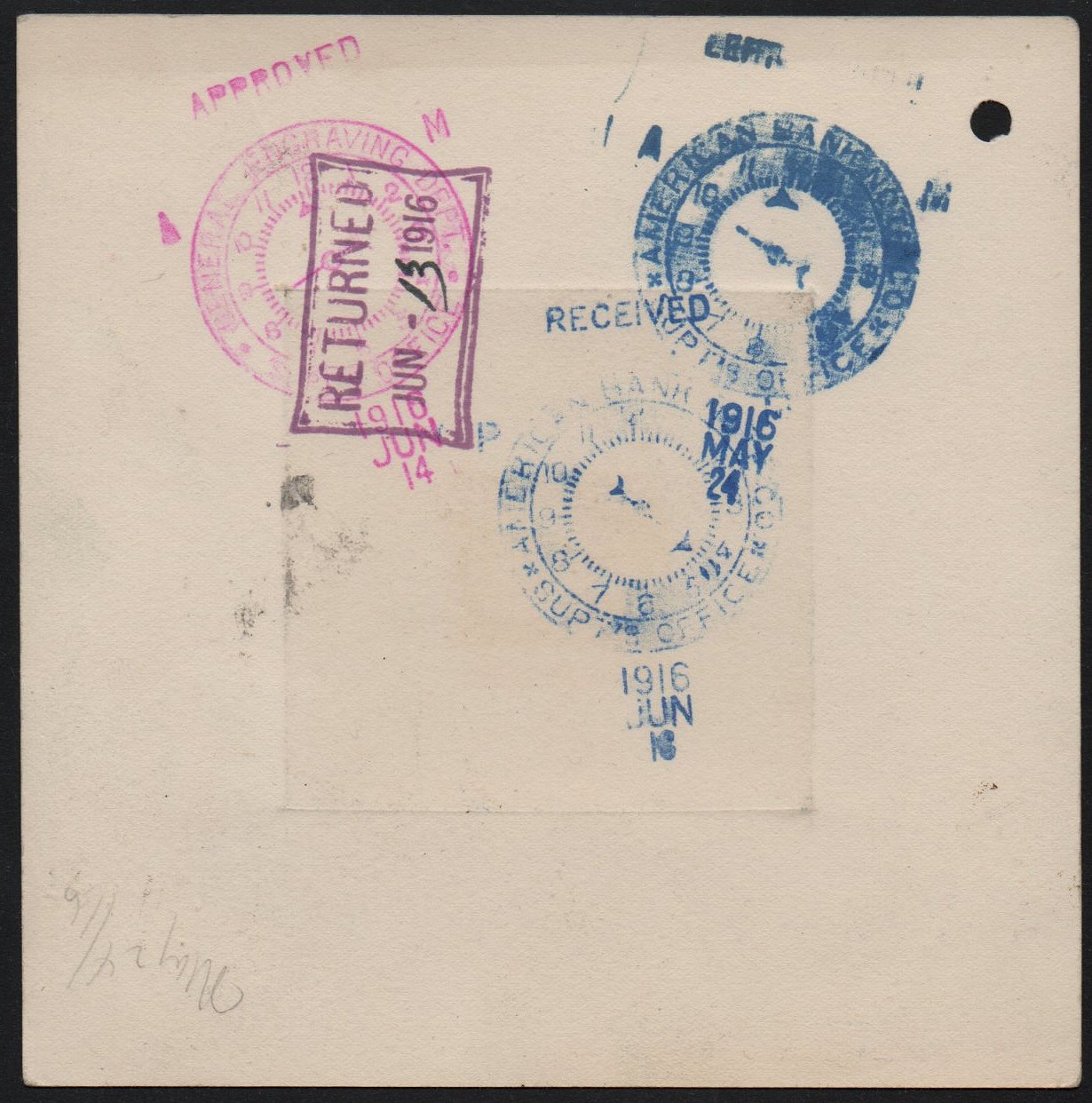
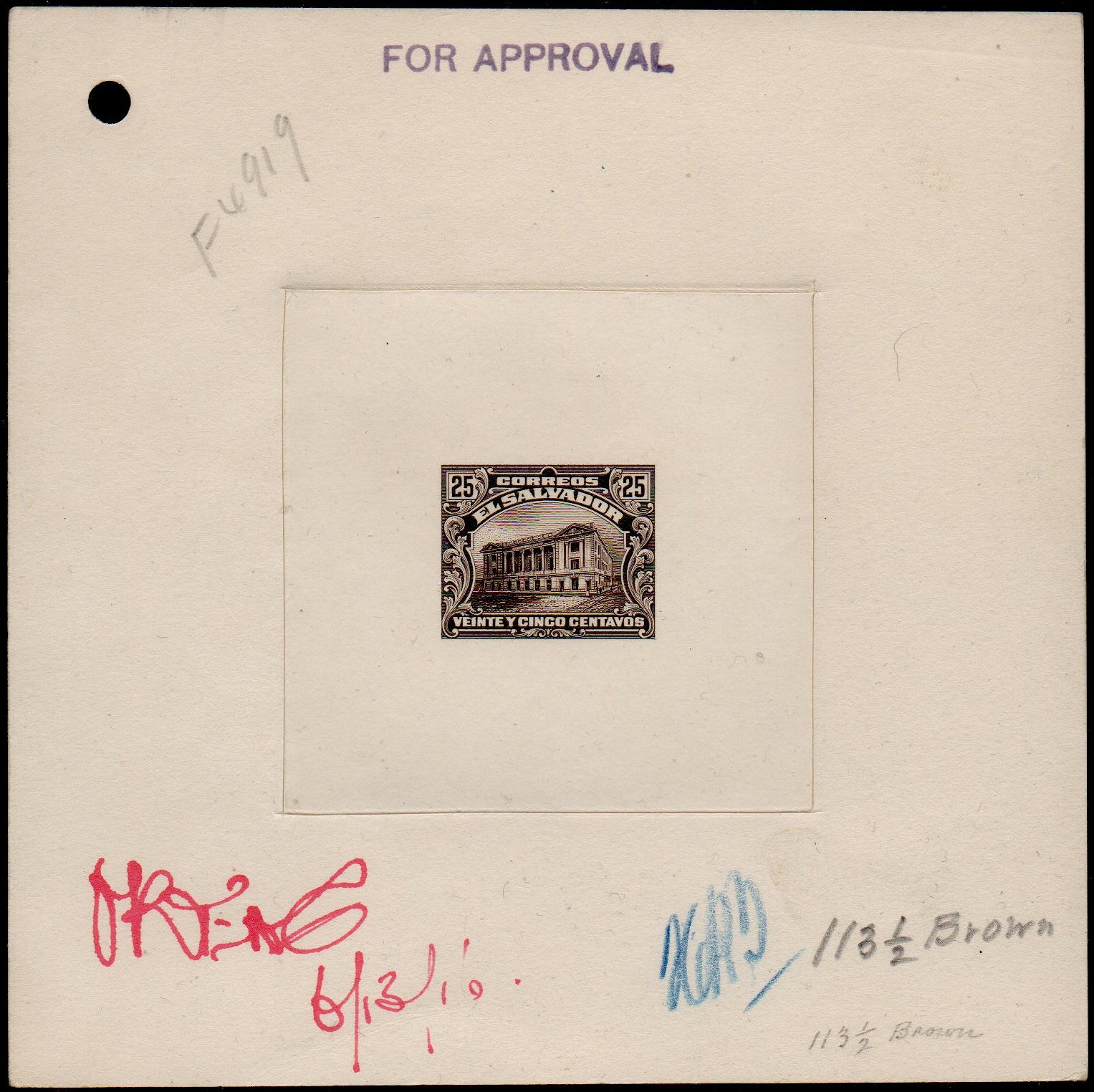
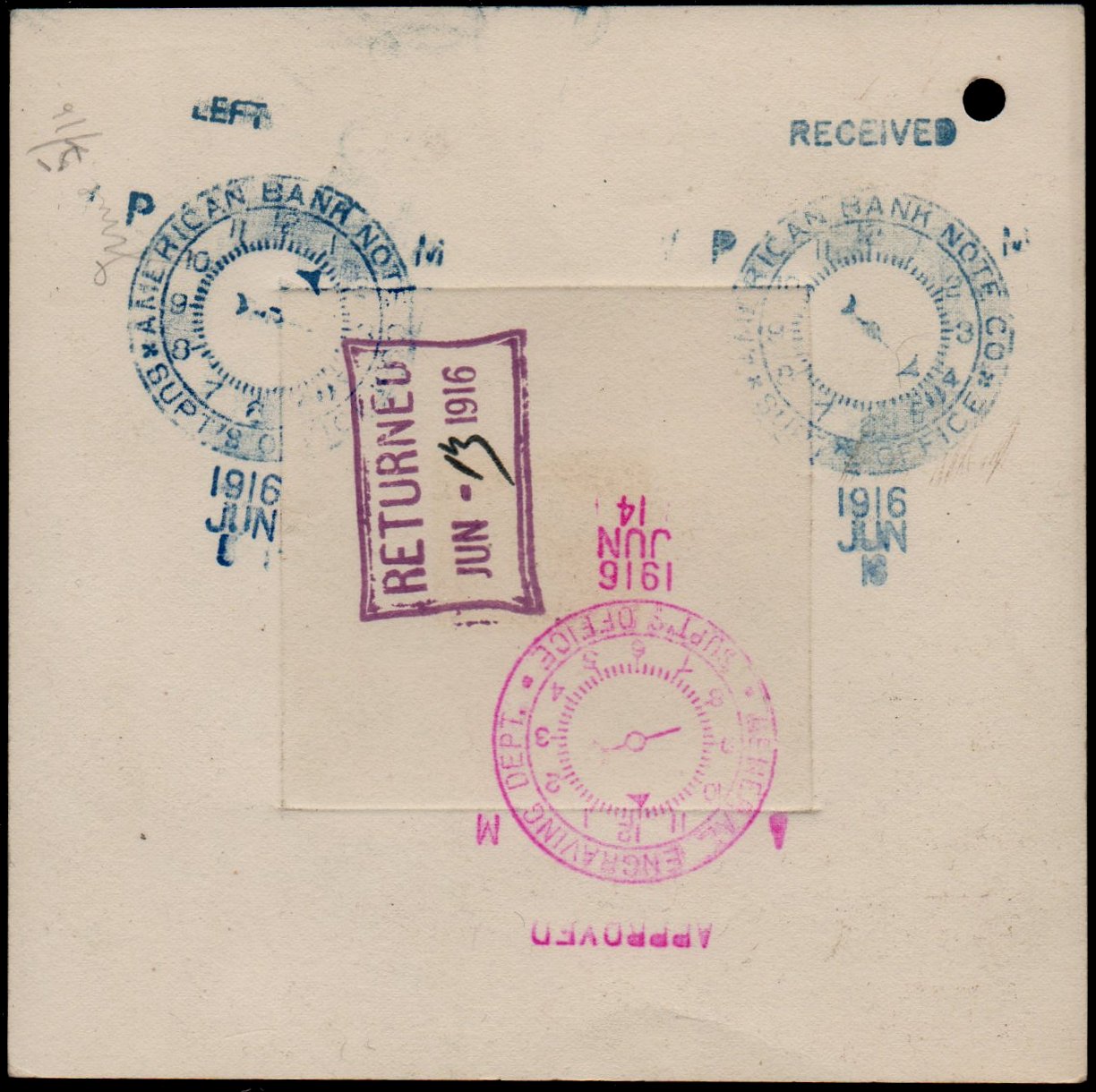
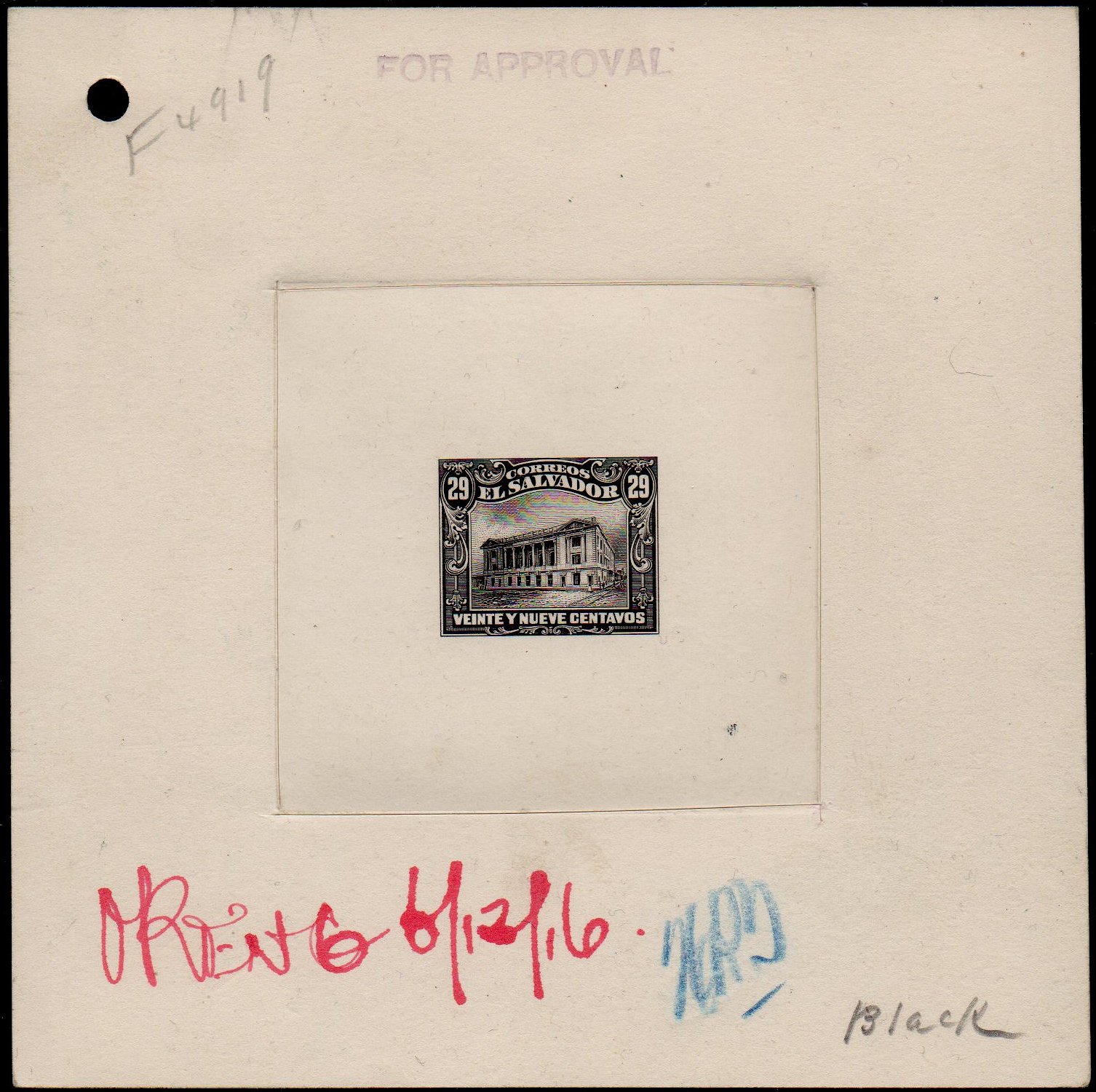
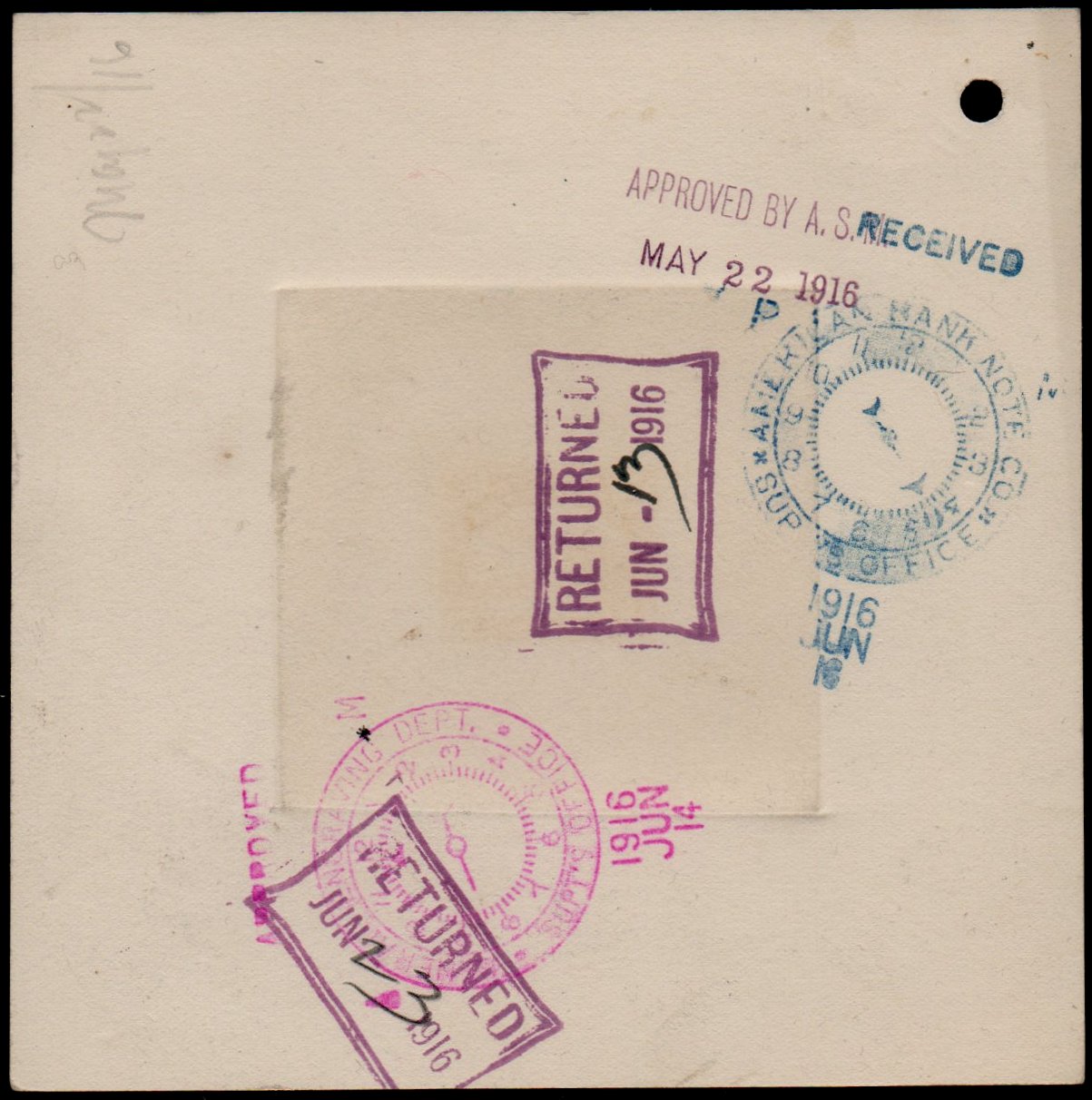
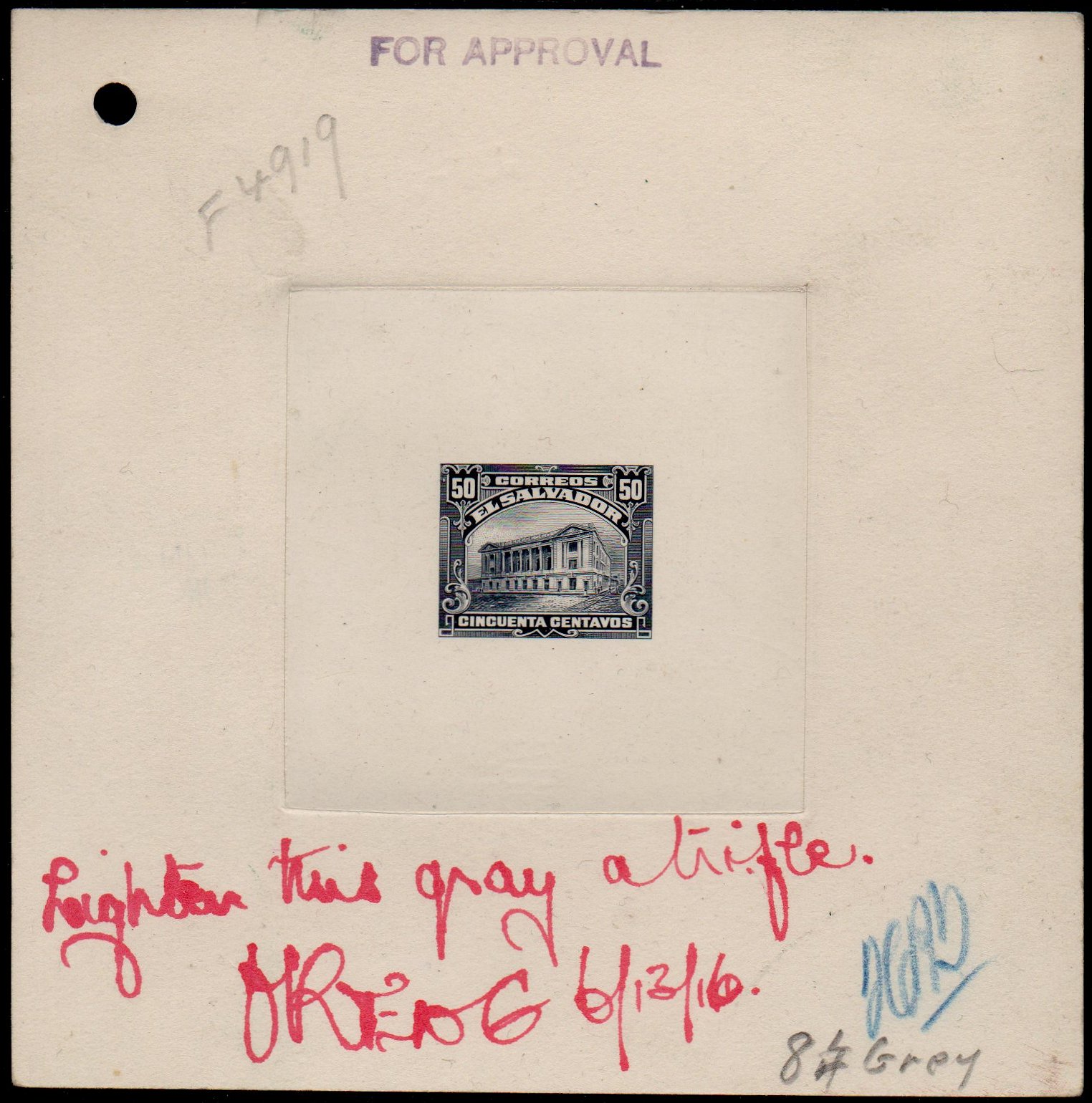
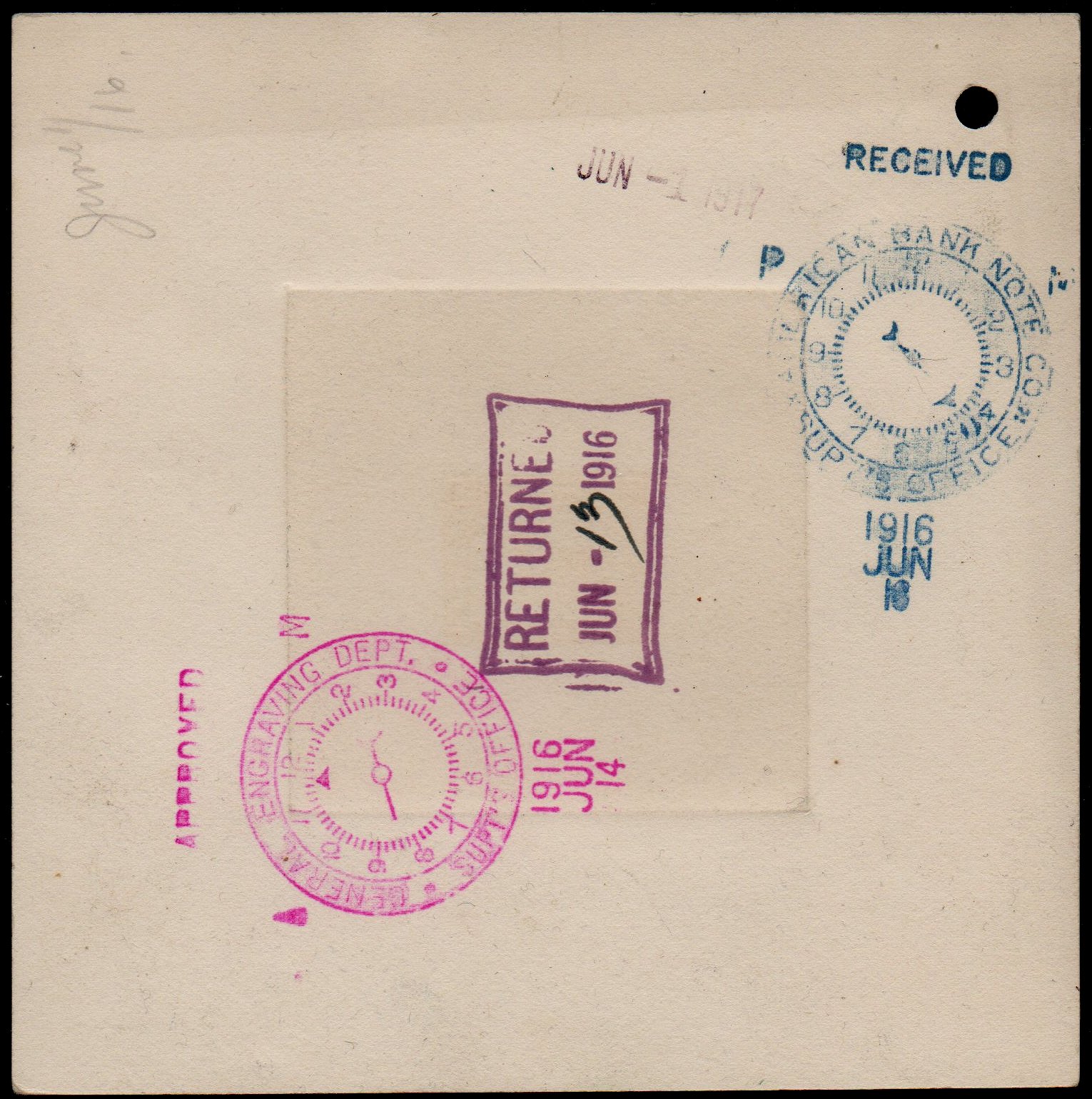
A small number of sunken die proofs would have been produced for each value, variously distributed around the Company. Those which were being used expressly for approval and production would be stamped with a date in each department. We can thus track their progress. We have scans for each value of the actual sunken die proof on which the authorisation finally to proceed with the printing of the stamp appears.
The approval process should have been completed around June 12th 1916 but two stamps, the 6c and 12c, were rejected in their chosen colours in the purple/violet range at this advanced stage. The amendments to the colours did not run smoothly; the confusing outcome is described below the scans of the 6c die proofs.
Although we are about to illustrate sunken die proofs for all the denominations below, value by value, we thought it might be useful to provide one overall picture of the fronts of all 12 Master Sunken Die Proofs (10 values + an extra 6c and 12c) full screen. To view this, please click here : (opens in a new tab).
.
.
Die Proof: Centre only.
These carry the earliest date we have seen, April 4th 1916, in the production process. Larger images, showing just the stamps in the artwork above, are shown below alongside the die proofs of the 1c, 6c and 17c values. In the end, the Honduras Post Office opted for all ten of the Theatre design stamps to be printed in single colours.
Die Proofs in the Approval Process : Overview :
A small number of sunken die proofs would have been produced for each value, variously distributed around the Company. Those which were being used expressly for approval and production would be stamped with a date in each department. We can thus track their progress. We have scans for each value of the actual sunken die proof on which the authorisation finally to proceed with the printing of the stamp appears.
The approval process should have been completed around June 12th 1916 but two stamps, the 6c and 12c, were rejected in their chosen colours in the purple/violet range at this advanced stage. The amendments to the colours did not run smoothly; the confusing outcome is described below the scans of the 6c die proofs.
Although we are about to illustrate sunken die proofs for all the denominations below, value by value, we thought it might be useful to provide one overall picture of the fronts of all 12 Master Sunken Die Proofs (10 values + an extra 6c and 12c) full screen. To view this, please click here : (opens in a new tab).
.
.
Die Proof: Centre only.
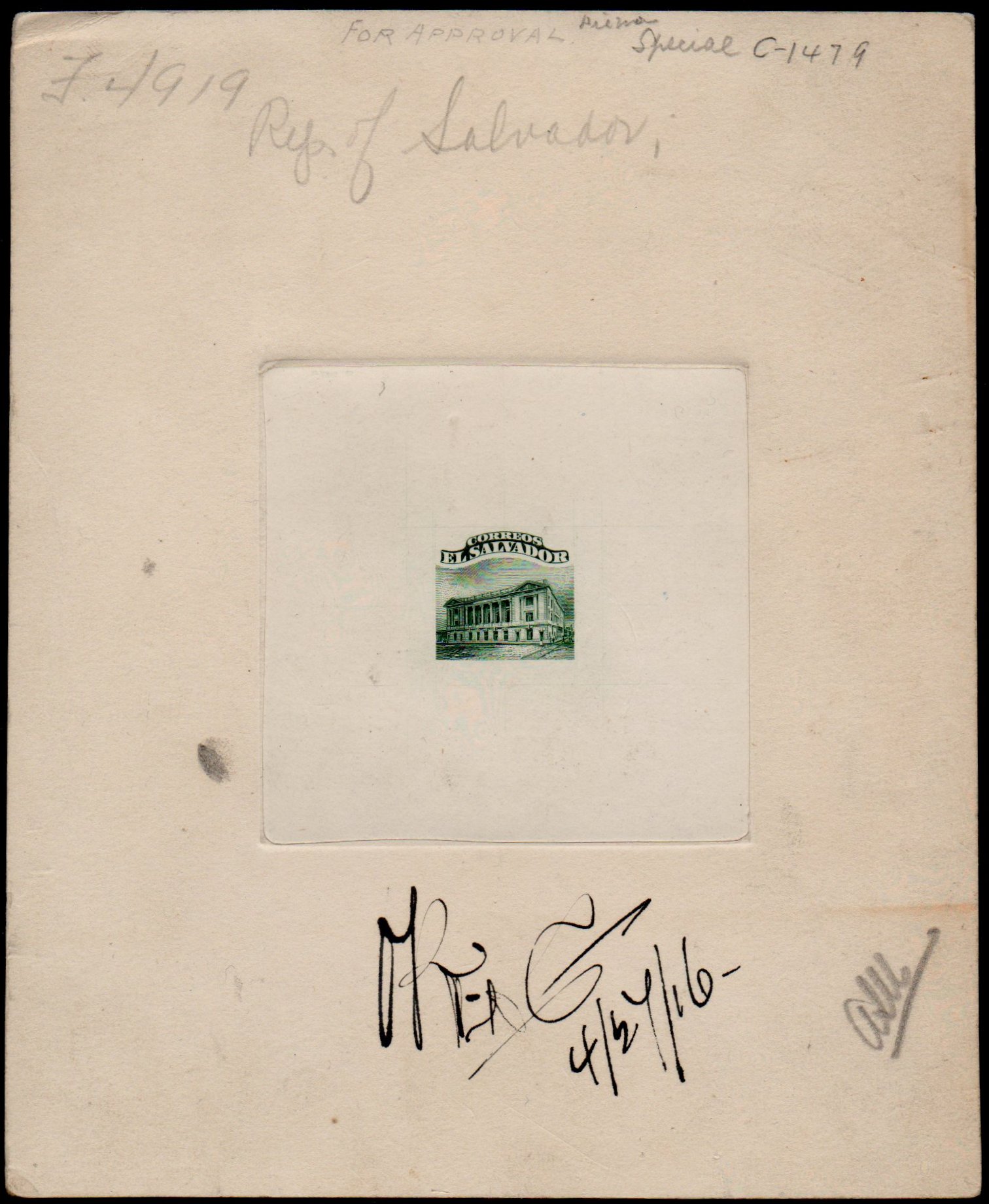
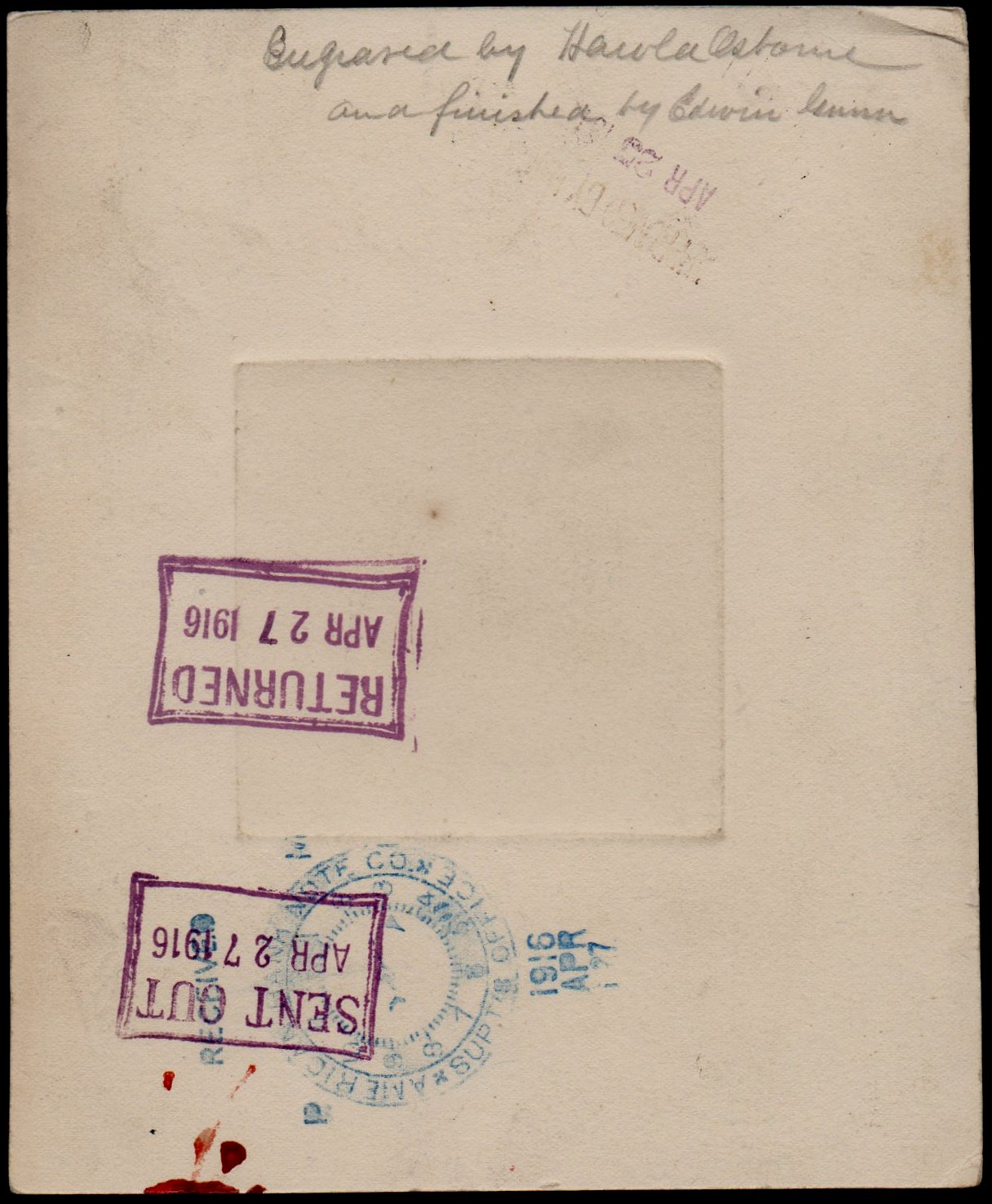
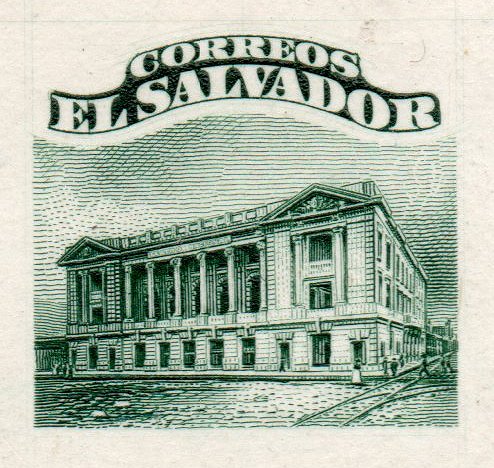 Above: The next step we witness in the creation of the stamps is a high quality engraving of the centre, dated April 27th, 1916. Customer approval appears to have taken a few weeks, which would be consistent with transit times between Honduras and the United States at the time. We have not seen any other engraving of just the centre beyond the one shown here. Duplicates or proofs in other colours may possibly have been produced.
.
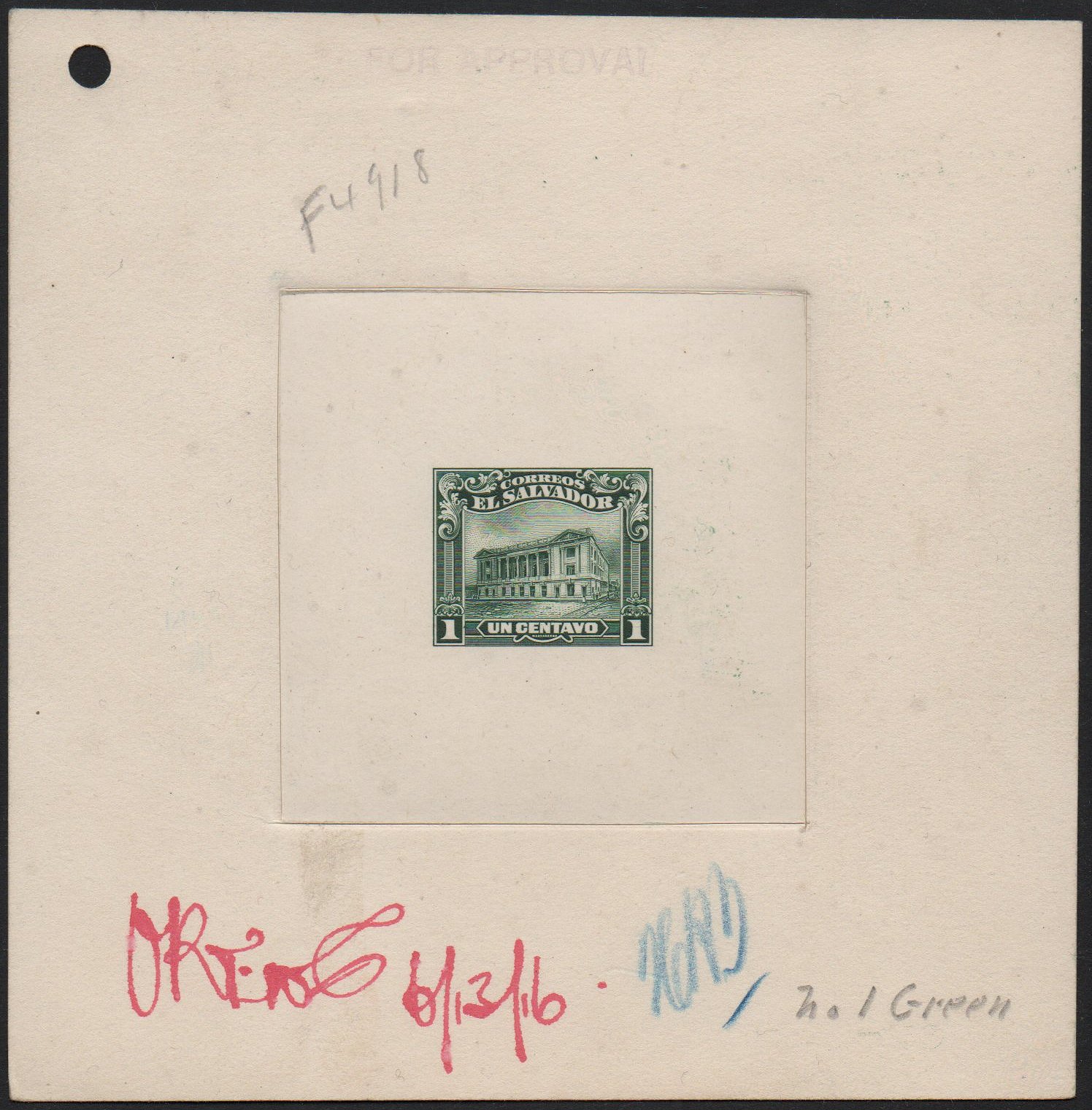
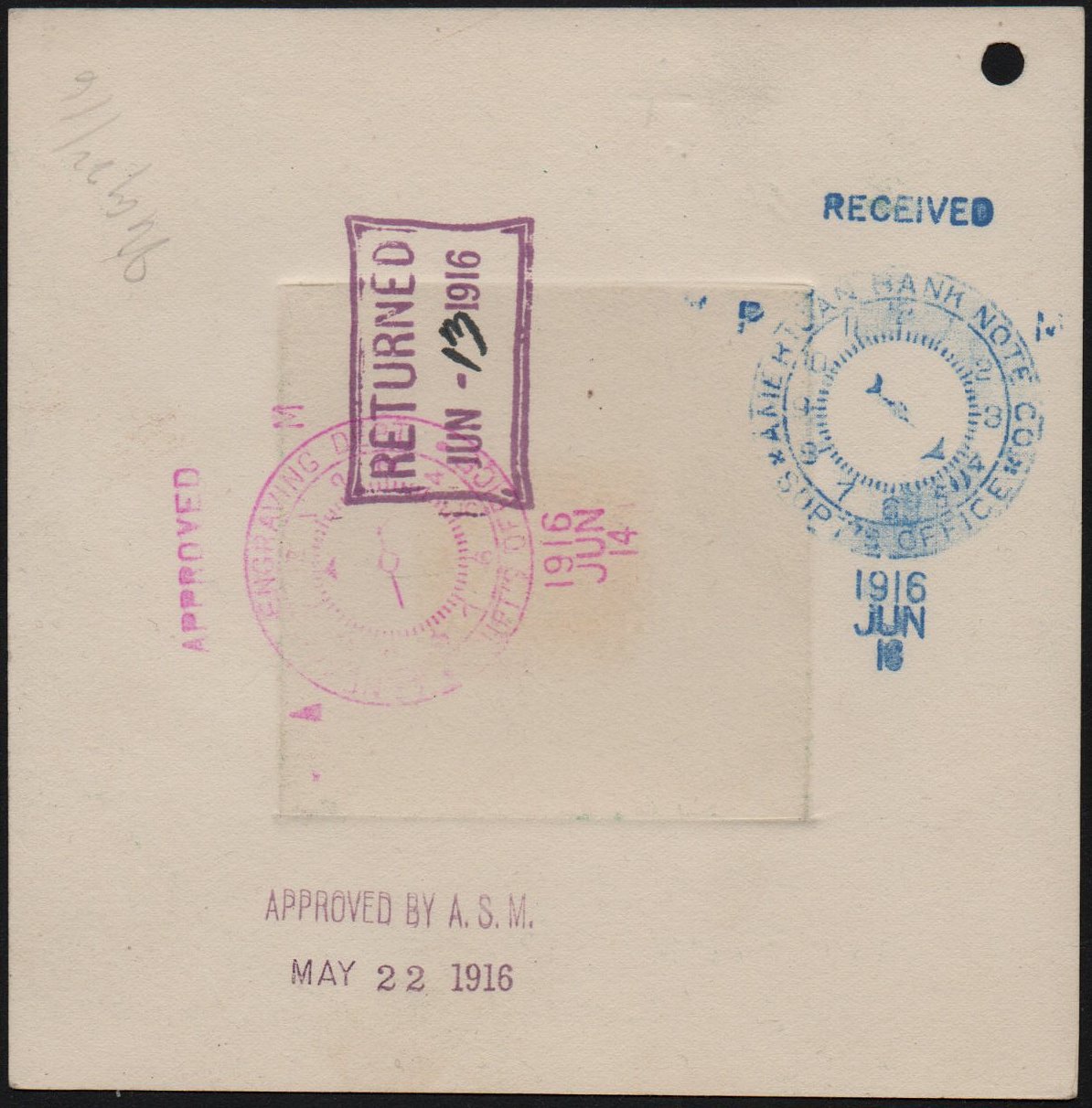
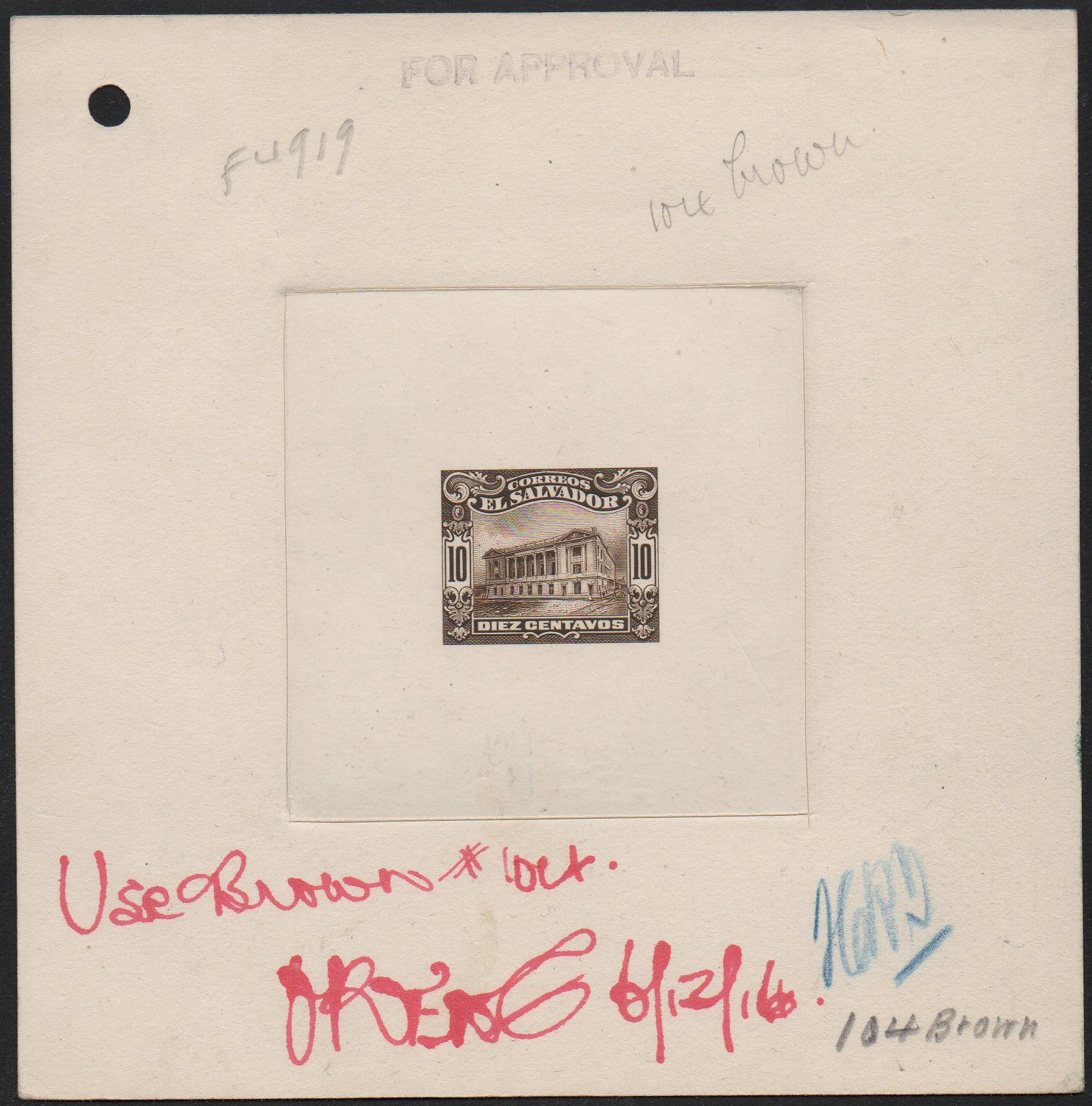
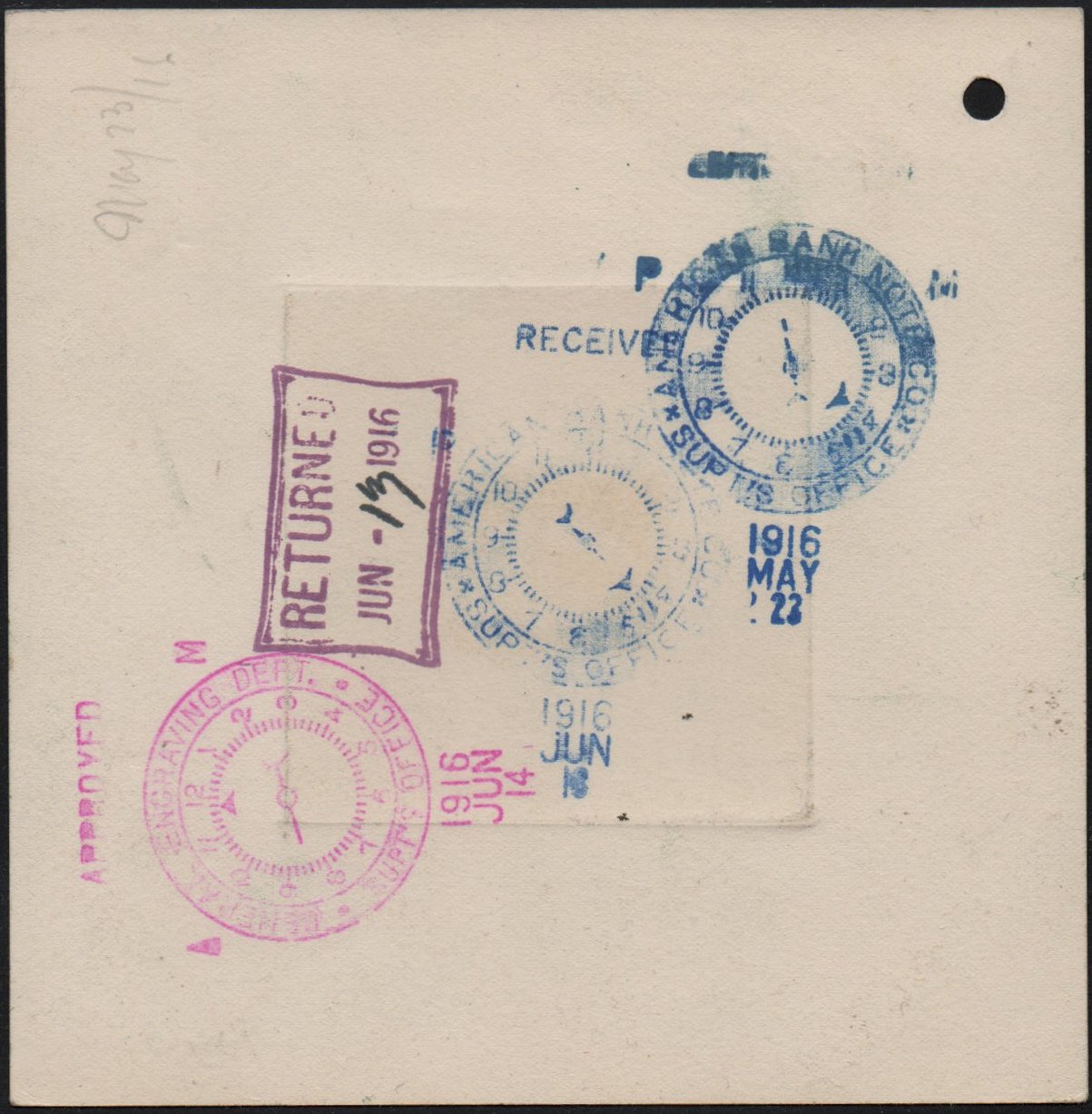
We now turn to the unique sunken die-proofs with manuscript authorisation for each value, showing the front and back of each.
Working Die Proof: 1c Value :
Above: The next step we witness in the creation of the stamps is a high quality engraving of the centre, dated April 27th, 1916. Customer approval appears to have taken a few weeks, which would be consistent with transit times between Honduras and the United States at the time. We have not seen any other engraving of just the centre beyond the one shown here. Duplicates or proofs in other colours may possibly have been produced.
.
We now turn to the unique sunken die-proofs with manuscript authorisation for each value, showing the front and back of each.
Working Die Proof: 1c Value :
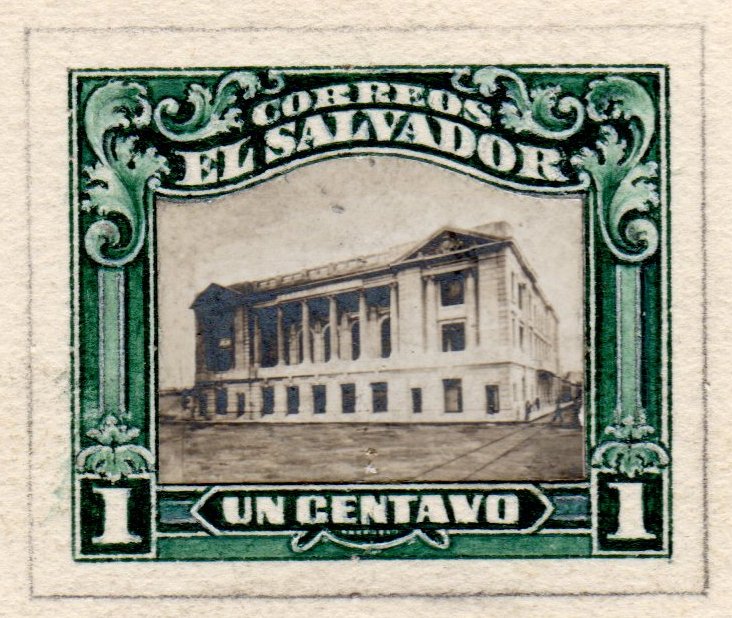 Detail: The hand-painted essay for the 1c, shown higher up on card.
.
Working Die Proof: 2c Value :
Detail: The hand-painted essay for the 1c, shown higher up on card.
.
Working Die Proof: 2c Value :
 .
Working Die Proof: 5c Value :
.
Working Die Proof: 5c Value :
 .
Working Die Proofs: 6c Value :
.
Working Die Proofs: 6c Value :
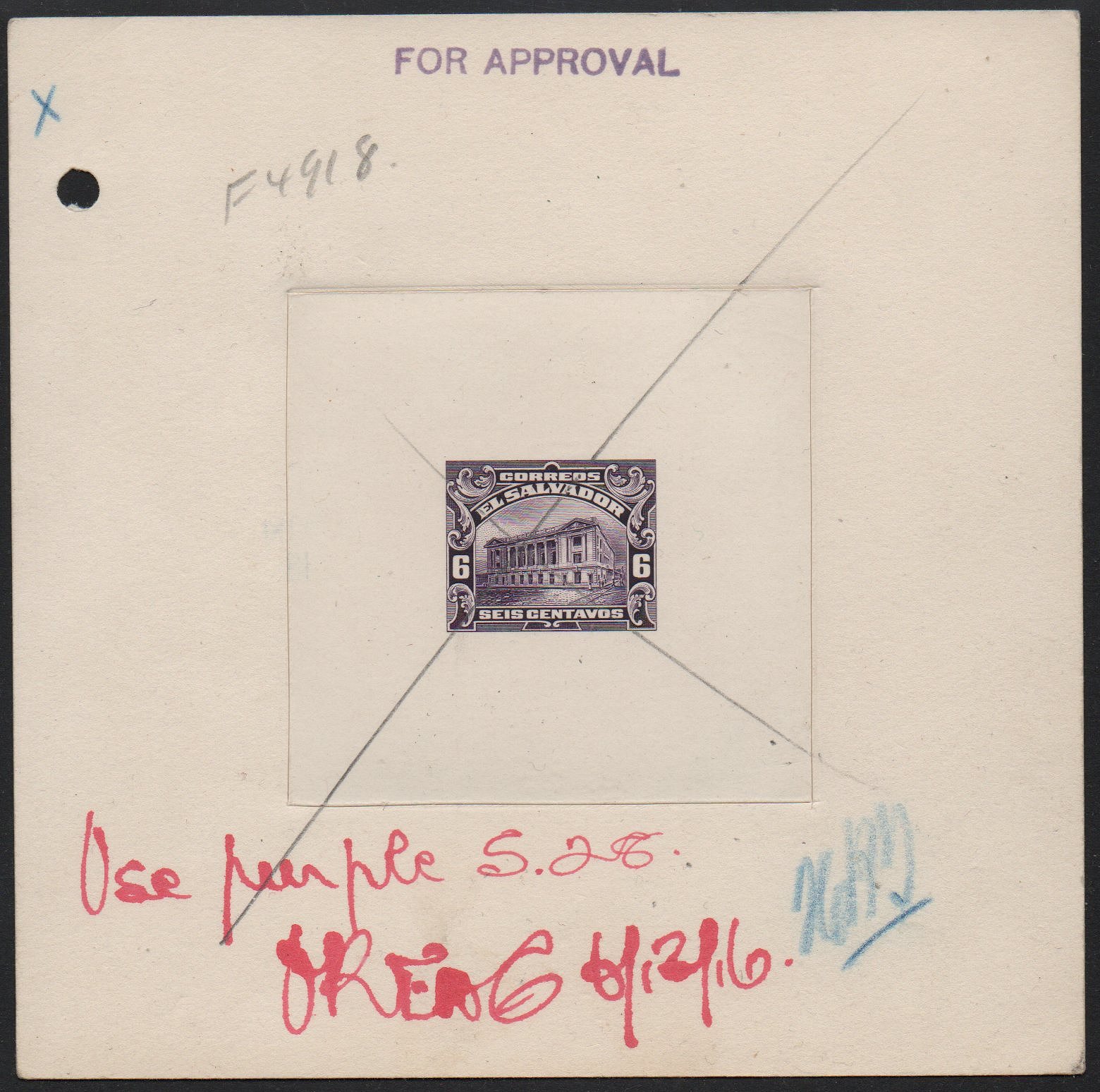
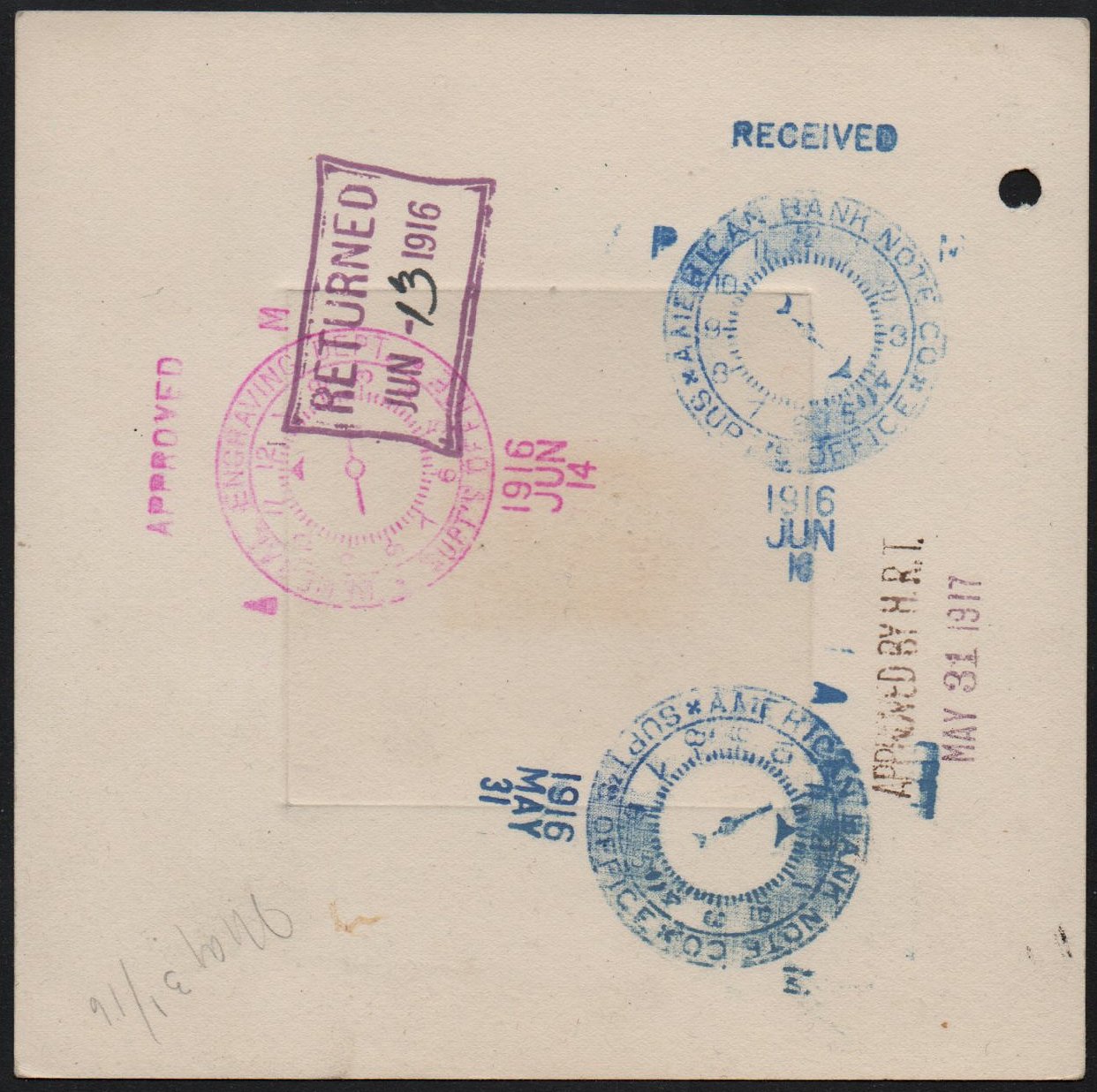
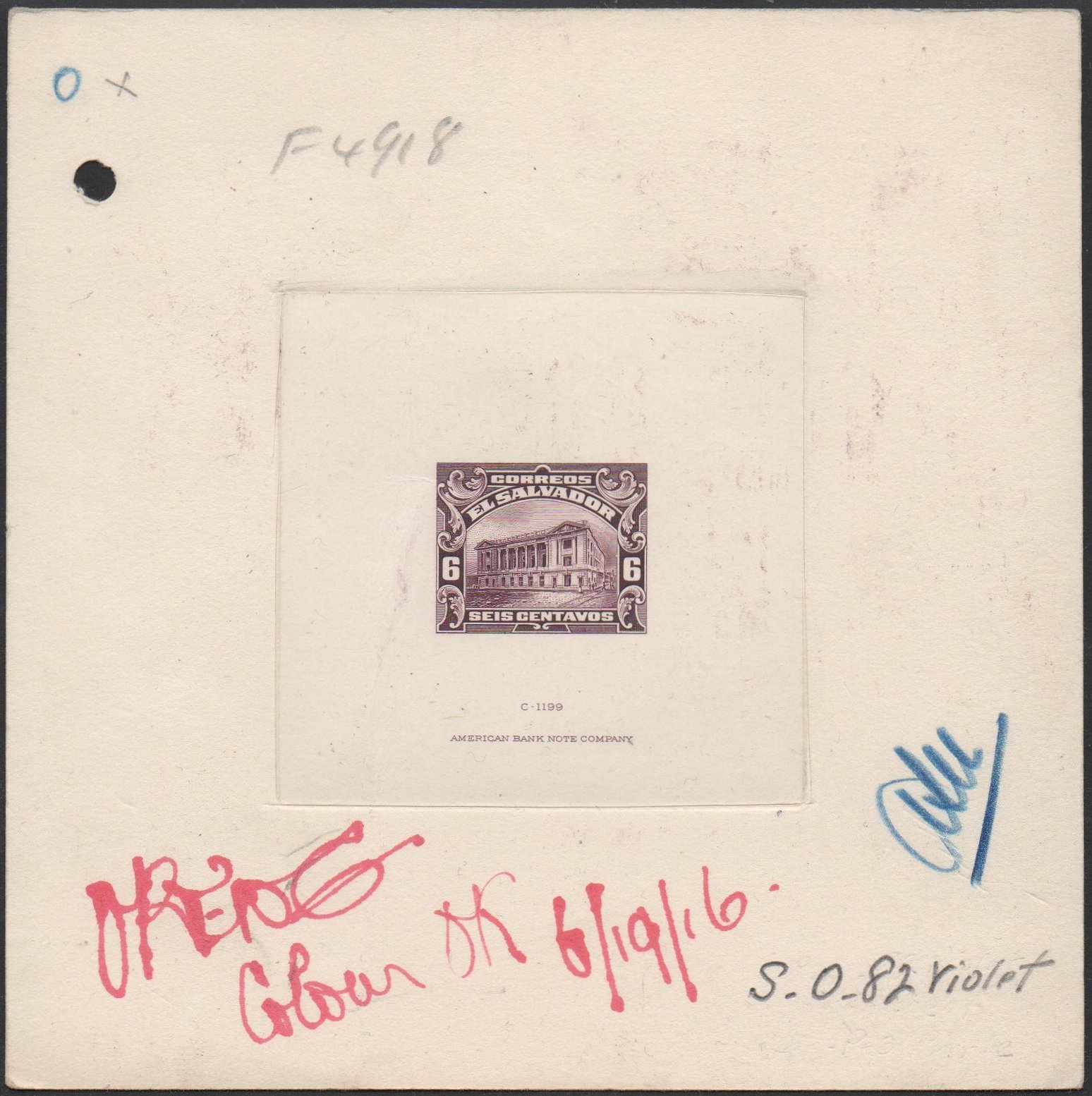
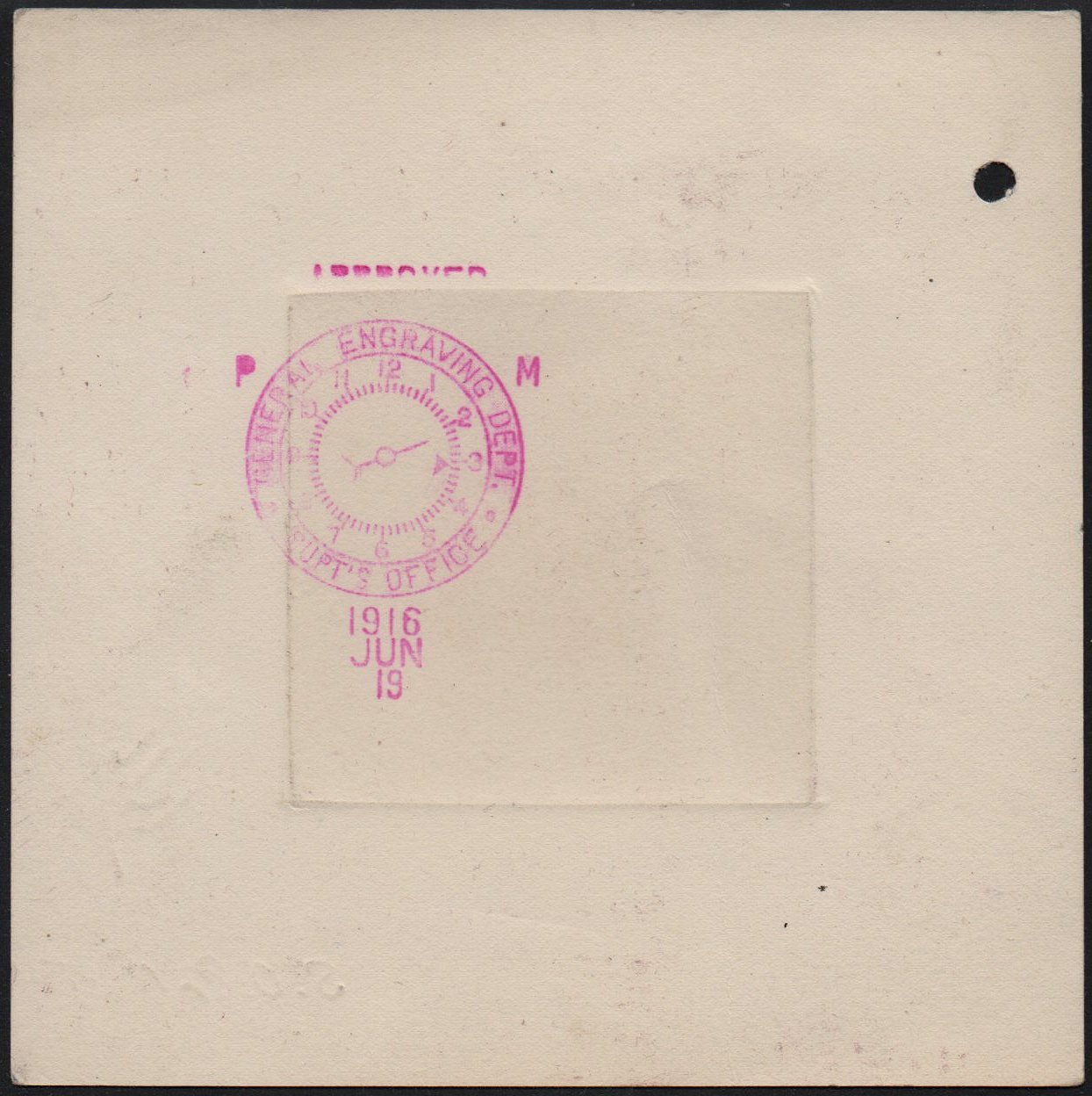 Note: The colours of the 6c and 12c are closely inter-related. We recommend that you next take a brief look at the images of the 12c die proofs a little lower down (after the 10c value), prior to reading the commentary immediately below.
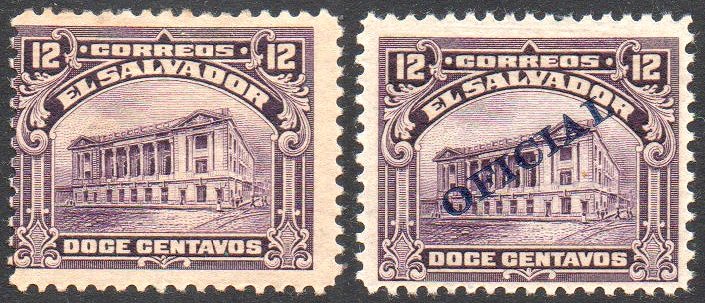
As mentioned higher up, the colours used for the issued 6c and 12c stamps required late amendment and the picture is somewhat muddled. Initially, the 6c was proposed (and the die proof printed) in Violet, this dated June 12th. This colour, however, was rejected in favour of Purple. Meanwhile, the 12c in Violet-Blue had also been rejected - and its die proof, like that of the 6c, also has the manuscript instruction 'Use Purple'.
The second 6c die proof above was printed in Purple and signed off as OK one week later (June 19th) but someone must have noticed that the 6c and 12c had been authorised in the same colour, Purple. It appears that there followed some confusion and, in the end, neither stamp was truly printed in Purple.
With Violet having been rejected and the preferred Purple being unavailable due to its being earmarked for the 12c, the choice for the 6c finally fell on Violet-Blue, the colour that had been rejected at the outset for the 12c. We have not seen a die proof of the 6c in this final Violet-Blue colour of the issued stamp. In terms of likely time constraints at such a late production stage, it is quite possible that none was ever produced. Given the speed of revisions, it seems quite likely that the ABN Company sought approval for the colour-change amendments from the Honduran Post Office telegraphically.
With regard to the final colour of the 12c, it is described in catalogues as Purple, which is in line with the instruction on the die proofs. The colour in which it was printed has a rather bluer tinge than the purple of the second 6c die proof, moving it a little towards violet.
Note: For comparative viewing of both 6c and both 12c die proofs alongside each other, see the foot of this page.
Note: The colours of the 6c and 12c are closely inter-related. We recommend that you next take a brief look at the images of the 12c die proofs a little lower down (after the 10c value), prior to reading the commentary immediately below.
As mentioned higher up, the colours used for the issued 6c and 12c stamps required late amendment and the picture is somewhat muddled. Initially, the 6c was proposed (and the die proof printed) in Violet, this dated June 12th. This colour, however, was rejected in favour of Purple. Meanwhile, the 12c in Violet-Blue had also been rejected - and its die proof, like that of the 6c, also has the manuscript instruction 'Use Purple'.
The second 6c die proof above was printed in Purple and signed off as OK one week later (June 19th) but someone must have noticed that the 6c and 12c had been authorised in the same colour, Purple. It appears that there followed some confusion and, in the end, neither stamp was truly printed in Purple.
With Violet having been rejected and the preferred Purple being unavailable due to its being earmarked for the 12c, the choice for the 6c finally fell on Violet-Blue, the colour that had been rejected at the outset for the 12c. We have not seen a die proof of the 6c in this final Violet-Blue colour of the issued stamp. In terms of likely time constraints at such a late production stage, it is quite possible that none was ever produced. Given the speed of revisions, it seems quite likely that the ABN Company sought approval for the colour-change amendments from the Honduran Post Office telegraphically.
With regard to the final colour of the 12c, it is described in catalogues as Purple, which is in line with the instruction on the die proofs. The colour in which it was printed has a rather bluer tinge than the purple of the second 6c die proof, moving it a little towards violet.
Note: For comparative viewing of both 6c and both 12c die proofs alongside each other, see the foot of this page.
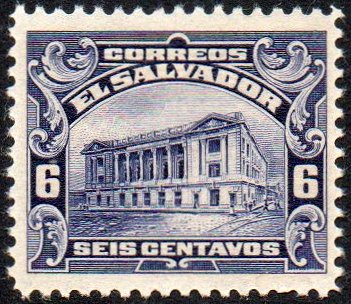
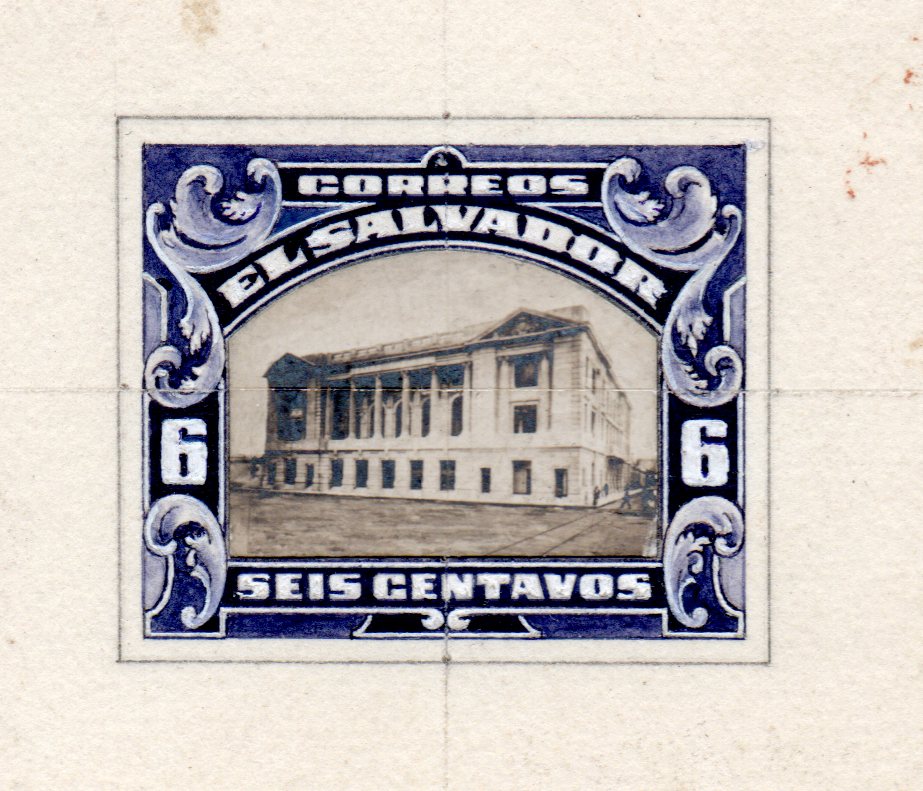 Left : Issued 6c stamp in Violet-Blue . . . . Right : The hand-painted essay for the 6c.
.
Working Die Proof: 10c Value :
Left : Issued 6c stamp in Violet-Blue . . . . Right : The hand-painted essay for the 6c.
.
Working Die Proof: 10c Value :
 .
Working Die Proof: 12c Value :
.
Working Die Proof: 12c Value :
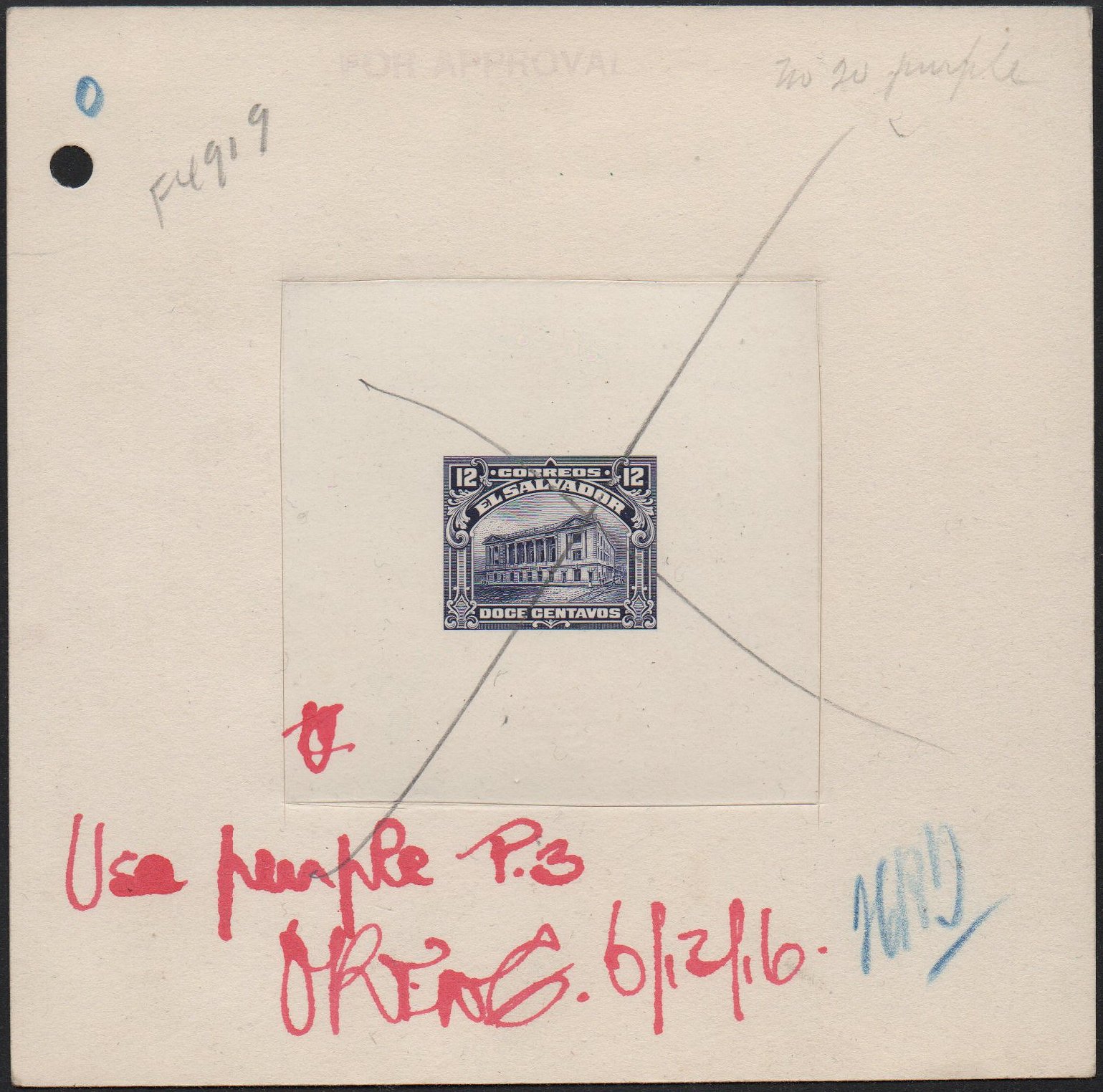
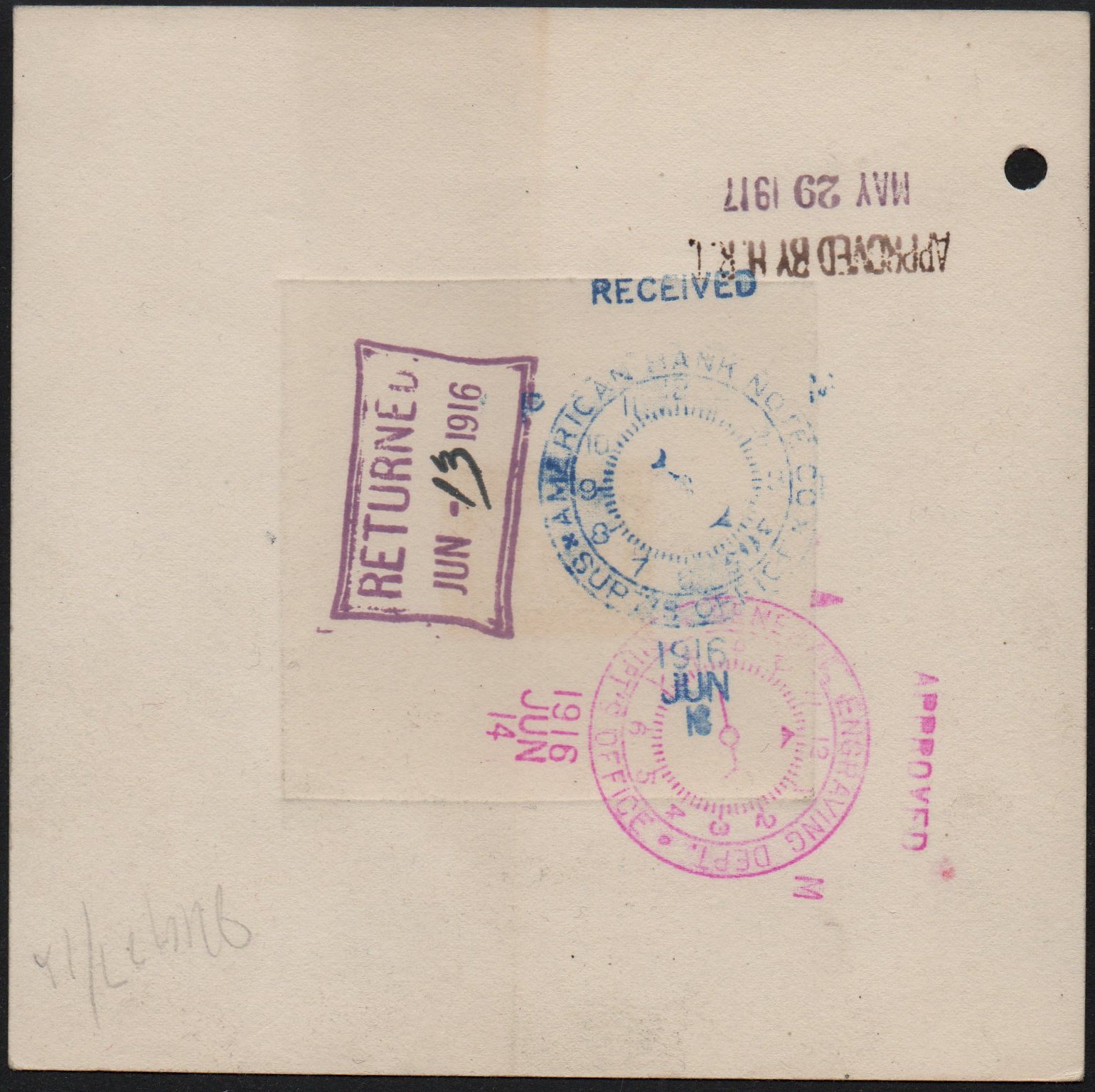 Above: Violet Blue . . . . Below: Violet
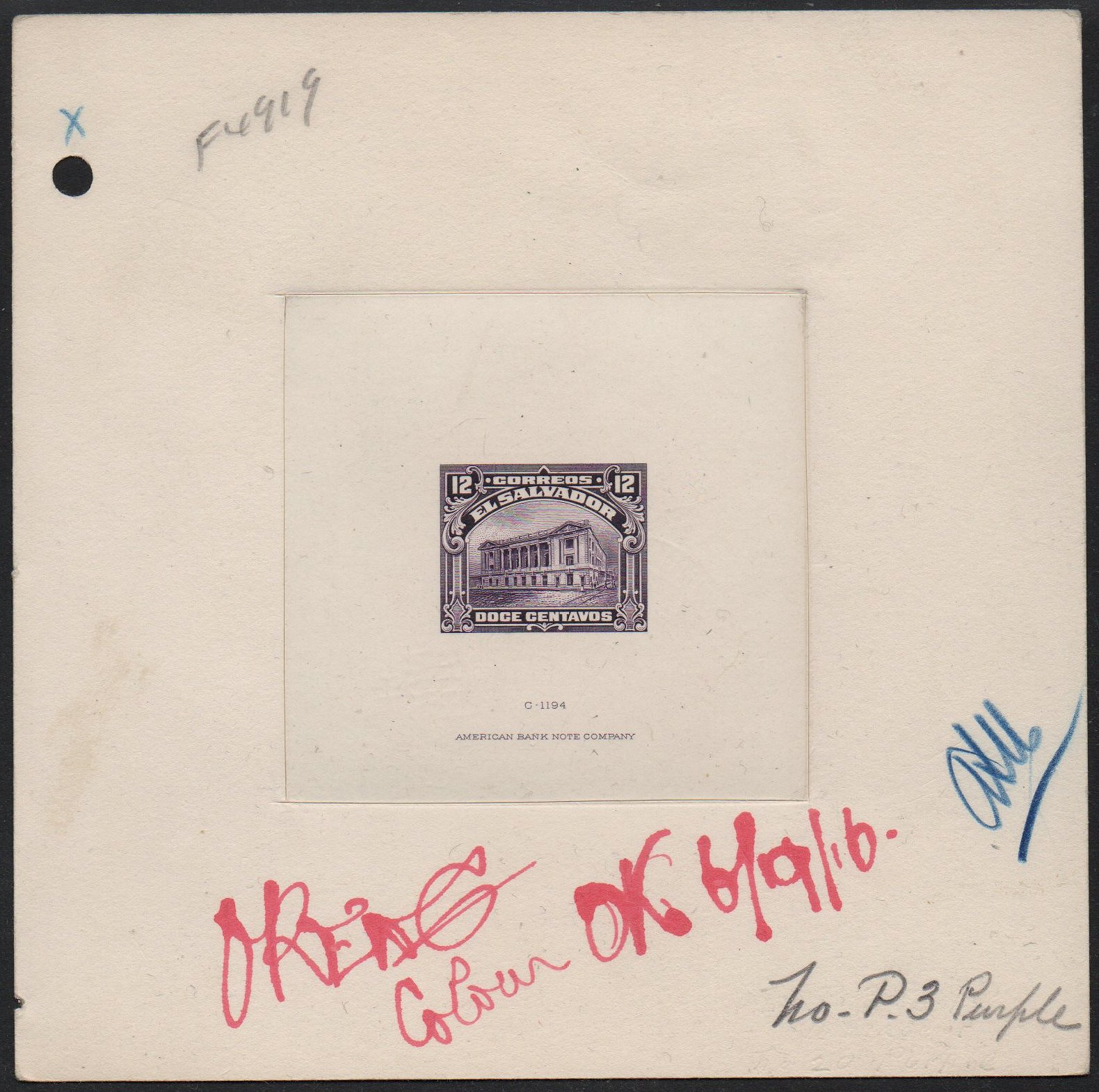
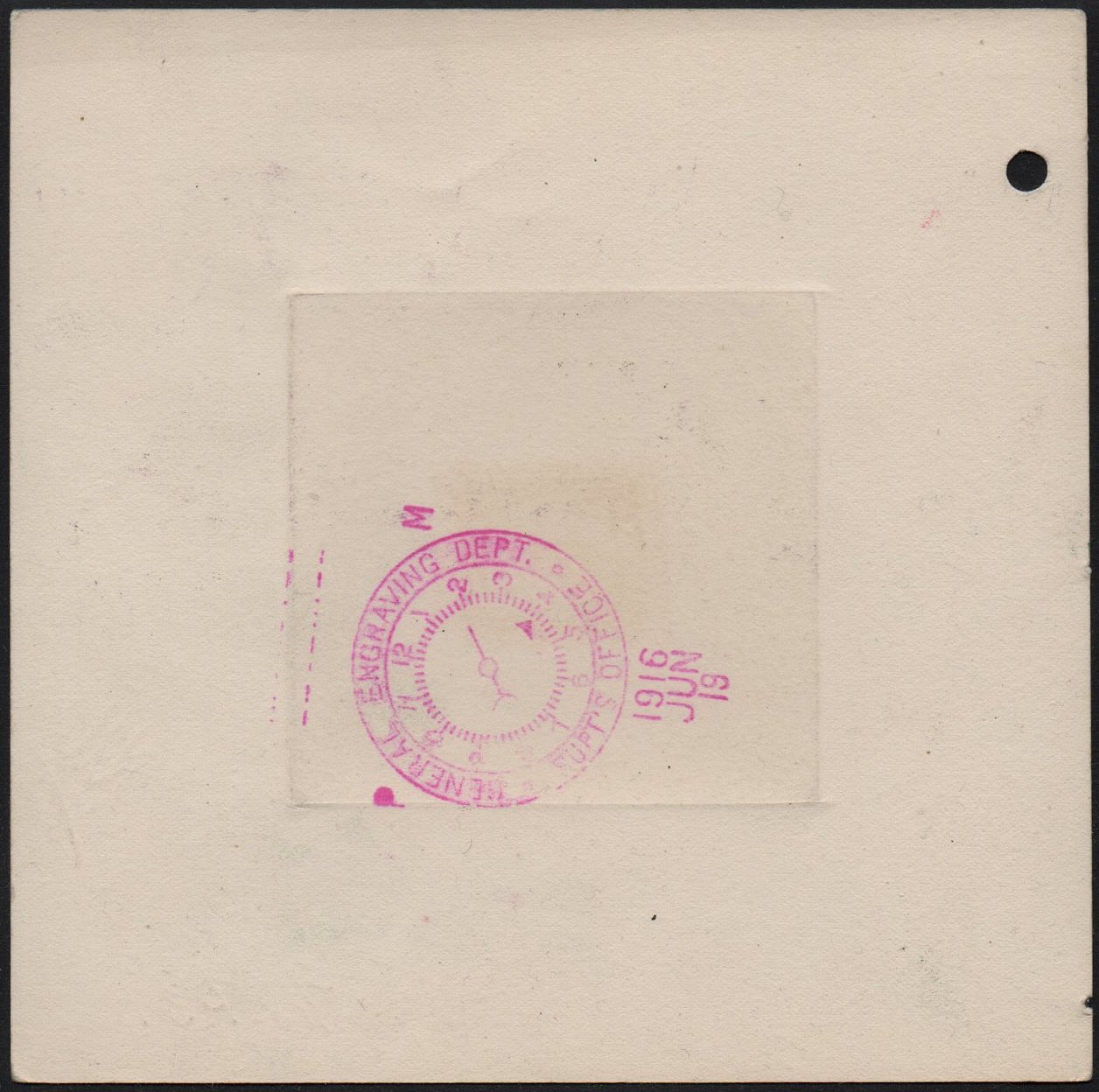
 Please refer back to the commentary on the 6c die proofs with regard to the adopted colours for the issued stamps.
.
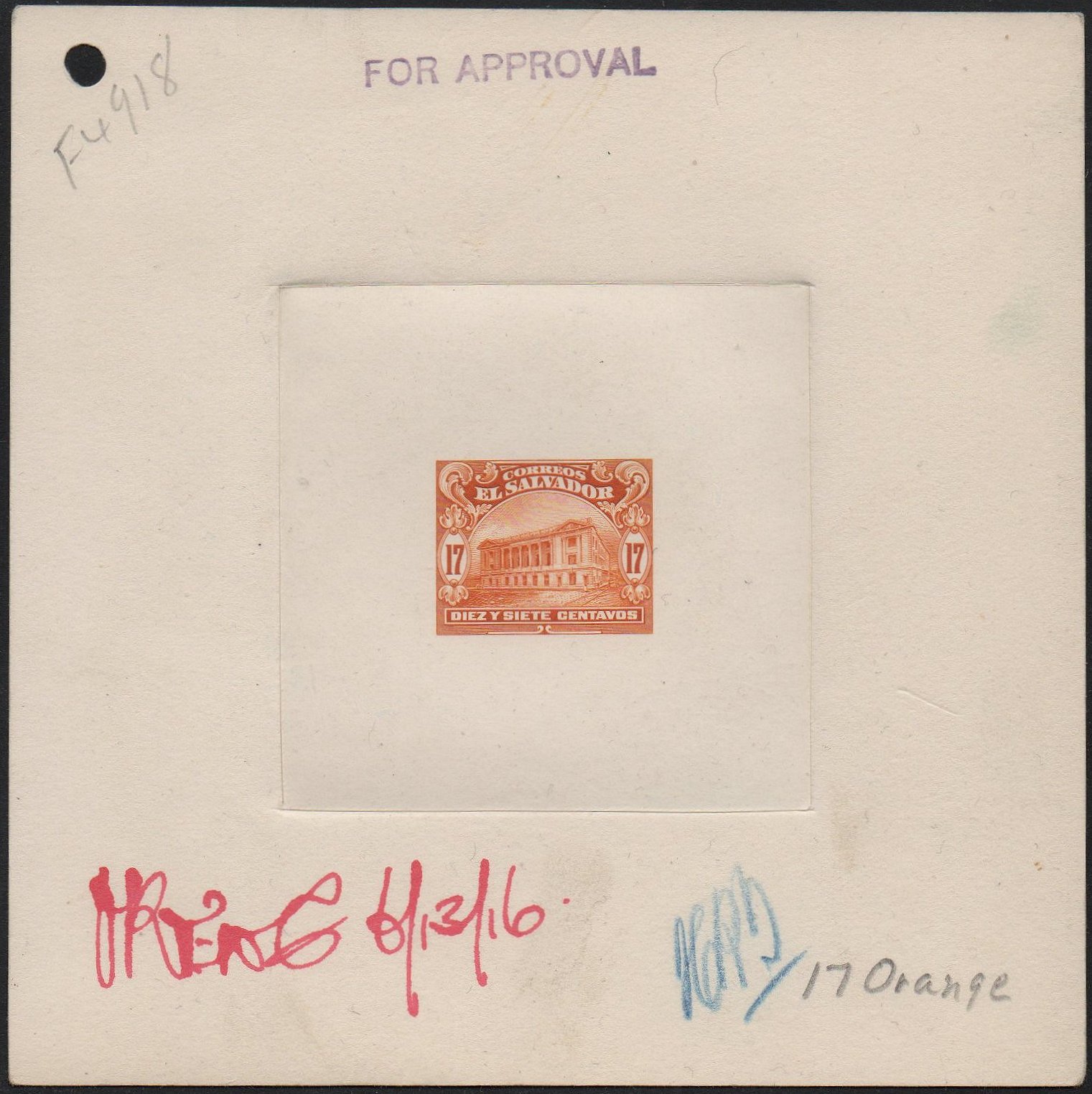
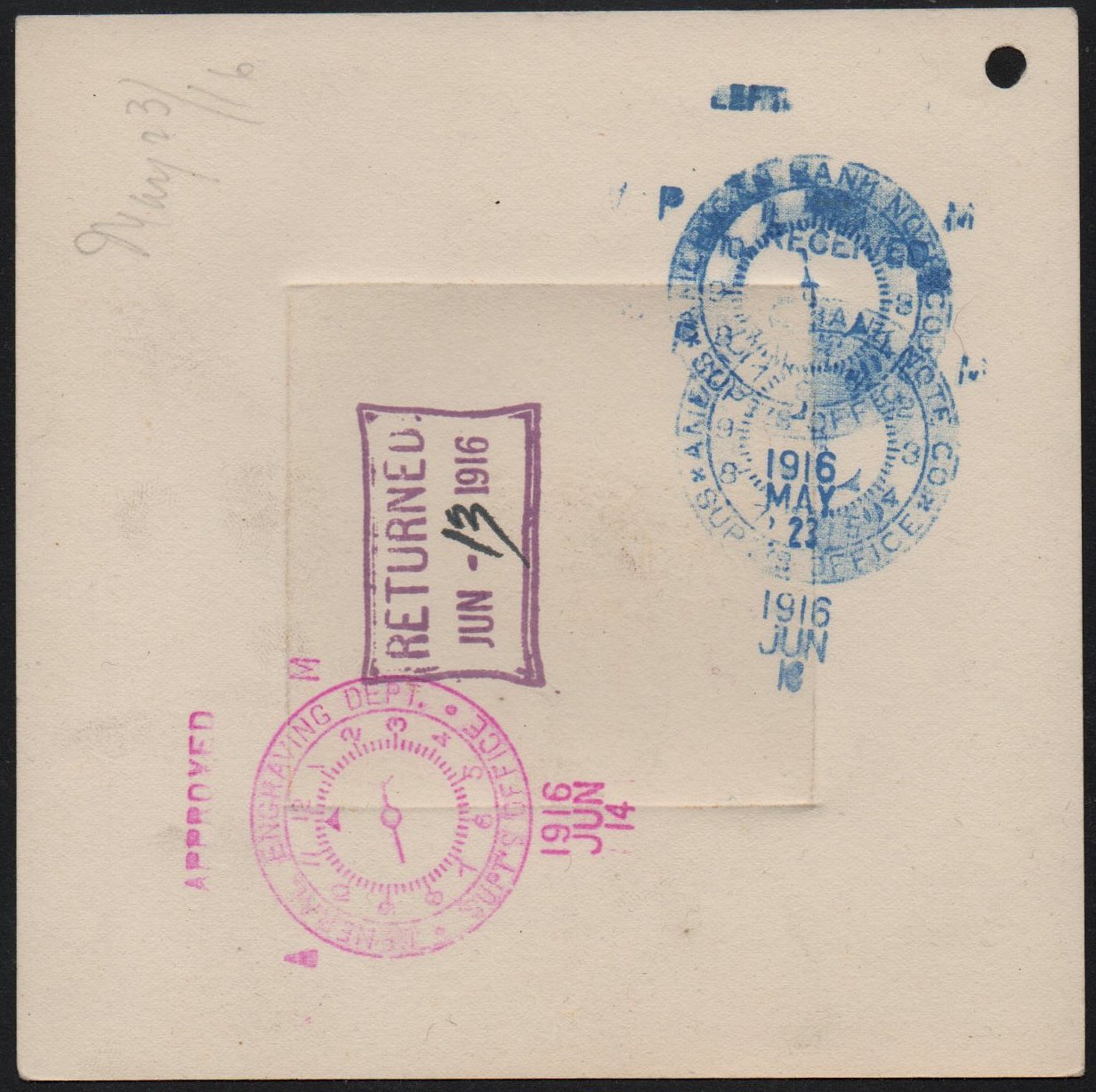
Working Die Proof: 17c Value :
Please refer back to the commentary on the 6c die proofs with regard to the adopted colours for the issued stamps.
.
Working Die Proof: 17c Value :
 Above : Hand-painted essay for the 17c.
.
Working Die Proof: 25c Value :
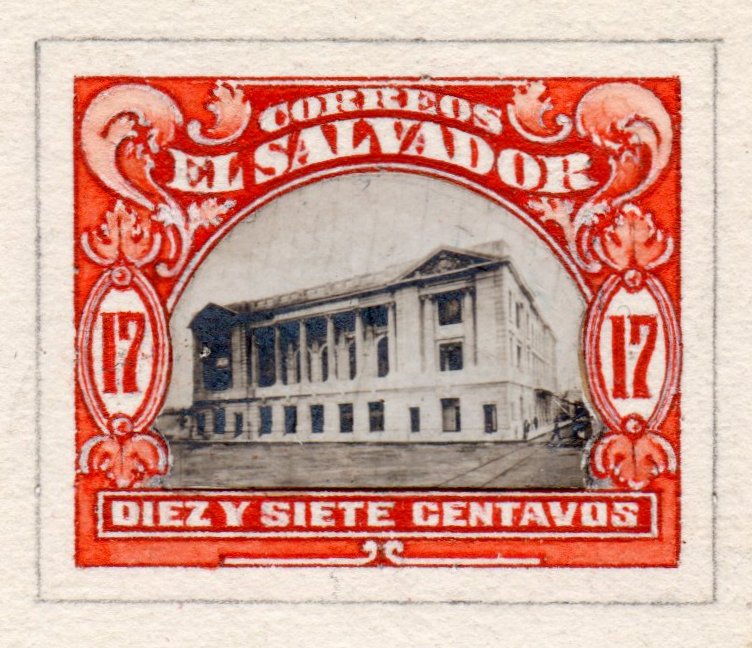
Above : Hand-painted essay for the 17c.
.
Working Die Proof: 25c Value :
 .
Working Die Proof: 29c Value :
.
Working Die Proof: 29c Value :
 .
Working Die Proof: 50c Value :
.
Working Die Proof: 50c Value :
 .
Specimen overprints:
.
Specimen overprints:
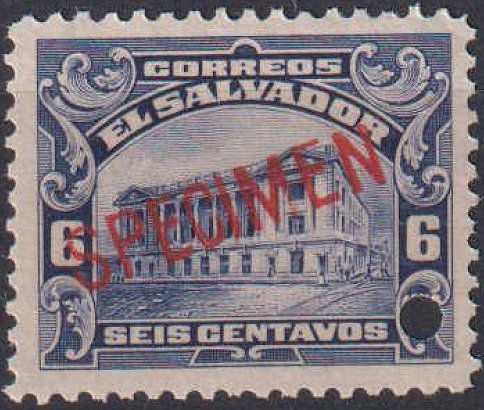
 Postage values are found both with the large-font and small-font SPECIMEN overprints seen in the scan above. We have seen the large Specimen overprint on the 2c and 17c in BLUE and the 6c and 10c with large Specimen overprint in RED. We suspect the colour was assigned according to face value and that each value may only exist with one colour of the large font Specimen overprint. The only small font Specimen overprint on a postage value we have seen is on the 12c; that overprint is in RED.
Offical stamps:
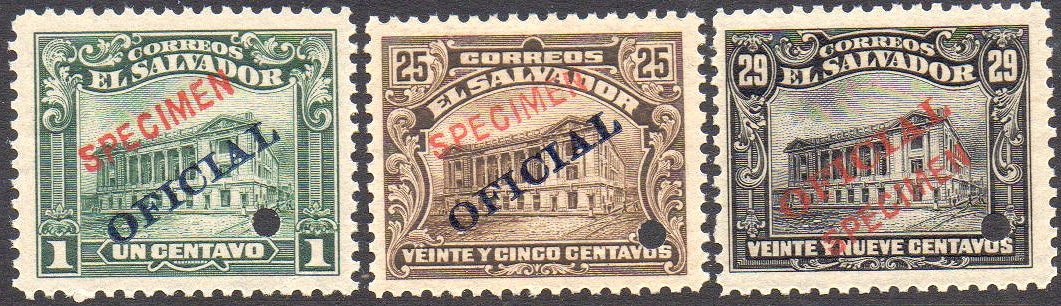
We have only seen three official stamps, all with small-font SPECIMEN overprints - and all in RED (all shown in the scan).
However, we have done very little research into these SPECIMEN overprints and other styles and colours may exist. We think it likely that all values in both the postage and official sets exist with at least one of the Specimen overprints.
.
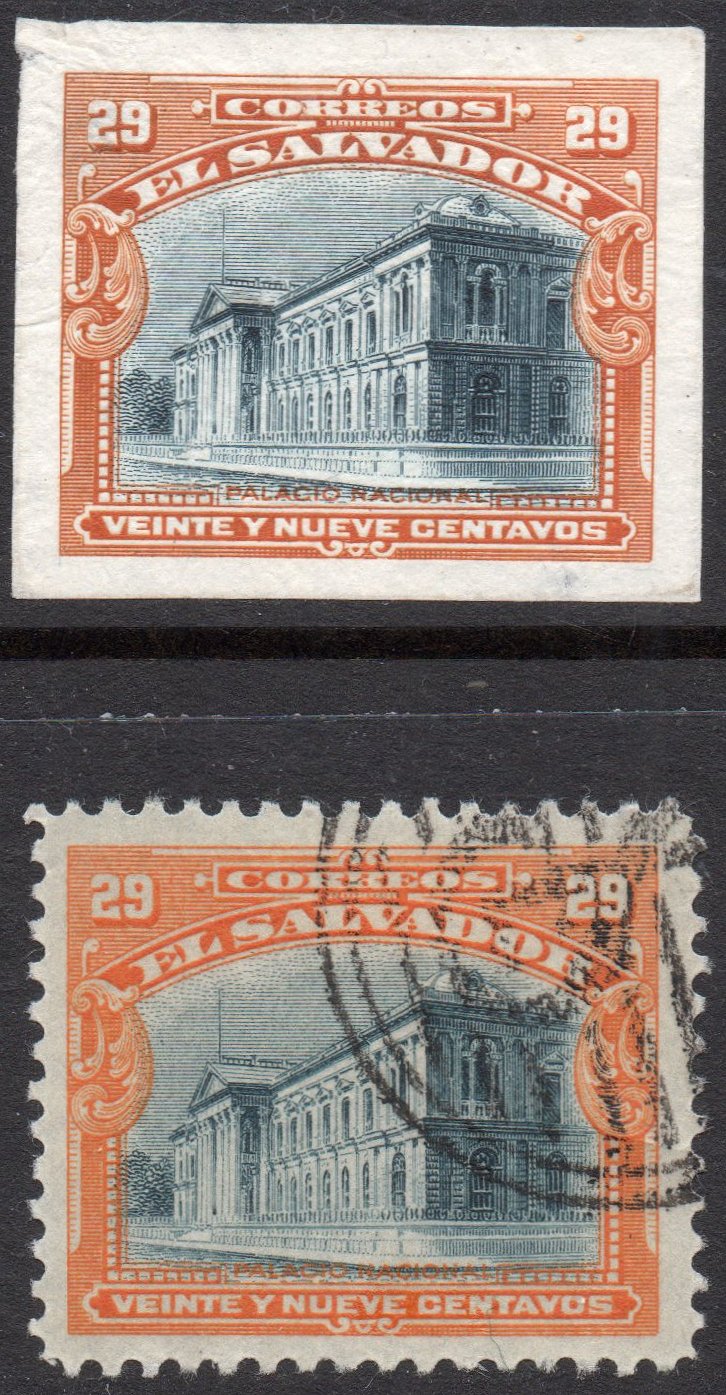
The 1912 National Palace 29c
The 1912 29c stamp is not a railway thematic, as any evidence of the tramway's presence, or indeed anything other than the Palace itself, was to be excluded by the engraver. However, we think this a good opportunity to share two ABN CO. archive photographs of the National Palace, one of which shows the tram tracks in front of the National Palace, whilst the other photograph was taken from the opposite side of the building with no tram tracks visible. We show the two images and further documentation for this issue below:
(i) Unadopted Design:
Postage values are found both with the large-font and small-font SPECIMEN overprints seen in the scan above. We have seen the large Specimen overprint on the 2c and 17c in BLUE and the 6c and 10c with large Specimen overprint in RED. We suspect the colour was assigned according to face value and that each value may only exist with one colour of the large font Specimen overprint. The only small font Specimen overprint on a postage value we have seen is on the 12c; that overprint is in RED.
Offical stamps:
We have only seen three official stamps, all with small-font SPECIMEN overprints - and all in RED (all shown in the scan).
However, we have done very little research into these SPECIMEN overprints and other styles and colours may exist. We think it likely that all values in both the postage and official sets exist with at least one of the Specimen overprints.
.
The 1912 National Palace 29c
The 1912 29c stamp is not a railway thematic, as any evidence of the tramway's presence, or indeed anything other than the Palace itself, was to be excluded by the engraver. However, we think this a good opportunity to share two ABN CO. archive photographs of the National Palace, one of which shows the tram tracks in front of the National Palace, whilst the other photograph was taken from the opposite side of the building with no tram tracks visible. We show the two images and further documentation for this issue below:
(i) Unadopted Design:
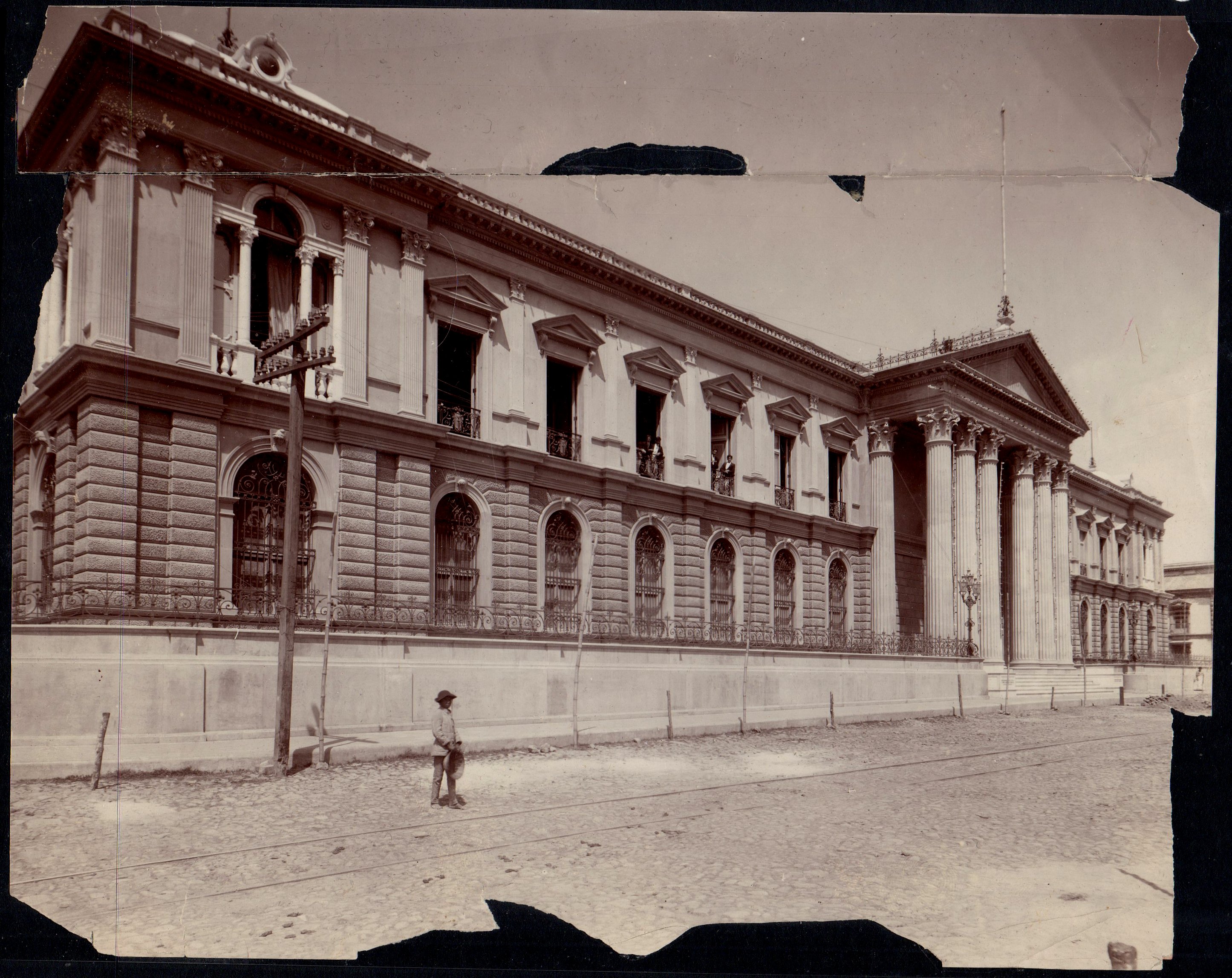
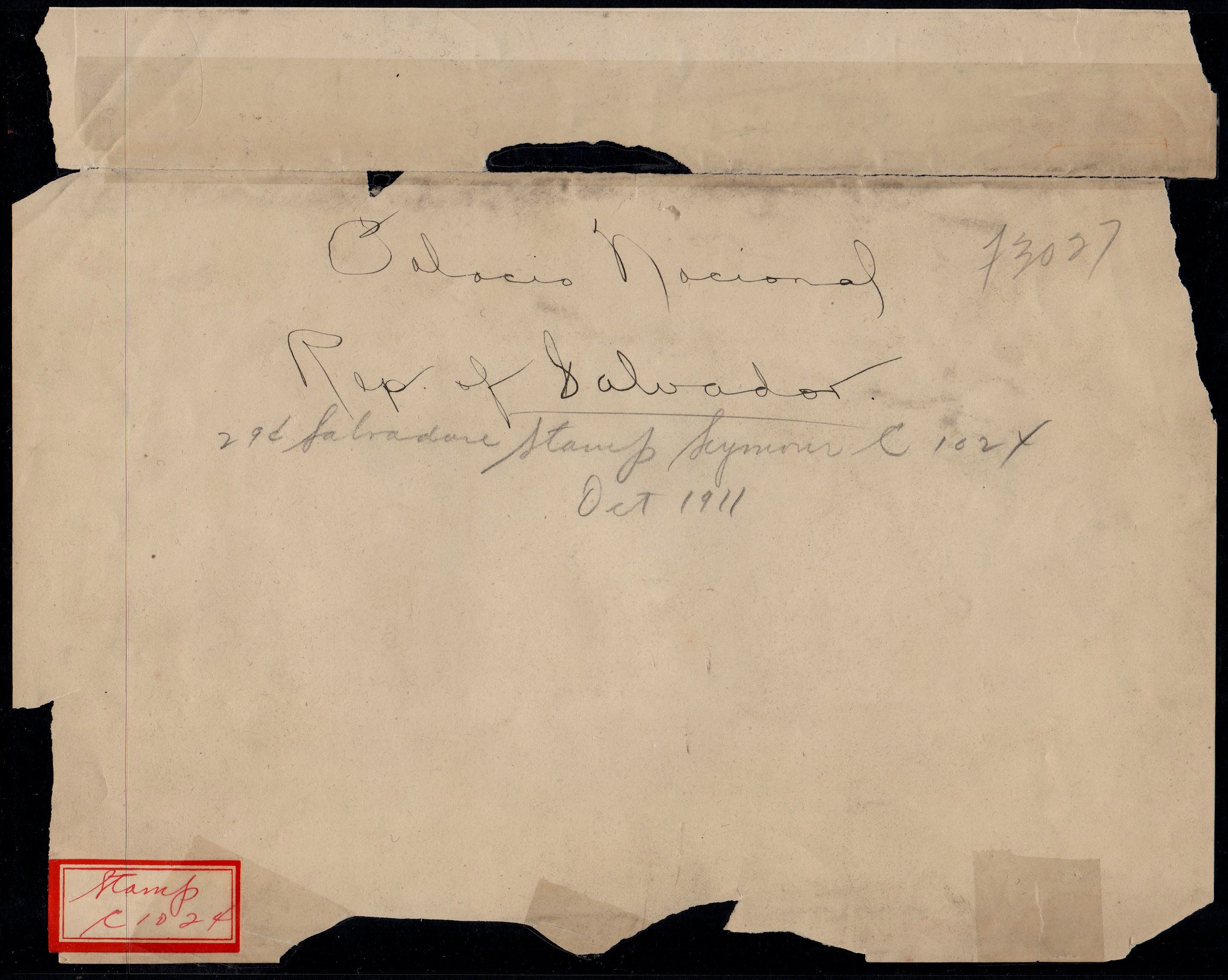
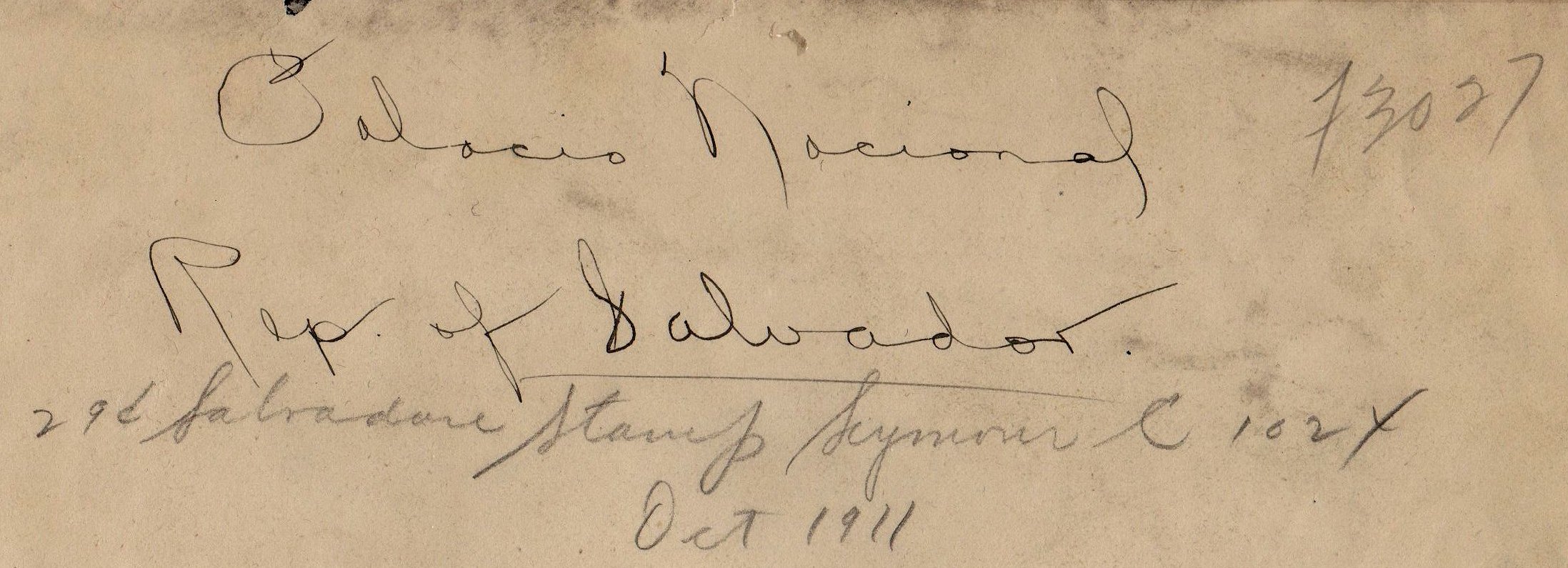
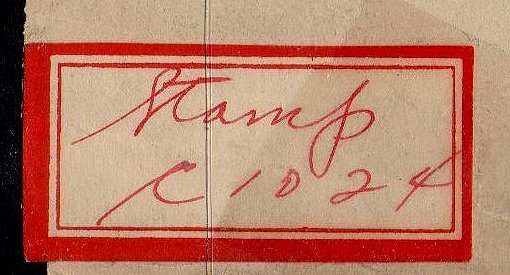 This battered photo from the archives, showing the tram tracks in front of the National Palace has several Company references but we know of no stamp produced using this image.
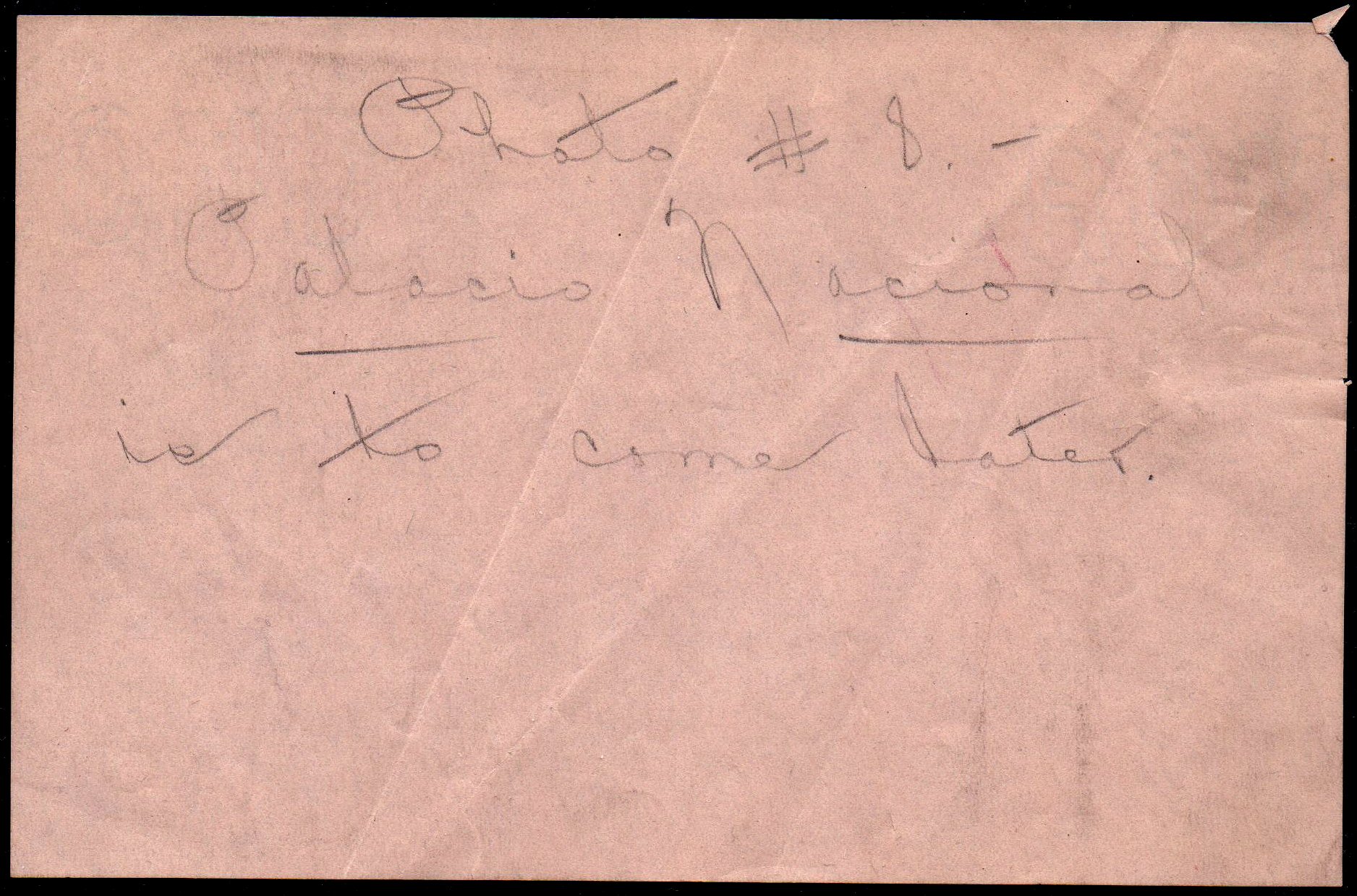
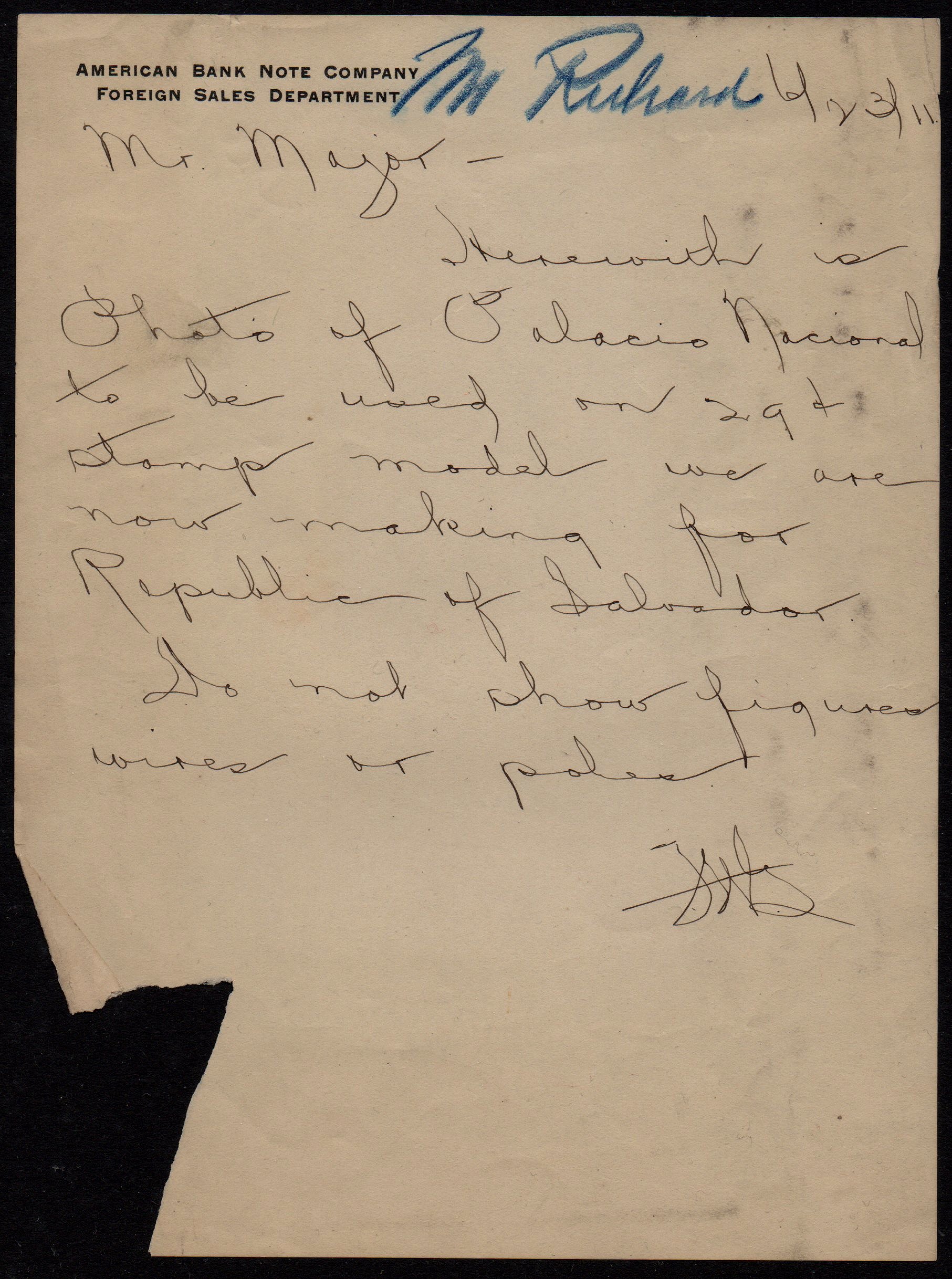 ABN Co. internal notes in the process of stamp production.
Left : Photo to follow (for the Palacio Nacional stamp)
Right : Here's the photo of the Palacio Nacional to be used on 29c stamp model ... Do not show figures (people) wires or poles.
.
(ii) Adopted Design (no railway or tramway interest):
ABN Co. internal notes in the process of stamp production.
Left : Photo to follow (for the Palacio Nacional stamp)
Right : Here's the photo of the Palacio Nacional to be used on 29c stamp model ... Do not show figures (people) wires or poles.
.
(ii) Adopted Design (no railway or tramway interest):
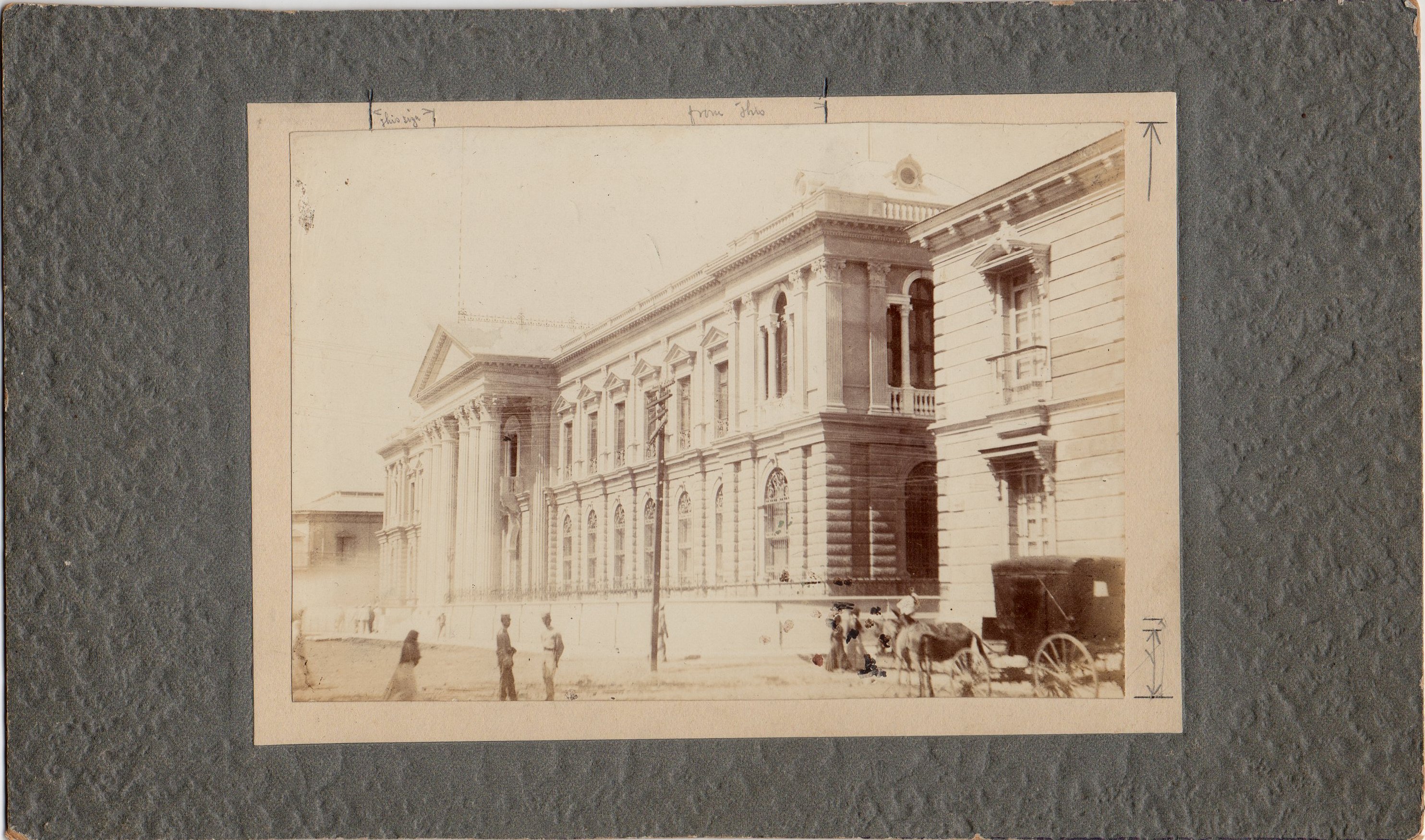
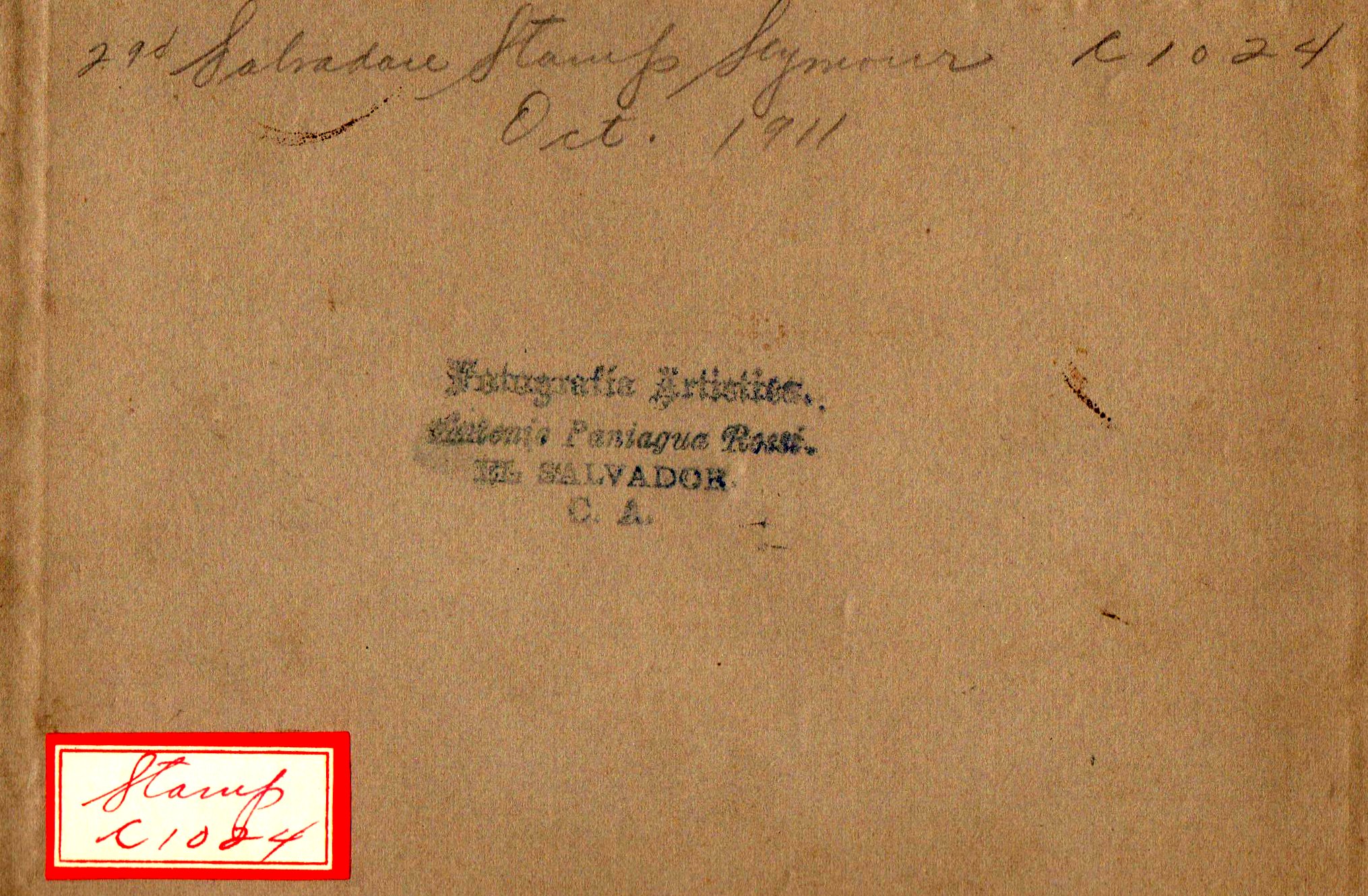
 The photograph taken from the opposite side was used as the source of the 1912 29c Presidential Palace stamp. The photo was apparently sourced from a commercial photographers. The tram tracks are not visible in the image. However, even if they had been present, they would not have been included in the finished stamp, as the engraver chose to concentrate entirely on the building.
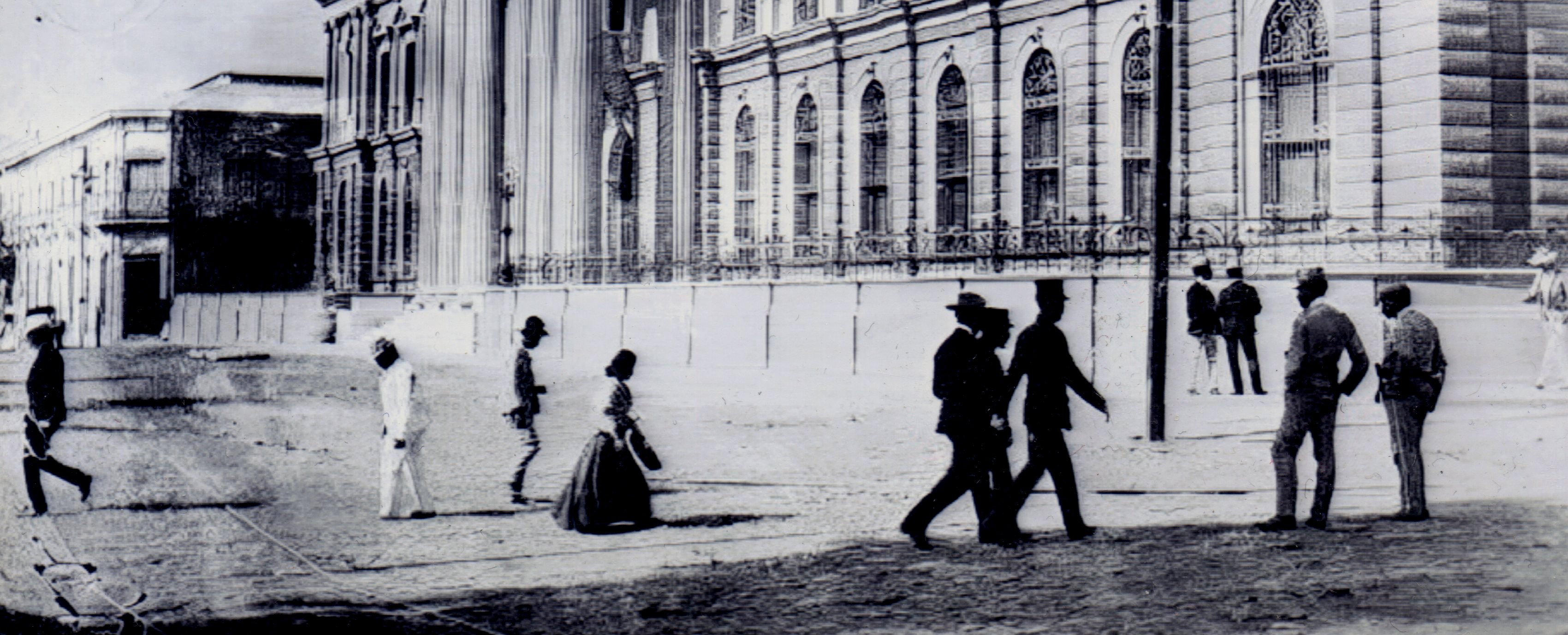 A detail from a further view of the Palace, a modern print of a photograph, shows the wide-gauge tracks in front of the Palace in a woeful state, albeit typical, it would seem, of the whole network. Given the low speeds, the risks would have been manageable. Allen Morrison's webpage (link at top of our main article) remarks that this extremely wide gauge was chosen to fit the vehicles available around 1870 and that the tramway was converted to narrow-gauge in 1919.
.
The 6c & 12c Proof colours compared:
We close with extra (cropped) scans of the 2 x 6c and 2 x 12c die proofs, allowing easier comparison of colours.
A detail from a further view of the Palace, a modern print of a photograph, shows the wide-gauge tracks in front of the Palace in a woeful state, albeit typical, it would seem, of the whole network. Given the low speeds, the risks would have been manageable. Allen Morrison's webpage (link at top of our main article) remarks that this extremely wide gauge was chosen to fit the vehicles available around 1870 and that the tramway was converted to narrow-gauge in 1919.
.
The 6c & 12c Proof colours compared:
We close with extra (cropped) scans of the 2 x 6c and 2 x 12c die proofs, allowing easier comparison of colours.
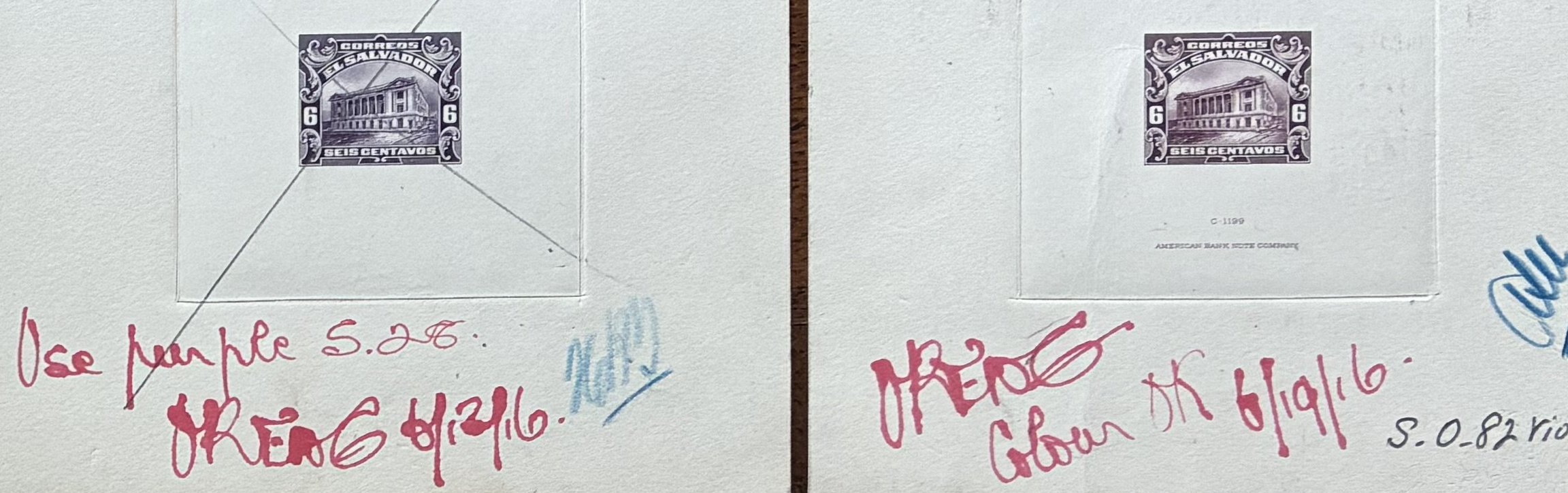
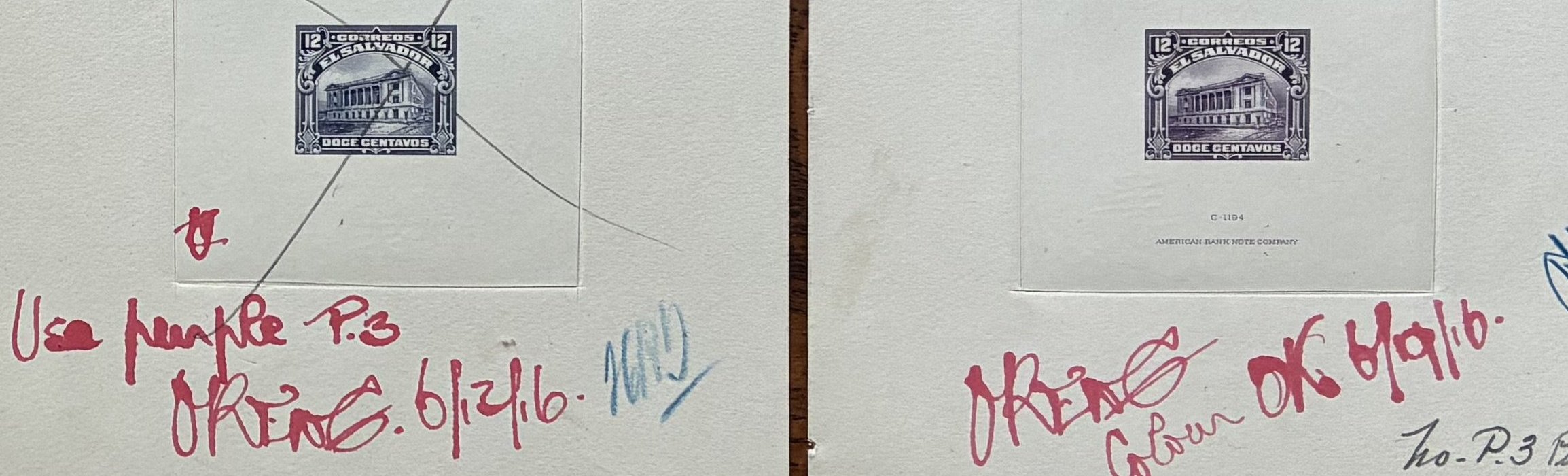 The 6c issued stamp was in a very similar colour to that of the first (crossed through) 12c die proof.
The 12c issued stamp was in purple with a blue tinge, rather than the purple with a red tinge of the second 6c die proof.
The 6c issued stamp was in a very similar colour to that of the first (crossed through) 12c die proof.
The 12c issued stamp was in purple with a blue tinge, rather than the purple with a red tinge of the second 6c die proof.
Return to Listing of all Railway Articles (with links). Note: You may already have an open tab